"A robot doesn't bleed" — but the infantry still holds the position
# Chief of Staff of the 12th "Azov" Brigade Explains Why Unmanned Ground Vehicles Remain "Workhorses" Rather Than Soldier Replacements Lev Pashko, the Chief of Staff of the 12th "Azov" Brigade, explained at the Ground Truth Symposium in Washington why unmanned ground vehicles (UGVs) remain "workhorses" rather than replacements for soldiers. Meanwhile, UGVs have set a record of 45 days of combat duty on the front lines without a single soldier nearby.

By Oleg Bazylewicz
April 8, 2026 · 2 min read
At the beginning of 2025, the Armed Forces of Ukraine reported a precedent: a single ground unmanned vehicle with a machine gun held a position in the east of the country for 45 consecutive days — it was reloaded and serviced every 48 hours. "Only the UGV system was present at the position. The concept is simple: robots don't bleed," commented Mykola Zinkevych from the Third Army Corps according to Atlantic Council data.
This very case became the context for discussion at the Ground Truth Symposium in the Capitol, where Ukrainian military personnel met with American defense experts. And it was there that Lev Pashko, chief of staff of the 12th Special Purpose Brigade "Azov," halted the logic that this case provokes.
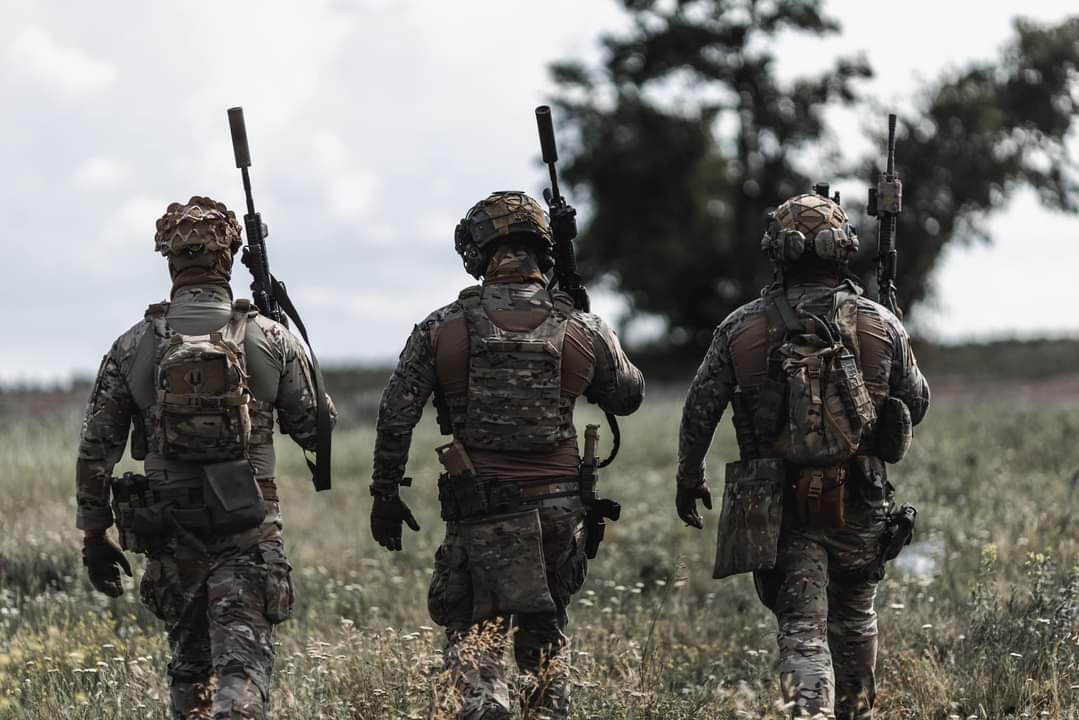
"If a unit is effective — it must act actively. When occupiers enter a zone where a group can operate, command creates conditions — and infantry goes out to destroy the enemy, recapture positions. The UGV takes on the most dangerous work. But ultimately, everything is decided by infantry."
Lev Pashko, chief of staff of the 12th "Azov" Brigade, Ground Truth Symposium
According to him, a ground robotic complex on the Ukrainian battlefield performs the role of "hard labor" — something sent where humans cannot be sent:
- Logistics under fire. Delivery of ammunition to positions unreachable by any vehicle.
- Evacuation of the wounded. Extraction of fighters under heavy fire.
- Kamikaze. Ground platforms for destroying enemy strongholds.
In parallel — a figure explaining why the discussion even arose: according to BBC data, in November 2025, up to 90% of supplies to forward positions near Pokrovsk were delivered by UGVs. Ukraine's Ministry of Defense reports exceeding all plans for UGV deliveries in 2025 and announces further scaling.
That is, the technology is scaling faster than the doctrine for its use is being formed. Pashko acknowledges this openly: "I'm confident we don't yet know everything about how to properly apply ground robotic complexes."
It is telling that the same symposium recorded a different tension: Ukrainian developers demonstrate radioelectronic reconnaissance systems for $2,000 — where the American analog costs up to $15 million, as reported by LIGA.net. For the Pentagon, this is not just admiration — it's a challenge to the procurement model.
If Ukraine truly transitions to industrial production of UGVs in 2026 in the declared volumes — the key question will not be whether a robot will replace an infantryman, but whether the doctrine of application will take shape before the technology once again outpaces those who operate it.



