Russia Copies SBU Structure of AFU and Recruits Army of Drone Operators: What's Behind It
Over four months, Russia increased the number of military personnel engaged in unmanned operations by 28,000 — and this is not merely recruitment figures, but a deliberate replication of the Ukrainian model. Commander of Special Operations Command Robert Brovdy revealed the mechanics of this process.

By Tetiana Suchkova-Ladik
May 14, 2026 · 2 min read
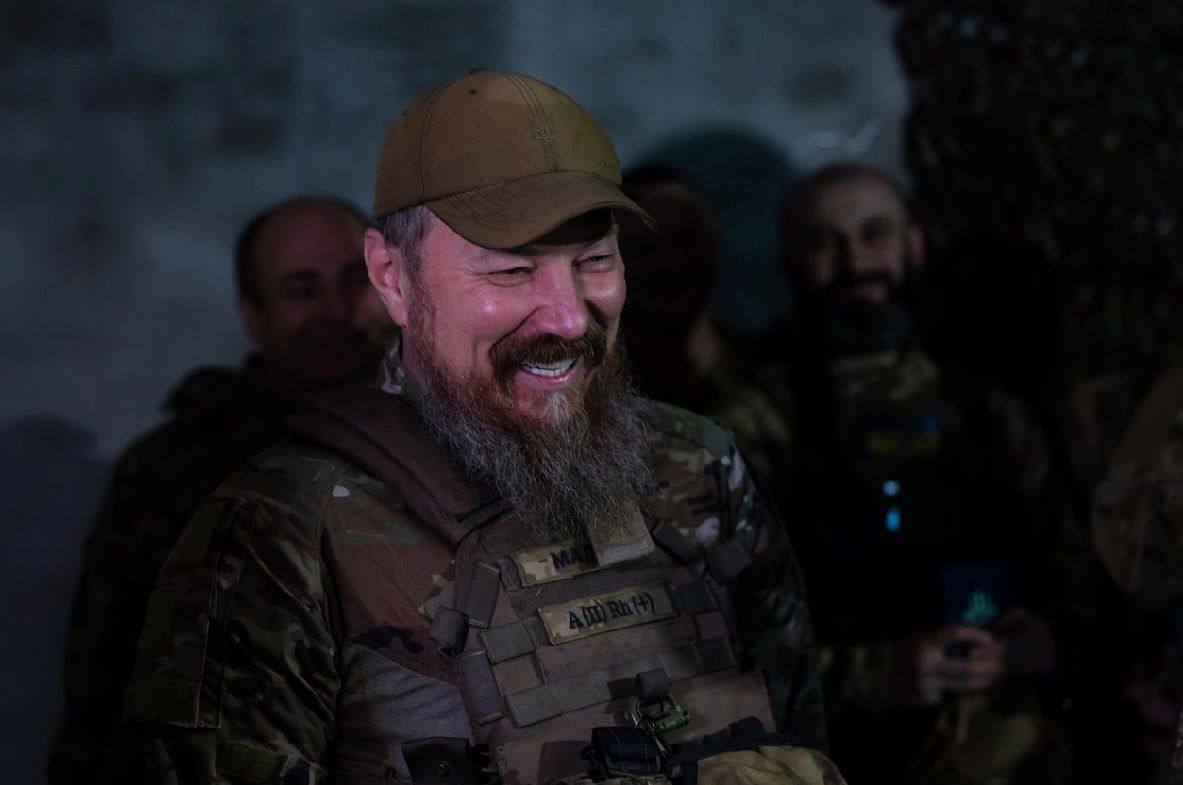
At the beginning of 2026, Russia had involved 86,000 military personnel in unmanned tasks. By April 1 — already 100,000. By May 1 — 114,000. By the end of 2026, Moscow plans to reach 168,000, and potentially 200,000 in the future. This is not simply a mobilization increase: according to the commander of the Ukrainian Armed Forces' Unmanned Systems Forces Robert "Madyar" Brovdi, Russia is deliberately copying the structure of Ukraine's unmanned systems forces.
Copying as strategy
"They have their own experience, but most of them are trying to steal something from the Defense Forces," Brovdi said in an interview with Ukrainian Pravda. This is not just about technical solutions, but about organizational model: Russia is building a separate military branch with its own command hierarchy — essentially reproducing what Ukraine built under the pressure of combat realities since 2022.
Simultaneously, Moscow is scaling up specific capabilities. Three examples cited by Brovdi are notable precisely for their systematic nature.
- "Molniya." Previously — a drone with limited range, easily shot down by FPV. After state intervention: price reduced to approximately $1,500, warhead increased to 10 kg, state procurement — 1.1 million units. According to Brovdi, an average brigade on the front line receives up to 60 such strikes daily.
- "Shahed." Russia is already capable of deploying 300–400 such drones per day — and this figure reflects not only production capacity but also the system's logistics capability.
- Mobile electronic warfare. During infantry assaults, Russians use not large stationary complexes but small portable electronic warfare tools — a tactical solution that complicates countermeasures.
Starlink analogue — a matter of one year
A separate signal — satellite communications. Brovdi believes Russia is capable of creating its own Starlink analogue along the front line within a year.
"They restricted Starlink for them, they have their own satellite system and already have prototypes of analogues... Yes, they are clumsy, they are easily detectable. But it is a matter of time. They will evolve in a year and will have their own alternative network along the entire front line".
Robert "Madyar" Brovdi, commander of the Ukrainian Armed Forces' Unmanned Systems Forces, interview with Ukrainian Pravda
This fundamentally changes the picture: while Starlink remains one of Ukraine's key asymmetric advantages in coordinating strikes, Russia is closing this gap — not through quality, but through scale and time.
What stands behind this
28,000 new drone operators in four months — this is a pace comparable to forming a separate army. If Russia reaches 168,000 by the end of 2026, the difference in numbers between the two operator armies will become a structural rather than tactical problem. The question is not whether Ukraine can technologically outpace — it is already doing so. The question is whether the Ukrainian system of production and personnel training can sustain the pace at which Russia is increasing quantity rather than quality — and whether this balance will shift if Moscow does launch its own satellite network.



