Russia Threatens Hungarians with "Maidan" — While Opposition Leads in All Polls
Vox Harbor analyzed 628,000 Telegram messages and found a coordinated fear campaign aimed at deterring voters from voting against Orbán, whom Moscow openly supports.

By Oleg Bazylewicz
April 10, 2026 · 2 min read
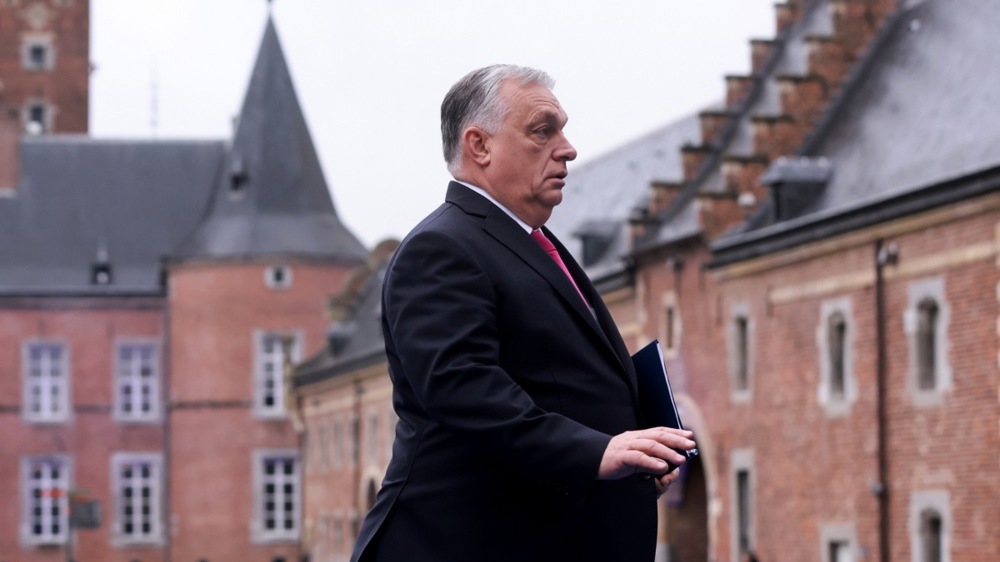
On April 12, Hungarians will vote in parliamentary elections where Viktor Orbán faces his first real risk of losing in 16 years. According to Politico's Poll of Polls, opposition candidate Péter Márki-Zay's party "Tisza" is polling at around 48% compared to 39% for the ruling "Fidesz." It is precisely at this moment that analysts at Vox Harbor detected a large-scale intimidation campaign on Telegram.
628,000 messages — one goal
Researchers analyzed over 628,000 Telegram messages and discovered coordinated waves of identical content. A significant portion of such messages, according to Vox Harbor's findings, are distributed by users connected to Russia or of Russian origin. The message is simple: Orbán's defeat will result in catastrophe — instability, loss of sovereignty, a "Maidan."
"Everyone understands that Ukraine is preparing a Maidan in Hungary"
— pro-Russian propagandist Vladimir Kornilov on his Telegram channel, March 23
As documented by Kyiv Independent, this phrase is a distorted quote from American journalist Michael Weiss, who was merely theoretically discussing a possible scenario if Orbán tried to "steal" the election. The context disappeared when reposted.
Not just Telegram: an entire ecosystem
Telegram is just one channel. According to the Financial Times, Russia has engaged the Social Design Agency — a structure under Western sanctions that the U.S. Department of Justice accused in 2024 of launching the "Doppelgänger" network of fake news websites. The agency's task is to portray Márki-Zay as a "puppet of Brussels" and discredit "Tisza" as a party of "incompetence and hidden agendas."
In parallel, the pro-Russian group Storm-1516 — an offshoot of the "Internet Research Agency," known for interference in the 2016 U.S. elections — operates. It has already fabricated Euronews materials to spread fake information about Márki-Zay, using the same technology Storm-1516 employed during Germany's February 2025 elections, which prompted an official diplomatic protest from Berlin.
TikTok removed hundreds of accounts impersonating Hungarian candidates ahead of the vote and thousands of videos violating the platform's election rules. Meta, however, reported that it imposed no restrictions on the prime minister's accounts.
Paradox: Russia protects the one who protects himself
Orbán has spent years blocking military aid to Ukraine in the EU and publicly maintained ties with the Kremlin. Yet external support through disinformation creates an inconvenient narrative for him: a leader who appeals to sovereignty wins thanks to foreign interference — only from the other side.
According to the European Observatory of Digital Media (EDMO), "entire ecosystems based on artificial intelligence are created to spread pro-government messages, and platform rules on political advertising are systematically violated." "Fidesz" allies released 14 AI-generated video clips against Márki-Zay — which he himself publicly acknowledged.
If "Tisza" wins on April 12 despite all this pressure — it will be the first documented case where a coordinated pro-Russian intimidation campaign failed in an EU country with an electoral system Orbán has spent years adapting to suit himself. Will voters have enough immunity to fear if the ballot box stands next to a neighbor whom these messages actually convinced?



