Russia Increases Activity in Belarus — Zelensky Reminded Lukashenko How Friendship with Putin Ends
After Syrsky's report on Russian military regrouping, Zelensky warned: activation in Belarus is not accidental, but the Kremlin's logic with allies is already known from the examples of Maduro and Assad.

By Tetiana Suchkova-Ladik
April 17, 2026 · 2 min read
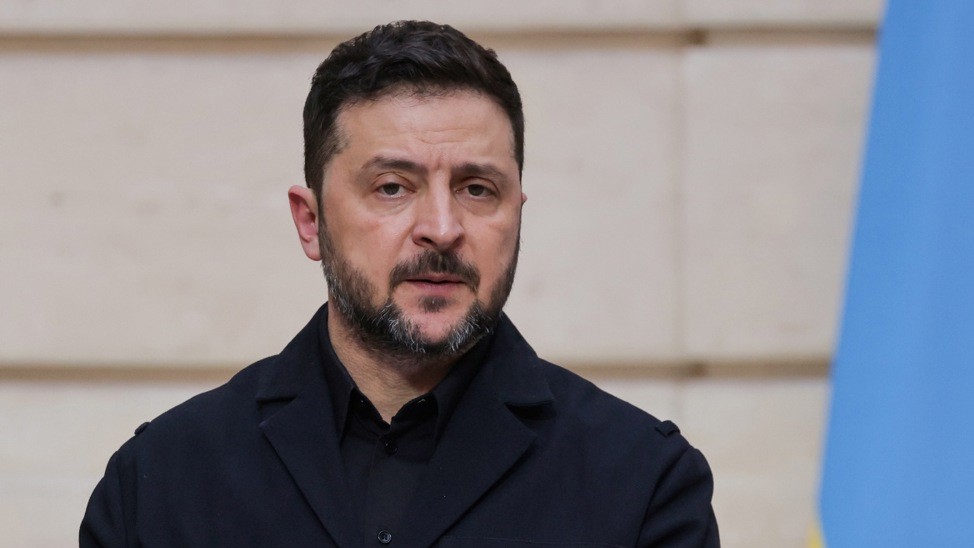
On the evening of April 17, President Volodymyr Zelensky published a comment in social media following a briefing by the Commander-in-Chief of the Armed Forces of Ukraine Oleksandr Syrsky. The essence: intelligence is registering a regrouping of the Russian occupying contingent — and this is connected to what is happening to the north of Ukraine.
What is happening in Belarus
According to Zelensky, the Russian armed forces have increased their activity on Belarusian territory — most likely to compensate for a shortage of personnel at the front. This is not the first such warning: back in February, he stated that Putin would attempt to draw Belarus into direct participation in the war, and in the summer could send troops there under the pretext of exercises.
The analytical center iSANS in its April review confirmed: as of May 1, 2025, the number of Russian military in Belarus is estimated at approximately 2,150 persons, and at the Baranovichi airfield there are stationed at least six Su-30SM fighter jets. A slight increase — connected with the arrival of personnel for the May 9 parade. But the main factor that could radically change the situation — joint exercises "Zapad-2025," the active phase of which is scheduled for September 12-16.
"All exercises have some purpose. And one of those purposes is the covert creation of offensive troop groupings"
Oleksandr Syrsky, Commander-in-Chief of the Armed Forces of Ukraine, in an interview with LB.ua
Why now — and why Maduro
The reference to the fate of the Venezuelan regime is not mere rhetoric: on the night of January 3, 2026, the United States conducted a special operation and captured Nicolás Maduro, a Moscow ally who in May 2024 signed with Putin a pact on "strategic partnership." Approximately a year before this, the Assad regime fell in Syria — another Kremlin partner to whom Russia provided "key support in exchange for influence in the Middle East." Zelensky constructs a logical chain: regimes that chose dependence on Moscow end the same way.
Minsk's reaction to Zelensky's April statements has been restrained. Belarusian state media reproduced Kremlin narratives regarding the strike on Sumy, while pro-government experts commented on reports from Ukraine without sharp polemics with Kyiv. No public response from Lukashenko to the specific warning from April 17 was received.
Is there a deterrent mechanism
Carnegie Endowment in its April analysis noted: "any large-scale movement of Russian troops to Belarus would immediately attract NATO's attention" — and this is precisely what makes the scenario of an open invasion from Belarusian territory less likely in the short term. However, Zapad-2025 remains "the nearest test of nerve" for Eastern Alliance members.
Syrsky has already assessed the risks: exercises in Belarus are a factor that the Armed Forces of Ukraine are obliged to take into account, because "the visibility of exercises" is the most acceptable way to imperceptibly transfer and concentrate troops in the required direction.
If Russia really uses "Zapad-2025" to accumulate a combat grouping — the key question will be whether NATO countries will respond with concrete actions or limit themselves to another round of "serious concerns."



