Russia ramps up nuclear and Arctic forces near Finland — what this means for European security
Finland's Defense Minister Antti Häkkänen warns: the Kola Peninsula is a hub of Russia's nuclear capability. We explain why these changes in the Arctic concern not only Finland but also the security of Europe and Ukraine.

By Tetiana Suchkova-Ladik
February 16, 2026 · 3 min read
Briefly
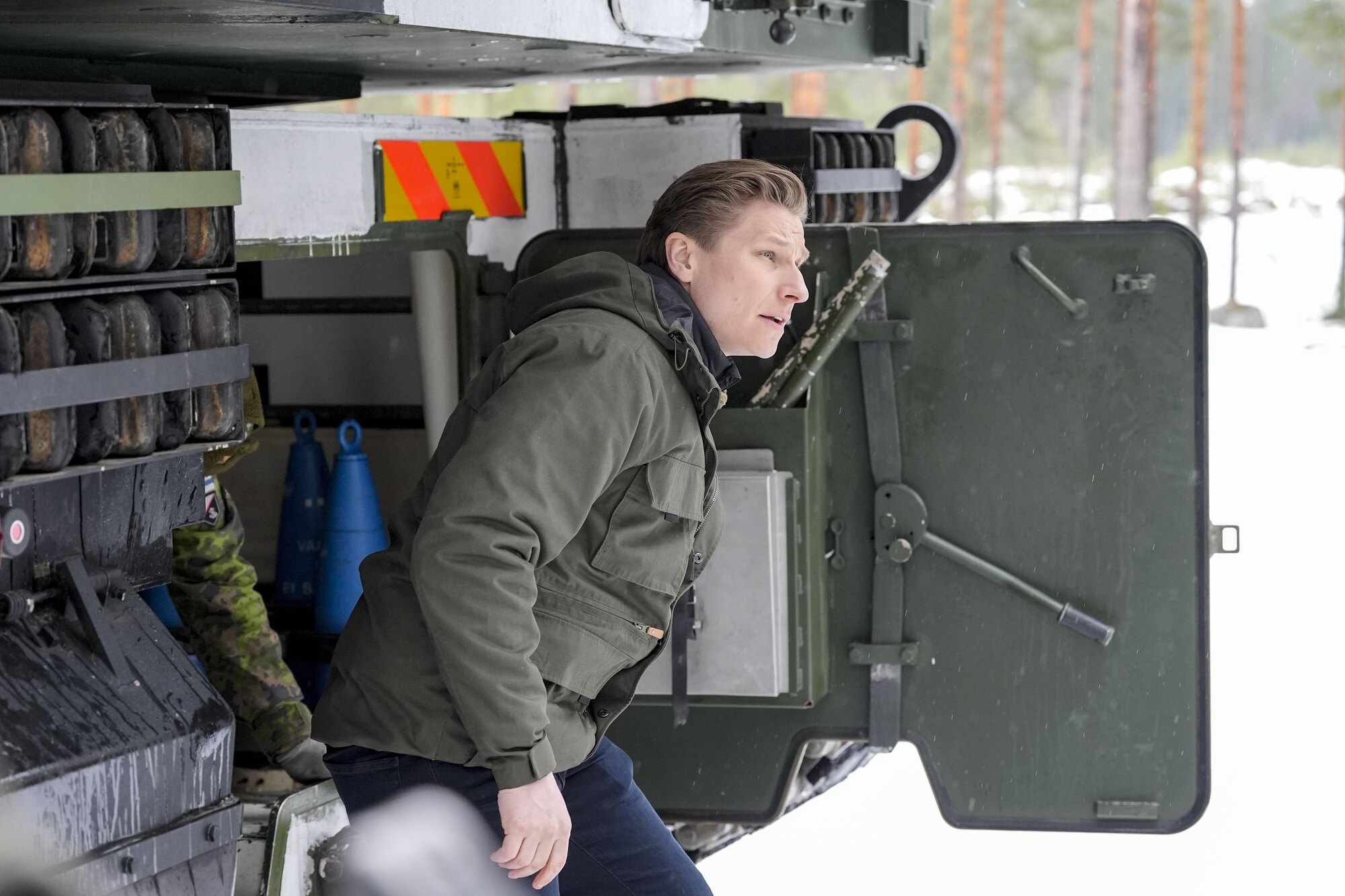
On the sidelines of the Munich Security Conference, Finland’s defence minister Antti Häkkänen said the obvious but important thing: Russia is actively building up military infrastructure in the Arctic and along the Finnish border. This is not an emotional signal — it is a strategic deployment of forces that is shifting the balance in the North Atlantic and has direct consequences for collective security in Europe.
What the minister said
“A significant portion of Russia’s largest strategic capabilities in nuclear weapons, submarines and long-range bombers is concentrated in the area of the Kola Peninsula.”
— Antti Häkkänen, Finland’s defence minister (interview with Euronews, Munich Conference)
Häkkänen emphasized that the Arctic is of “critical” importance to European defence and that surveillance and deterrence capabilities in the region must be strengthened.
What is happening on the Kola Peninsula
The Kola Peninsula is a logistical and strategic hub for the Russian Northern Fleet: it hosts nuclear submarines armed with strategic ballistic missiles, multi-role submarines, surface ships and coastal missile systems. In addition, the region houses maritime aviation units, long-range aviation, air defence systems (including S-300/S-400) and Arctic motorized rifle brigades. Such deployments enable Russia to rapidly operate in the Barents Sea and the North Atlantic — and thus to influence sea lanes and strategic nuclear deterrence.
Finland’s response and steps
Finland is not waiting. In May 2025 the country completed the first 35 km of a 4.5 m-high fence on the border with Russia. In response to the threats, NATO defensive planning in the High North was restored and an enhanced surveillance system — “Arctic Guard” — was launched. Häkkänen also noted that the Finnish armed forces are “fully Arctic” and ready to share experience with allies.
In addition, the political context is reinforced by decisions: on 10 January 2026 Finland formally withdrew from the Ottawa Convention on the Prohibition of Anti-Personnel Mines, and at the end of 2025 the government warned of possible movements of Russian troops to NATO borders under certain peace-negotiation scenarios regarding Ukraine.
Why this matters for Ukraine
The focus on the Arctic is not a local story. The strengthening of Russia’s presence on the Kola Peninsula increases the potential for sustained strategic pressure on neighbours and on maritime communications that are important for alliance supplies and strategic mobility. For Ukraine this means several realities:
- Broader coordination with allies is needed on maritime intelligence and countering undersea threats.
- Investment in surveillance systems and anti-ship and anti-submarine defence becomes a priority.
- Developing Arctic expertise in partners (for example, Finland) is a valuable resource for building more resilient defence chains.
Analytical conclusion
Minister Häkkänen’s words confirm an obvious trend: Moscow is putting the Arctic back at the center of its strategic calculations. This is not a one-day spike — it is a sustained effort to build up forces and infrastructure. Europe’s and NATO’s response should not only be a show of presence but systematic investments in intelligence, countering undersea and air threats, and sharing Arctic experience among allies. For Ukraine, the key is to monitor these processes as part of the wider security environment and to develop practical cooperation with partners to minimize risks and strengthen the capabilities of the EU and NATO in the northern direction.
“Finnish forces are fully Arctic — we are ready to share experience for better protection of the region.”
— Antti Häkkänen, Finland’s defence minister
Declarations have already begun to turn into concrete steps. The next test is whether partners can combine surveillance, policy and resources so that deterrence in the Arctic becomes real rather than nominal.



