Russian satellites spot U.S. bases in the Middle East — a risk to partners and an argument against sanctions relief
According to Ukrainian intelligence, over several days Russian satellites captured a series of images of U.S. facilities in the region. Zelensky points to this as a direct counterargument against lifting sanctions — we examine why this matters for the security of Ukraine and its partners.

By Tetiana Suchkova-Ladik
March 28, 2026 · 2 min read
Multiple satellite imaging runs in a matter of days
Ukrainian intelligence reported a series of satellite imagery captures by Russian teams of several military and energy facilities in the Middle East from 24 to 26 March. Among those recorded were Diego Garcia, the air bases Prince Sultan, Incirlik, Al Udeid, as well as oil fields and regional airports.
- 24 March — imaging of the joint US–UK base Diego Garcia (Chagos Archipelago).
- 25 March — Prince Sultan air base in Saudi Arabia (repeated observation after 20 and 23 March).
- 26 March — the Shaybah field (Saudi Arabia), Incirlik (Turkey), Al Udeid (Qatar); also recorded were Kuwait International Airport and parts of oil-production facilities.
Sources and context
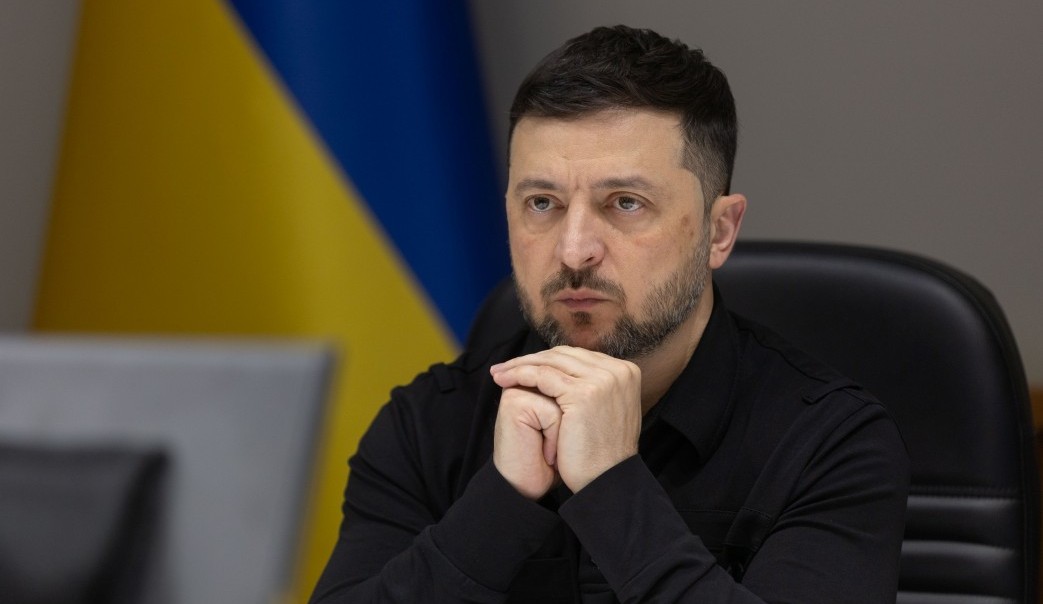
The information was announced by President Volodymyr Zelensky during a press interaction on 28 March; it is also corroborated by Ukrainian intelligence data and publications by LIGA.net. At the same time, on 26 March the United States eased some sanctions against a number of Belarusian companies — a step experts link to a prisoner exchange and political risks.
"By lifting sanctions from the aggressor, who earns money every day and transmits relevant information about attacks on American, Middle Eastern, British bases — so who is helping whom?… If the Russians are doing this, how can you lift sanctions?"
— Volodymyr Zelensky, President of Ukraine
Why this matters
Satellite intelligence is not just images: it is a signal of operational preparation. Repeated passes over targets make it possible to clarify infrastructure, access routes and vulnerable points. If this data reaches third countries — in particular, as Zelensky claims, to Iran — it increases the risk of precision strikes on critical infrastructure and military targets.
Experts and former diplomats note that easing sanctions on Belarusian enterprises can create channels for circumvention schemes and additional financial resources for Russia. Pavlo Klimkin, in a comment to LIGA.net, also pointed out that some of the decisions had domestic political logic in the US (for example, farmers' interests ahead of elections).
What this means for Ukraine and its partners
First, it is an argument in favor of maintaining pressure and sanctionary unity — because lifting restrictions can lower barriers for logistical and financial channels that Russia uses to continue its aggression. Second, it is a reminder of the importance of countering reconnaissance: enhanced air defenses, cloud and electronic countermeasures, and rapid operational protection of critical infrastructure.
Conclusion
The fact of serial imaging by Russian satellites of US bases in the region is not an isolated episode, but an element of intelligence activity with clear geopolitical consequences. Political decisions about sanctions and diplomatic exchanges must take into account not only short-term gains but also risks to the security of partners and to Ukraine itself. Whether partners are ready to convert declarations of support into long-term tools of deterrence is the key question for the coming months.



