"Rubicon" is not the reason for pressure near Kupyansk. The Armed Forces named what actually determines the situation
# Spokesperson Tregubov Refutes "Elite Unit as Main Challenge" Media Narrative Spokesperson for the Usk Operational Command Tregubov has dismissed media claims portraying an elite unit as the primary challenge. According to him, while Russia's drone center affects logistics, it is not the driving force behind offensive momentum in the sector. The actual pressure points, Tregubov stated, are Holubyivka to the north of the city and the left bank of the Oskil River.

By Tetiana Suchkova-Ladik
April 24, 2026 · 2 min read
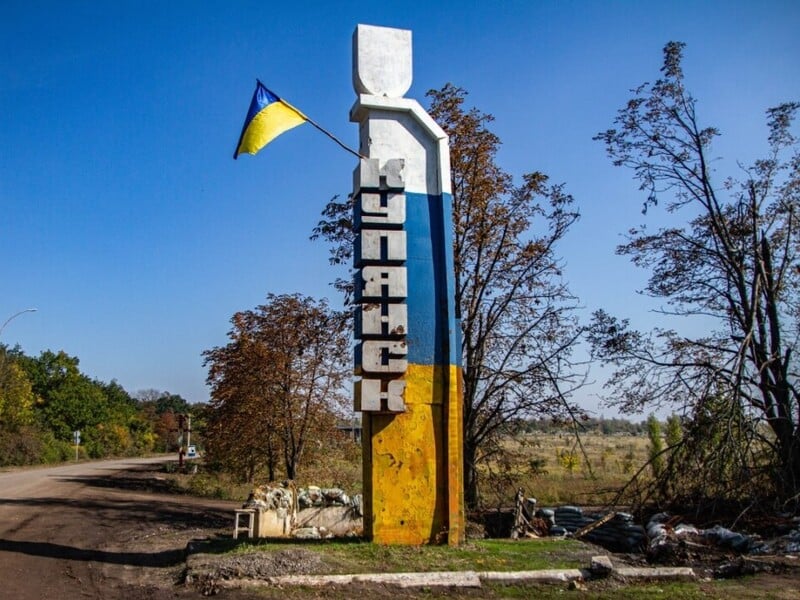
When a version appeared in the media that the redeployment of Russia's elite drone unit "Rubicon" to the Kupyansk direction directly intensified pressure from the occupiers, Viktor Trekhubov, spokesperson for the Joint Forces Group of the Armed Forces of Ukraine, rejected it. According to him, the connection between "Rubicon" and the dynamics of ground attacks is not direct.
Where it's actually "conditionally hot"
Trekhubov outlined two active points. The first is north of Kupyansk: the occupiers entered Holubivka and are trying to advance from there toward the city through underground communications. The "advancing through pipes" tactic is not new: it has been observed both in Kursk region and in other sections of the front in 2025. The second is the left bank of the Oskil River, where Russians are pressing, trying to reduce the Ukrainian bridgehead and cut off the city from supplies.
At the same time, according to Trekhubov, attacks from the south and east of the city are also ongoing — the enemy is trying to advance toward Kupyansk-Vuzlove. However, the spokesperson does not link any of these vectors with the presence of "Rubicon" as a driver of offensive efforts.
What "Rubicon" actually does
"Rubicon" is not an assault unit. It is a centralized Russian drone reconnaissance center whose documented specialization is the destruction of logistics. On the Kupyansk direction, Vladislav Zolotarov, an officer of the "Orion" unit of the "Guard of the Offensive" brigade, described its work specifically: drones attack transport every 3–5 minutes, the goal is to cut off supplies to the front line.
"On our direction, there is directly an enemy unit called Rubicon — it is an elite unit whose main task is to stop AFU supplies"
Officer Vladislav Zolotarov, "Orion" unit, telemarathon
That is, "Rubicon" complicates rotation, delivery of ammunition and food — and therein lies its real impact on the combat capability of units in the city. But this is a different level of threat than ground pressure.
Context: why the media frame turned out to be inaccurate
The history of "Rubicon" helps explain why the temptation to link its presence with an escalation is great. According to Wikipedia and NV analysis, this unit was involved in exhausting the AFU in Kursk region: systematic work on destroying logistics in February–March 2025 led to a withdrawal from the Kursk bridgehead. On the Kostyantynivsk direction, "Rubicon" destroyed up to 70% of drone positions of one of the Ukrainian brigades in a week.
Since February 2025, the unit has expanded its geographic reach to include the Kupyansk, Pokrovsk, Kharkiv, Vugledar, and South Donetsk directions. That is, its appearance is part of Russia's systemic strategy, not a situational decision for a specific assault.
That is why Trekhubov's statement is not a minor clarification for specialists. It separates logistical threat (drones cut supply lines) from tactical dynamics (ground attacks from Holubivka and along the Oskil). Mixing them means misdiagnosing the problem and, accordingly, incorrectly forming expectations.
If "Rubicon" really cuts logistics as effectively as it did in Kursk region, the question is not whether Kupyansk will fall under the pressure of assaults, but how long the units in the city will be able to hold out without stable supplies.



