Rubio Fixes Pause in Negotiations — and Explains It by Ukraine's Confidence on the Front
U.S. State Secretary acknowledged that the peace process "has somewhat lost momentum," and cited an unexpected reason: Ukraine's strengthened position on the battlefield. According to this logic, the better Kyiv fights, the fewer incentives it has to sit at the negotiating table.

By Tetiana Suchkova-Ladik
May 14, 2026 · 2 min read
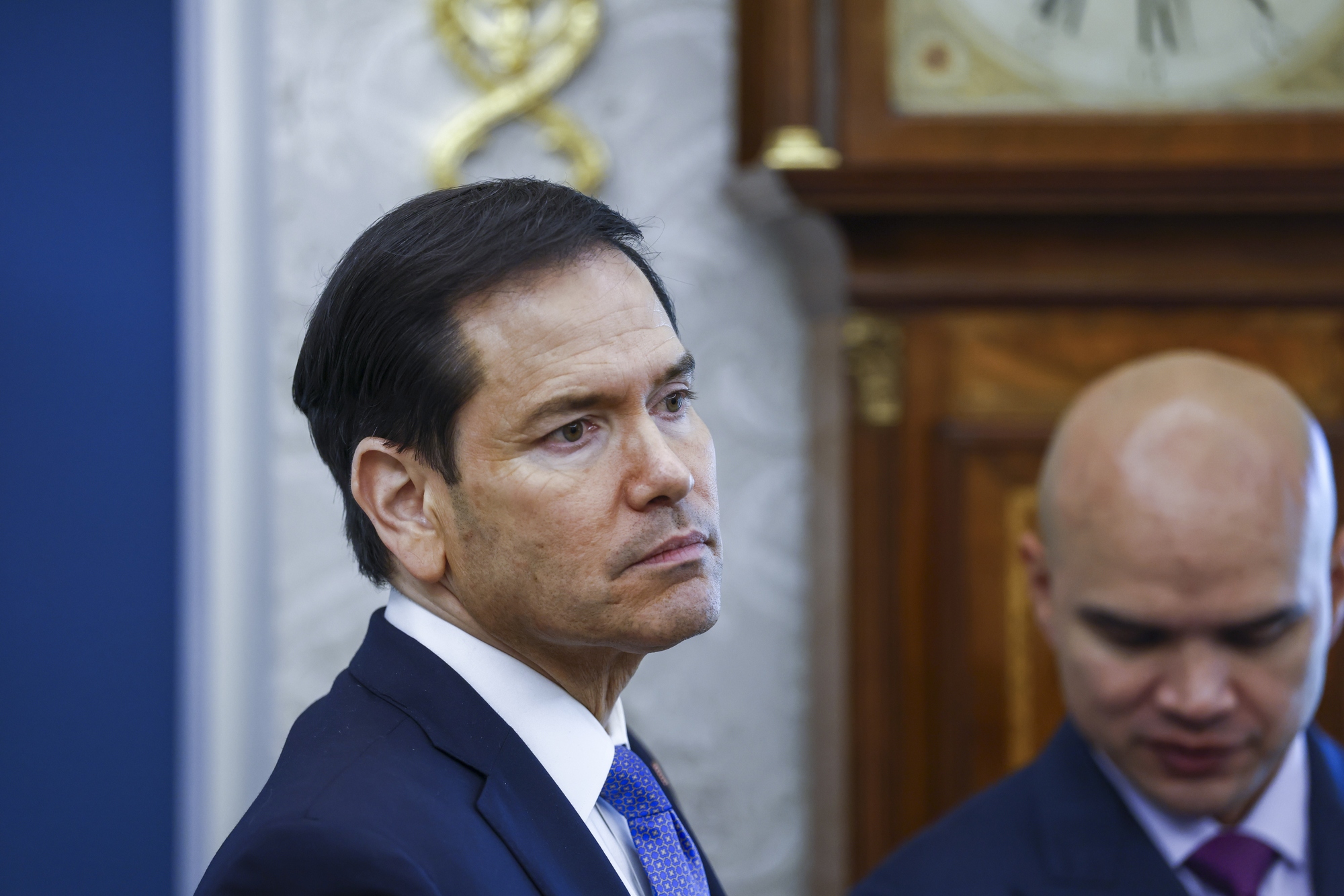
US Secretary of State Marco Rubio acknowledged in a Fox News interview that peace negotiations regarding Russia's war against Ukraine "have somewhat lost momentum for various reasons." But the list of these reasons proved revealing.
What Rubio named as the drivers of the pause
According to the Secretary of State, the negotiation process has been slowed not only by Moscow's position. He directly listed: Ukrainians are becoming increasingly confident in their battlefield positions, they have survived the winter — while Russians, in turn, feel a certain optimism due to rising oil prices. Both sides believe time is on their side.
"Ukrainians feel increasingly more confident in their battlefield positions; they have survived the winter; Russians feel a certain optimism because the price of oil has risen."
Marco Rubio, Fox News
This logic has concrete confirmation. According to an ISW assessment published on May 10, Russian forces have not achieved any significant operational breakthrough over the past year, while the Ukrainian Armed Forces have gained the most notable positions on the front since the Kursk operation in August 2024 — in particular, they liberated a significant part of Kupyansk and over 400 square kilometers in the south during counteroffensive operations.
Washington's position: ready, but not imposing
Rubio confirmed that the United States maintains its intention to serve as a mediator — and is convinced that Washington is the only country capable of doing so.
"We are ready, the President is ready, his team is ready to facilitate a diplomatic end to the war."
Marco Rubio, Fox News
At the same time, the Secretary of State cautioned: if neither side wants to move forward, the United States will not impose the process. A week earlier, he suggested the possibility of Washington withdrawing from mediation in the absence of progress.
The price of the pause — in lives and money
Rubio cited figures that are rarely heard in diplomatic discourse: Russia loses between 15,000 and 20,000 soldiers killed monthly, and he called the damage to the Russian economy "colossal." For Ukraine — two decades of reconstruction regardless of when the war ends.
- Russian losses: 15,000–20,000 killed per month according to the US Secretary of State's estimate
- Ukraine's reconstruction: at least 20 years, according to Rubio
- State of negotiations: a three-way format has not convened since February 2026
According to Interfax-Ukraine, Russia recently announced that it is withdrawing from the negotiation process and will not return unless Ukraine withdraws its armed forces from Donetsk and Luhansk regions — a condition Kyiv will not accept.
If the Ukrainian Armed Forces maintain the pace of their counteroffensive in the south and in the Kupyansk direction through the end of summer — will Moscow's calculation about "whose time it is" change?



