Rubio disputed Zelensky's statement on guarantees and the Donbas — what it means for Kyiv
In high-stakes diplomacy, it's not loud words but clarifications that matter. Marco Rubio openly rejected the claim that American guarantees were contingent on a withdrawal from Donbas — this changes the framework of negotiations and affects Kyiv's strategic decisions.

By Tetiana Suchkova-Ladik
March 27, 2026 · 2 min read
Main
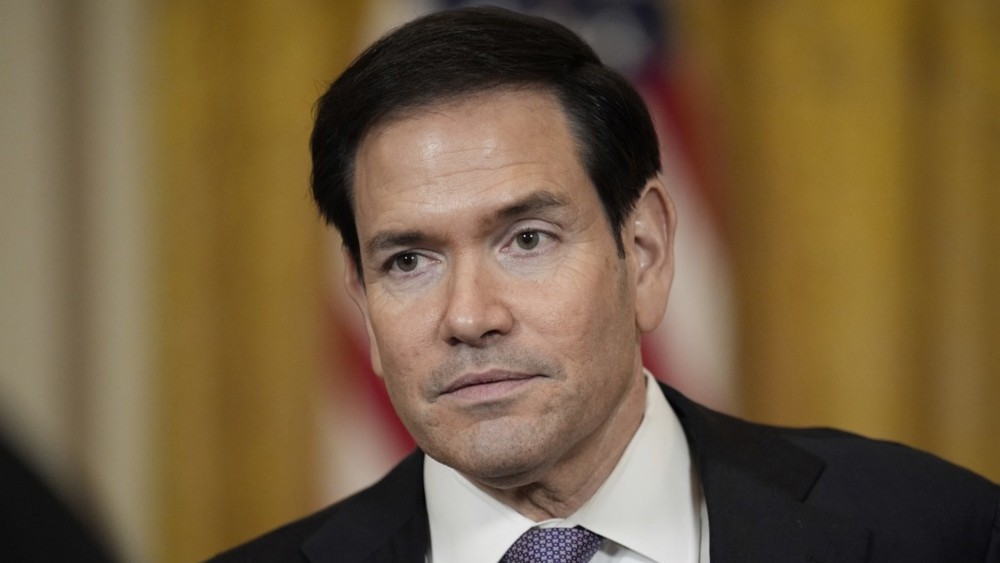
Marco Rubio categorically rejected President Volodymyr Zelensky’s words that American security guarantees were supposedly tied to Ukraine’s withdrawal from the Donbas. According to Rubio, such claims are “a lie,” and he emphasized that the guarantees will not take effect while the war continues, otherwise it would effectively mean drawing the United States into combat.
What Rubio actually said
"This is a lie. I saw him say it, and it’s unfortunate that he stated it — because he knows it’s not true ... security guarantees will not come into effect until the war is over. Because otherwise you yourself [the guarantor] would become involved in the war."
— Marco Rubio, U.S. Secretary of State (comment to Sky News)
Rubio also explained that by guarantees he means troops ready to intervene and defend, and introducing such mechanisms during an active war would mean the guarantor’s direct involvement in the conflict.
Why this matters for Ukraine
First, this clarification from an important American official changes the public frame of the negotiations: security guarantees should not look like an immediate territorial exchange for formal agreements. Second, this stance relieves some pressure on the Ukrainian side to make public concessions under the pretext of “receiving guarantees.” Third, it is a signal to the domestic audience — decisions about territory and security remain within Kyiv’s independent choice, but those choices will have consequences for the duration of the war.
Context and reactions
The comment came from a Sky News broadcast; earlier Ukrainian and international media reported pressure in various circles of American politics to reach an agreement. LIGA.net and other outlets noted that talks in the Ukraine–U.S. format took place without Russia’s participation, and the EU’s foreign policy chief Kristina Kallas expressed concern about American pressure on Kyiv regarding territorial concessions.
"We are not insisting on this. We explained it to them [the Ukrainian side]. The choice remains theirs. It is not for us to decide for them."
— Marco Rubio, U.S. Secretary of State (comment to journalists)
Consequences and possible scenarios
Experts point to two logics now intersecting: the diplomatic — where partners seek paths to compromise, and the military — where realities on the front dictate uncompromising demands regarding territory. If guarantees are formally tied to the cessation of military actions, rapid decisions should not be expected; if, however, mechanisms can be applied partially (for example, political and economic guarantees), then there will be room for maneuver.
Conclusion
Rubio’s public statements reorient the discussion: focusing on what “security guarantees” should mean in practice. For Ukraine, this is a reminder that responsibility for key decisions remains with Kyiv, while international guarantors clarify their limitations. The next move depends on a combination of diplomacy, concrete guarantees, and the situation at the front — whether words will turn into concrete security mechanisms remains open.



