Rubio in Munich: U.S. urges Europe to become stronger — what it means for Ukraine
Senator Marco Rubio in Munich described the restoration of "Western civilization" as a shared task of the United States and Europe. We examine why this matters now and what practical consequences it has for Ukraine's security and economic resilience.

By Tetiana Suchkova-Ladik
February 14, 2026 · 2 min read
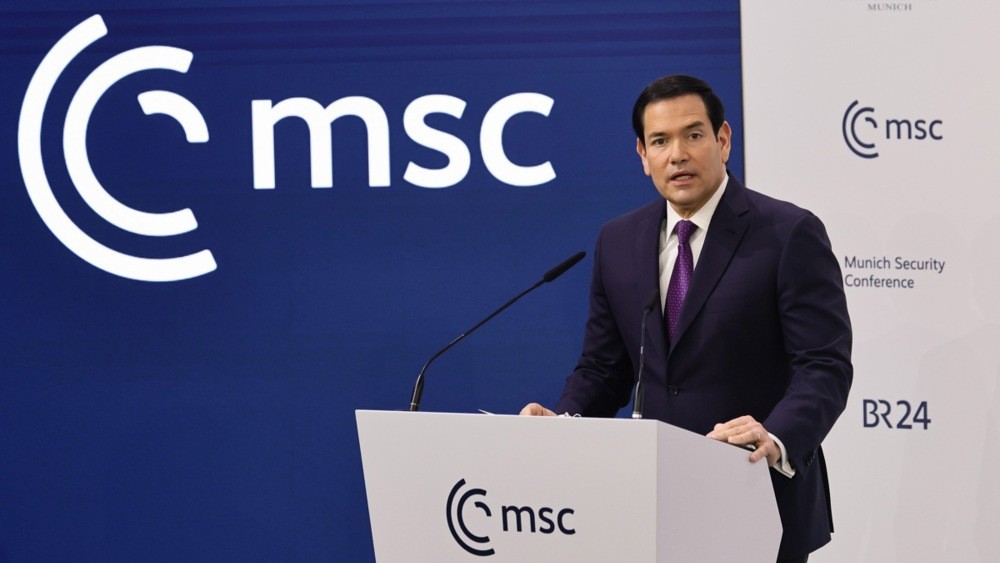
In high-level diplomacy, it's not loud statements but quiet agreements that matter
At the Munich Security Conference, U.S. Secretary of State Marco Rubio called for the restoration of a close Western alliance. His speech combined civilizational rhetoric with concrete points on security, the economy and institutional reconstruction — signals that have practical significance for Ukraine today.
What Rubio said
Key messages of the speech: the West is a historic alliance that won the Cold War; after that there was a period of overconfidence that led to mistakes in foreign policy; now the U.S. advocates rebuilding sovereignty, control over supply chains and reforming global institutions.
"We want Europe to be strong. We believe that Europe must survive"
— Marco Rubio, U.S. Secretary of State
Rubio also emphasized the need to build Western supply chains for critical minerals, to develop artificial intelligence and economic infrastructure that will not be vulnerable to external blackmail. Washington, he said, is ready to act independently but prefers to work together with Europe.
Why this matters for Ukraine
This is not just rhetoric. If the call turns into policy, several practical opportunities open up for Ukraine: strengthened military cooperation; support for restoring industrial capacity in Europe, which could reallocate production chains in Kyiv's favor; increased investment in critical sectors and technologies important for defense capability.
Analysts note that the emphasis on sovereignty and protecting internal cohesion means pressure on European elites to make clearer decisions on sanctions and aid to Ukraine. But it also places a task on Kyiv to more rapidly demonstrate concrete results of reforms and projects that will serve the West's common interests.
Risks and limitations
Rhetoric about a "revival of civilization" can mobilize support, but at the same time will encounter political realities inside individual European countries: electoral turbulence, economic pressure and fear of migration. The effectiveness of Rubio's appeals will depend on whether they are turned into budgetary decisions, industrial contracts and political guarantees.
What’s next
Things to watch in the coming months: signed contracts securing critical supply chains, concrete investments in joint technological projects, and the fate of military and financial aid to Ukraine. So far, this is a strong political signal from the United States. The next question: will numbers and agreements confirm it?
Whether words will turn into concrete steps is the key question for Ukraine's security and for preserving European resilience, on which our recovery also depends.



