Rubio Heads to Orbán and Fico: Why the Visit Could Affect Energy Policy and Support for Ukraine
According to Reuters, Senator Marco Rubio's trip to Hungary and Slovakia will address energy agreements and NATO commitments — we examine why this matters for Ukraine's security.

By Tetiana Suchkova-Ladik
February 15, 2026 · 2 min read
Behind-the-scenes talks: what and when
According to Reuters, Senator Marco Rubio is due to hold a series of meetings in Slovakia and Hungary on February 15–16 after taking part in the Munich Security Conference. Officially the visit has been announced as an opportunity to "cement relations," but on the agenda are questions of energy, bilateral relations and commitments within NATO, which directly concern Ukraine's interests.
"These are countries that have very strong [relations] with us, cooperate closely with the United States... and it's a good opportunity to visit them,"
— Marco Rubio, quoted by Reuters
What is known about the counterparts
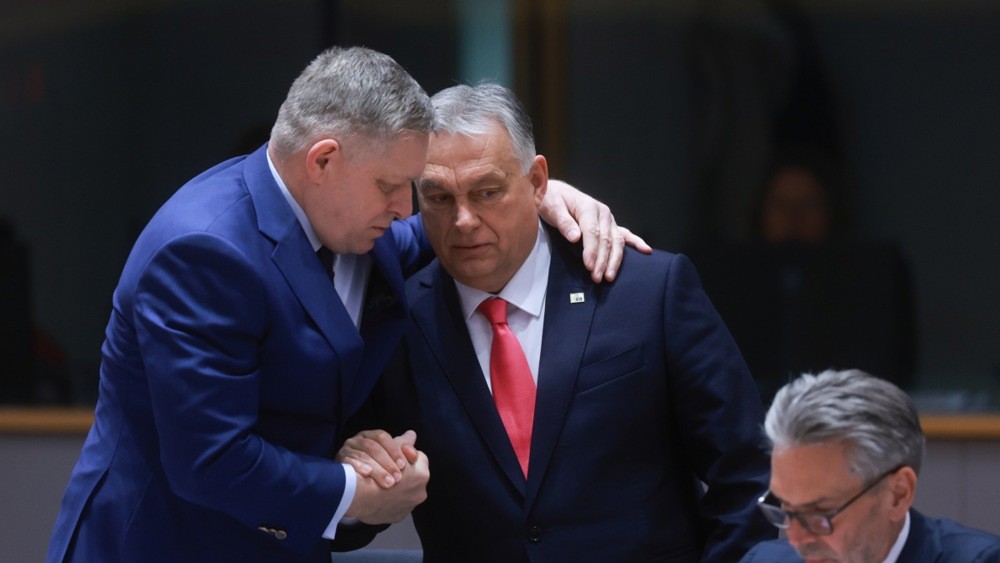
Rubio is set to meet Slovak leader Robert Fico and Hungarian Prime Minister Viktor Orbán. Both politicians have repeatedly been at the center of EU criticism over adherence to democratic standards and for closer contacts with Moscow; they have also slowly restored or left open channels for energy purchases from Russia, which raises concerns in Washington and Kyiv.
Why this matters for Ukraine
Questions about oil and gas from Russia, and positions on sanctions, are not an internal EU dispute but a direct element of the security architecture that affects the ability to support Ukraine. If Budapest and Bratislava maintain energy interdependence with Russia or push to limit sanctions, it weakens the West's unified position to pressure the Kremlin.
US position: pressure or strategic reminder?
Rubio's visit, as described by Reuters and Politico, has several goals: to remind partners of the importance of collective defense in NATO, to underline expectations regarding solidarity in sanctions policy, and to test the readiness of certain capital elites to adjust energy decisions. This is not a public message of "punishment," but a diplomatic measurement of risks — and a signal to partners that energy security and support for Ukraine remain a priority for a segment of the American political elite.
Possible consequences
In the short term — likely statements and agreements on dialogue; in the long term — two key scenarios: 1) if talks lead to gradual alignment of energy routes and coordination of sanctions, this will strengthen Ukraine's position; 2) if Hungary and Slovakia maintain policies at odds with the majority of the EU, this gives Moscow additional levers of influence and complicates the consolidation of support for Kyiv.
Conclusion
Rubio did not come to "save" or "condemn" — he is testing partners' readiness to act in the interests of collective security. For Ukraine, it is important to monitor the outcomes of the meetings not through emotions but through concrete consequences for energy independence and assistance mechanisms. The ball is now in the partners' court: will declarations turn into practical steps — and what will that change on the front of diplomatic and energy pressure on the Kremlin?



