Rutte: Front stabilizes, Russia loses more soldiers than it mobilizes
NATO Secretary General at a briefing following the Ramstein-34 meeting noted a shift in front-line dynamics in favor of Ukraine — while citing Russian casualty figures that cast doubt on Moscow's ability to maintain its offensive pace.

By Tetiana Suchkova-Ladik
May 22, 2026 · 2 min read
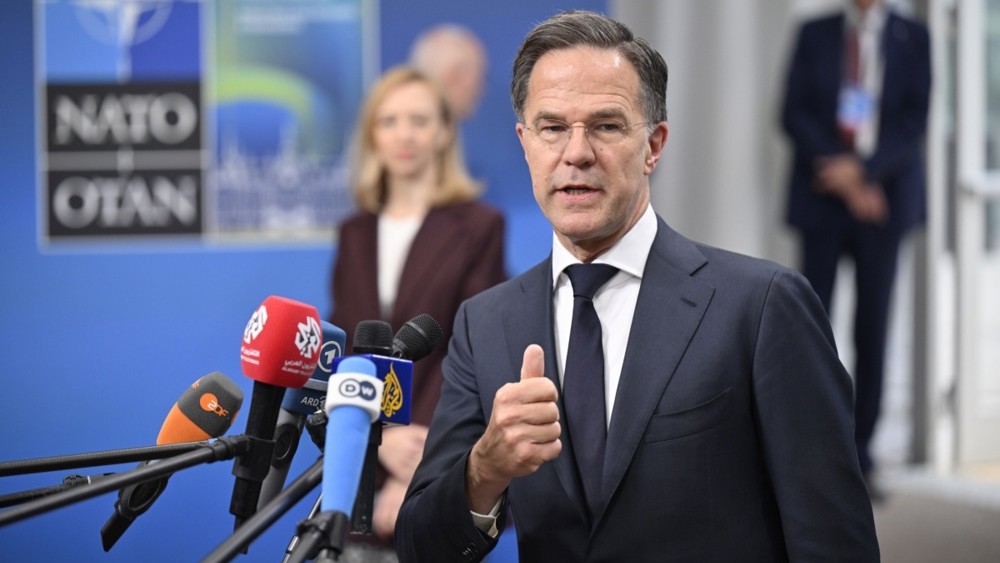
NATO Secretary General Mark Rutte offered an assessment of the front-line situation following the 34th meeting of the Ukraine Defense Contact Group in the "Ramstein" format. His conclusion is measured, but specific: Putin has little to celebrate now.
«It is clear that Ukraine is building a strong defense. The front line is stabilizing. There are even reports that Ukraine is, in net terms, retaking territory — not massively, but at least stabilization is happening, and the direction of movement is potentially correct».
Mark Rutte, NATO Secretary General
Rutte also noted: Russia's monthly losses at the front exceed the cumulative losses of the USSR over 10 years of the Afghan war. According to data presented by Ukraine's Defense Minister Mykhailo Fedorov on the same day, in April 35,203 Russian military personnel were killed or seriously wounded — all confirmed on video. This is already the fifth consecutive month that Russia is losing more than it can mobilize.
What lies behind the figures
According to Fedorov, the average cost for the Russian army is 254 killed per square kilometer, and in Donetsk region this figure reaches 428 people. Rutte called such a situation «astounding» and separately noted the technological component: Ukrainians demonstrate «brilliant ingenuity» in the application of drones. 194 units of the Armed Forces of Ukraine have already confirmed the interception of Shahed drones with interceptor drones — another record.
Against the backdrop of these figures, Rutte called on allies to increase support to $60 billion in defense assistance in 2025, directly stating: «Too few countries are bearing too great a burden».
Context: winter and air defense
Fedorov recalled that between November and March Russia fired 462 ballistic missiles at Ukraine, approximately 600 cruise missiles and nearly 27,000 Shahed drones — with the goal of destroying the energy system. Despite this, the front line did not collapse. Zelenskyy confirmed at a briefing: five partners have already contributed funds to the PURL program, Norway is allocating over $500 million for unmanned vehicles and logistics, the Netherlands — over 200 million euros.
- 35,203 — confirmed Russian losses in April (Ukraine's Defense Ministry)
- 5 consecutive months — losses exceed mobilization rate
- $60 billion — target indicator for allied aid in 2025 according to Rutte
- 194 units of the Armed Forces of Ukraine — confirmed interceptions of Shahed drones by interceptor drones
Rutte avoided predictions regarding a ceasefire or negotiations. His assessment concerned only the actual state of the battlefield — and it is precisely this that gives it weight: the Alliance's Secretary General has no reason to embellish the picture for Kyiv.
The key question that remains open: if Russian losses have already exceeded the mobilization rate for five consecutive months — does Moscow have sufficient reserves to maintain the current intensity of the offensive through the end of 2025, or will the next «Ramstein» record not stabilization, but already a pullback?



