Seoul demands removal of banner "Victory Will Be Ours" — diplomatic incident amid rising security tensions
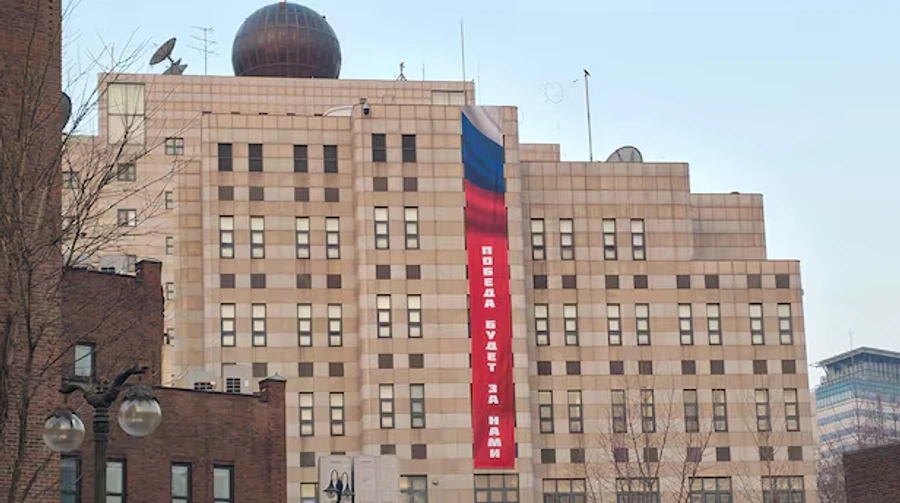
A 15‑meter banner in the colors of the Russian flag bearing a slogan about “victory” has appeared on the wall of the Russian embassy in central Seoul. Why South Korea insists on its removal and what this says about the broader security context in the region — we examine.

By Tetiana Suchkova-Ladik
February 23, 2026 · 2 min read
What happened
According to Yonhap, a large banner in Russian reading Победа будет за нами ("Victory will be ours") appeared on the exterior wall of the Russian embassy in central Seoul. Its size is estimated to be about 15 meters. The banner was placed ahead of the fourth anniversary of Russia’s full‑scale invasion of Ukraine (24 February 2026).
On 22 January, the Ministry of Foreign Affairs of South Korea asked the Russian mission to remove the banner. As of the morning of 23 February the banner was still hanging; the MFA statement did not indicate whether the Russian side had responded.
Why it matters for Seoul
The MFA’s official letter stresses that such public displays can create “unnecessary tension” in relations with local residents and other states. The statement also reiterated Seoul’s position that Russia’s invasion of Ukraine is illegal, and demanded an end to military cooperation with North Korea, which Seoul called a serious security threat and a violation of the UN Charter and UN Security Council resolutions.
"We have conveyed to the Russian side our position regarding the recent placement of a banner on the exterior walls of the Russian embassy in Seoul and public statements by the Russian ambassador to South Korea."
— Ministry of Foreign Affairs of the Republic of Korea (statement, Yonhap)
Context: not an isolated episode
This incident comes against a backdrop of existing tensions: in December 2025 nine Chinese and Russian military aircraft entered the KADIZ zone over South Korea — a fact that heightened security concerns in the region. Analysts in Seoul and Washington note that the appearance of such symbolic messages abroad may be part of a broader information‑psychological campaign or an attempt to demonstrate the solidity of domestic support for the relevant foreign‑policy course.
What could happen next
Possible scenarios: Seoul may insist on the official removal and a public response from Moscow; diplomatic steps could include lodging a protest or restricting protocols of engagement. For Ukraine and international partners, this episode is another signal that Russia’s stance is drawing reactions not only in Europe but also in key Asian capitals.
Questions for observers and partners: will the symbolic provocation turn into a more serious diplomatic rupture, and how will Moscow respond — this will determine whether the incident remains local or amplifies a broader trend of isolation and escalation in relations between Russia and countries in the region.
Source
Information — according to a statement by the Ministry of Foreign Affairs of the Republic of Korea and a report by Yonhap.



