US in Venezuela: strikes, blockade and 'govern until transition' plan — what it means for the region
The operation in Caracas is not just another episode in geopolitics. It is a precedent concerning the use of military force, control over oil, and the transfer of power that warrants close attention.

By Tetiana Suchkova-Ladik
January 3, 2026 · 3 min read
Why this matters now
On the night of January 3 explosions were heard in Caracas, reports came of aircraft overflights and partial power outages. CBS News reports U.S. airstrikes on Venezuela; in Washington this is presented as a large-scale operation that, according to the president, disabled a significant portion of the country's military capability. For a reader in Ukraine this episode matters not only as news from Latin America — it is a test of international practices of intervention, energy policy, and cross-border justice.
What the U.S. president said
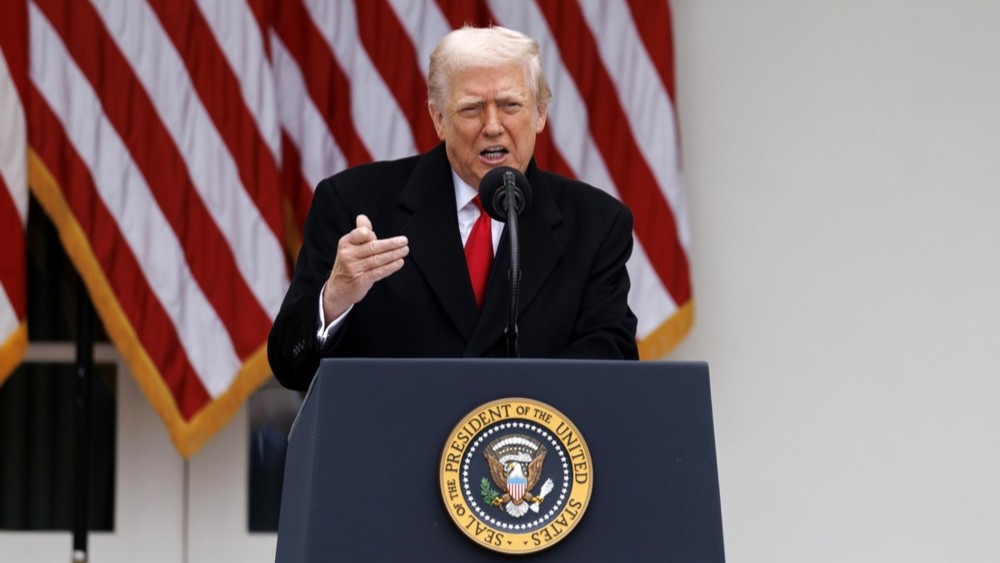
Donald Trump characterized the operation during a briefing as extremely successful and bloodless for American forces. He also announced the U.S. intention to "govern" Venezuela until a "safe and proper transition of power" is ensured and accused Venezuela's leadership of involvement in drug trafficking.
"No U.S. service member was killed, no piece of equipment was lost"
— Donald Trump, President of the United States
"Maduro will face the full force of American justice on American soil"
— Donald Trump, President of the United States
Facts to keep in mind
- CBS News reports airstrikes; local reports describe explosions and partial power outages in Caracas.
- Trump claimed that Nicolás Maduro was allegedly captured and taken out of the country; this information currently requires independent confirmation.
- The U.S. announced a naval blockade that, according to the administration, has been in effect since mid-December: sanctioned oil tankers are being blocked.
- The U.S. president also announced that major U.S. oil companies will "enter" Venezuela to restore infrastructure and drive economic recovery — this combines military and economic scenarios of intervention.
Analysis: why the U.S. acted and what the consequences are
The decision to carry out strikes and impose a blockade has three key motivations that analysts point to: a security one (protecting U.S. interests and citizens), a punitive-legal one (holding parties responsible for drug trafficking), and an economic one (control over oil flows). Each of these motivations provides an explanation for the actions and at the same time creates risks — from escalation with other regional actors to legal and diplomatic consequences for international law.
International relations experts note that the phrase "govern until a transition" creates a precedent of external administration of a state. This raises questions of legitimacy and trust: will neighbors and key international players accept such a transition, and what mechanisms will be used to hand power back to local institutions?
What this means for Ukraine
There are three lessons important for Ukraine: first, precedents of external intervention can change the rules of major-power politics — this concerns both security and energy; second, control over oil assets is again moving to the center of geopolitical struggle; third, the international reaction to such moves will determine how quickly similar practices become "routine." All of these aspects are directly related to Ukraine's national security and energy resilience.
Conclusion
We are seeing a complex operation with military, economic, and legal logic. So far much of the information comes from statements by the U.S. administration and media reports; independent verification of several key claims is still pending. The question is whether partners will be able to turn the current statements into legitimate and controlled institutional procedures — and what the reaction of the international community will be, which will determine the long-term consequences of this precedent for regional and global security.



