"Bumblebee" from Mindych's films: 9 hectares near Bukovel and hotels – while the war was ongoing
Igor Khmelov, who was referred to by the pseudonym "Shmel" in recordings of the "Midas" operation, has registered approximately 24 land plots in the Carpathians worth $4.5 million since 2022 — and this is only what journalists were able to trace.

By Tetiana Suchkova-Ladik
May 21, 2026 · 2 min read
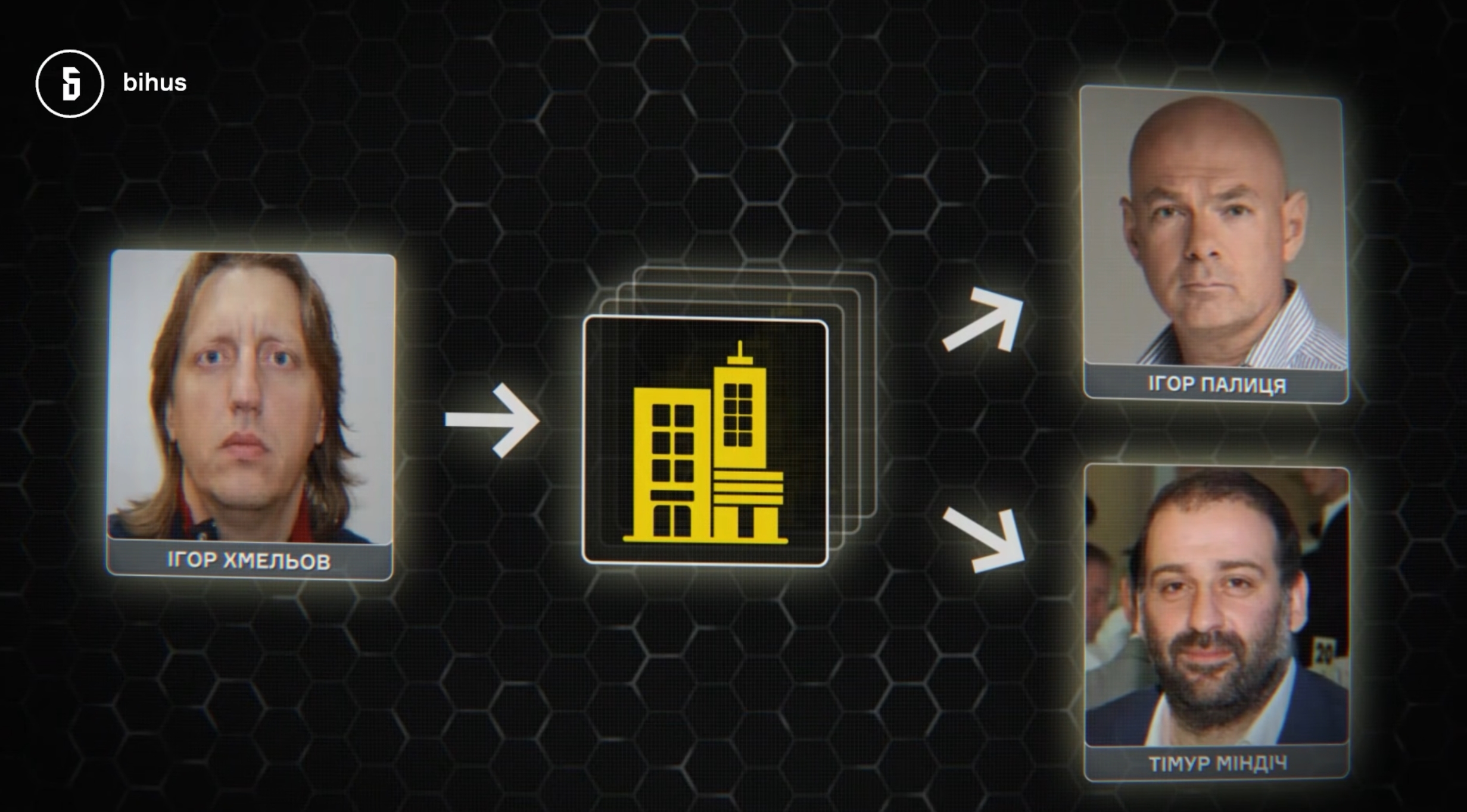
When Russia launched a full-scale invasion in 2022, Igor Khmelov — business partner of Timur Mindich and former top manager of defense contractor Fire Point — began purchasing land in the Carpathians. According to an investigation by Bihus.Info, by early 2026, approximately 24 land plots with a total area of ~9 hectares in the village of Yablunytsia near the Bukovel resort were registered through companies associated with Khmelov.
Who is "Shmel" and why it matters
In recordings of Operation "Midas," known as "Mindich's tapes," Khmelov appears under the pseudonym "Shmel" — as reported by People's Deputy Yaroslav Zheleznyak. He, along with Fursenko ("Ryoshyk") and Shtilerman ("Elektronik"), belongs to the circle of individuals connected to Fire Point — a defense contractor that received state contracts worth approximately one billion dollars.
A telling detail from those same recordings: when in May 2025 Khmelov allegedly wanted to give an interview to Bihus.Info, Zuckerman called this step "extremely dangerous due to the risk of exposing the scheme." According to Obozrevatel, in June 2025 Fursenko, Zuckerman, and Mindich decided to immediately dismiss Khmelov to sever any formal connection with him.
What exactly was purchased
The land plots purchased in Yablunytsia, according to journalists' estimates, could have cost around $4.5 million. On these territories, a hotel, restaurant, and glamping facility were already operating, and later another hotel complex appeared. Eventus Management company — through which assets were partially registered — was initially led by Mindich (2014–2016), and later Khmelov became one of its owners (2019–2023).
"The involvement of figures in the corruption scandal with one of Ukraine's largest defense contractors does not indicate abuse within Fire Point itself"
Yaroslav Zheleznyak, People's Deputy
This caveat is important: the question is not about the quality of weapons the company manufactures. The question is — where the money came from for the Carpathian hectares and hotels purchased in the midst of full-scale war.
Connections that are hard to call coincidental
- Khmelov actively cooperated with Igor Palytsia — co-owner of Bukovel itself and People's Deputy from the "For the Future" faction.
- In December 2025, the Recovery Service of Ivano-Frankivsk Region announced a tender for design documentation of a new road in the villages of Bystrytsya, Polyanytsia, and Yablunytsia — exactly where the purchased assets are concentrated.
- The chronology of joint businesses with Mindich can be traced back to 2008: Khmelov acted as a guarantor in LLC Forent, where Mindich invested $75,000.
If investigators from the SAP and NABU in the "Midas" case gain access to the financial flows of Eventus Management and related companies — it will become clear whether the Bukovel hectares are "Shmel's" personal capital or merely a conveniently registered asset of a broader scheme.



