Shmyhal on energy: why the defense minister's move matters for restoring networks
The President has proposed Denys Shmyhal for the post of Deputy Prime Minister — Minister of Energy. This is not just a personnel reshuffle: it is about accelerating the restoration of infrastructure after Russian strikes and strengthening coordination across sectors.

By Tetiana Suchkova-Ladik
January 3, 2026 · 2 min read
President's position
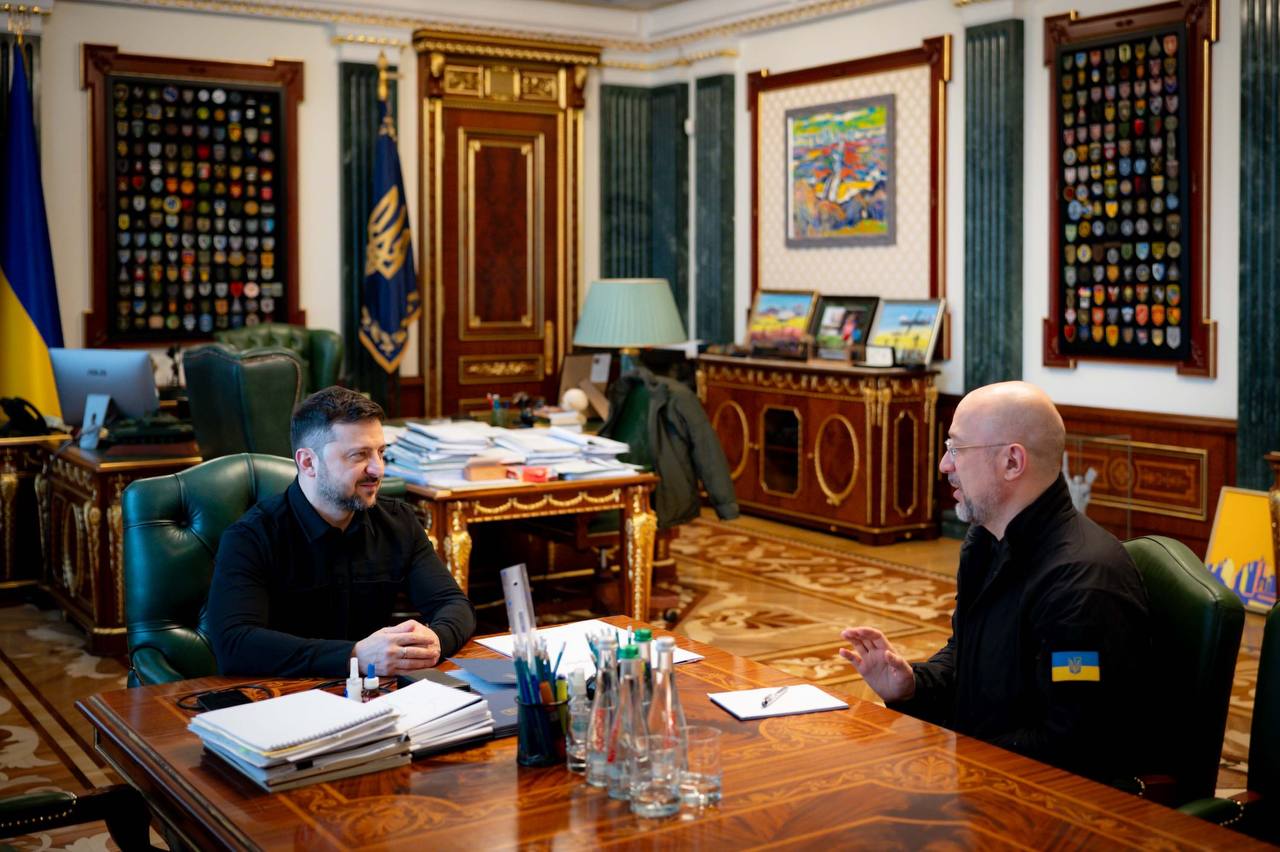
Volodymyr Zelenskyy announced that he expects support from the Verkhovna Rada for the candidacy of the current Minister of Defence, Denys Shmyhal, for the post of Vice Prime Minister — Minister of Energy. The President emphasized that it is the systematic approach Shmyhal demonstrated at the Defence Ministry that is also needed in the energy sector.
"It is important that after every Russian strike we can promptly restore what was destroyed and that the development of Ukrainian energy is stable and sufficient for Ukraine's needs"
— Volodymyr Zelenskyy, President of Ukraine
Why this matters
Energy during wartime is a matter of security and everyday life. When networks are damaged by attacks, the decisive role is played not only by repair crews but also by the coordination of logistics, financing, and interagency cooperation. These are precisely the strengths the President attributes to Shmyhal.
Context and timeline
Shmyhal has headed the Ministry of Defence since 17 July 2025. Prior to this, personnel changes in the energy sector accelerated: on 19 November 2025 parliamentarians approved the dismissal of former minister Hrynchuk amid an NABU investigation in the "Midas" case. Simultaneously, consultations are taking place at the highest level — Zelenskyy discussed the candidacy with Prime Minister Yuliia Svyrydenko.
Pros and risks of the decision
Advantages: faster decision-making during crises, unified coordination of infrastructure restoration, the possibility of combining defence logistics with the reconstruction of energy systems.
Risks: a personnel vacuum at the Ministry of Defence, resistance in parliament, questions about technical expertise in complex energy matters, and increased scrutiny from anti-corruption investigations in the sector.
What comes next
The decision must pass through parliament — and here the decisive factors will be not only the vote but also the plan to turn declarations into concrete budgets, contracts, and technical restoration programmes. Analysts and the expert community are already watching whether the new leader can combine military coordination with long-term energy reforms.
Summary: this personnel decision is an attempt to combine operational speed and systemic approach across two critically important spheres. The ball is now in parliament's court: will it back this format, and will promises be translated into practical steps for secure and stable energy supply.



