Xi Promised Not to Arm Iran — But Beijing Was Already Discussing Secret Supplies Before the Meeting
Trump returned from Beijing with two statements: China will support shipping through the Strait of Hormuz and will purchase 200 Boeing aircraft. Behind the scenes, American intelligence detected negotiations between Chinese companies and Iran regarding arms supplies through third countries.

By Tetiana Suchkova-Ladik
May 14, 2026 · 3 min read
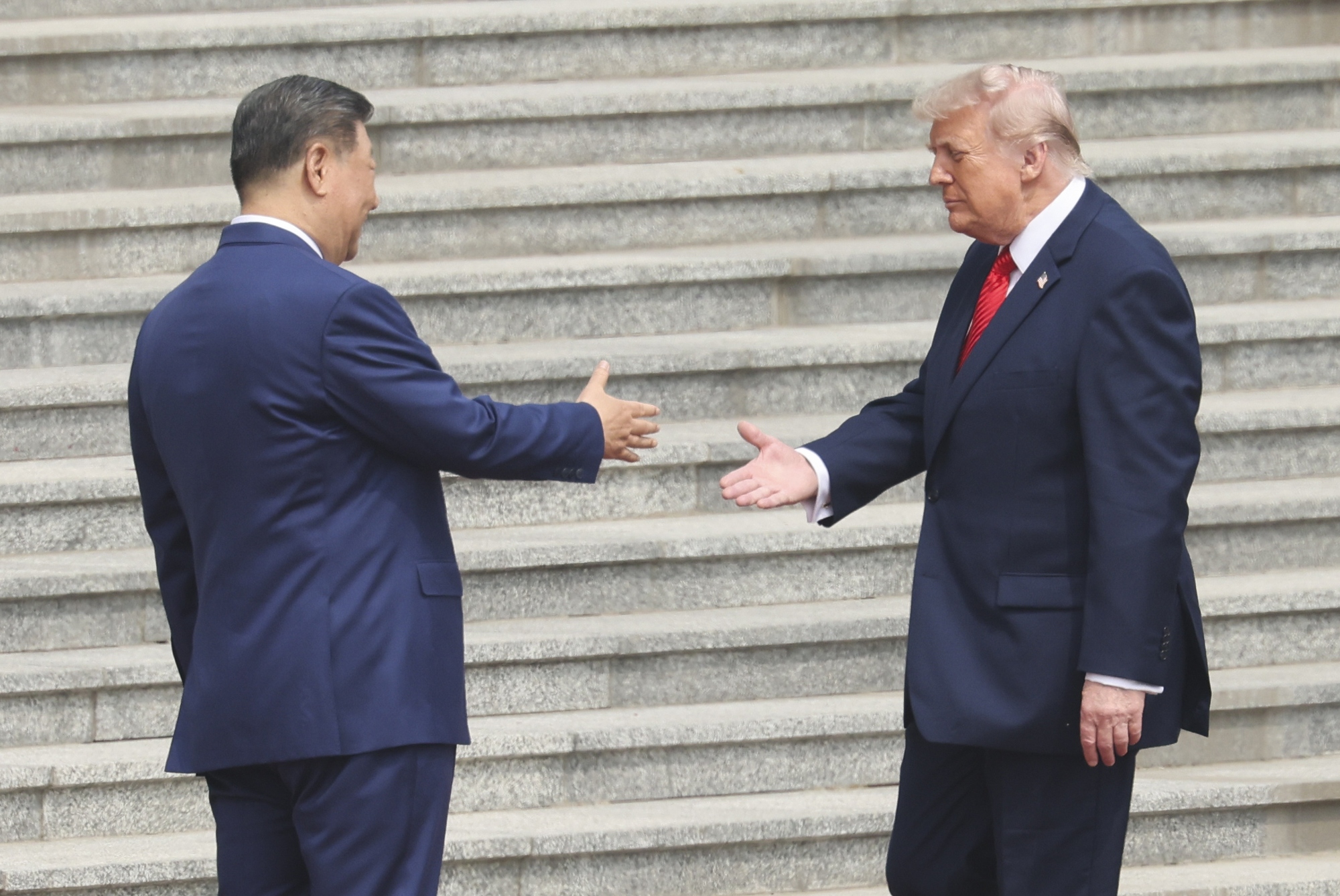
A two-hour summit between Trump and Xi in Beijing ended with a list of mutual assurances: the Strait of Hormuz should remain open, Iran will not obtain nuclear weapons, China will not supply military equipment to Tehran. All of this—in words. The problem is that American intelligence has documented these words against the backdrop of concrete actions.
What Beijing promised—and what it did before the summit
According to Trump, Xi Jinping personally assured him that China will not send weapons to Iran.
"He said he would not supply military equipment. That is a big statement"
— Donald Trump in an interview with Fox News
But just a month before the summit, CNN, citing American intelligence data, reported: Chinese companies were negotiating with Iranian representatives about possible arms supplies through third countries—to conceal the origin of the equipment. The Chinese side denied this, but provided no rebuttal with evidence.
Notably, this very gap between public assurances and intelligence data was the main headache for the American delegation. Secretary of State Marco Rubio, who flew to Beijing while under Chinese sanctions, clarified in a conversation with NBC News what was principally important: Washington is not asking Beijing for help regarding Iran. That is, Xi's help is not a response to a request, but a gesture of goodwill. The difference is substantial for understanding who is doing whom a favor.
Hormuz: a common position with different motives
The official summary of the meeting at the White House recorded: both sides agreed that the strait "should remain open for the free flow of energy resources." China also opposed its militarization and Iran's imposition of "tolls" for the passage of vessels.
Rubio explained Beijing's logic even before the summit: China is an export-oriented economy, its vessels are stuck in the strait, and a crisis hits Beijing itself. That is, Xi's position on Hormuz is not a concession to Trump, but a protection of its own interests. This is important to distinguish.
- China buys about 1.4 million barrels of Iranian oil per day—and has no intention of abandoning this.
- At the same time, Xi "expressed interest" in buying more American oil to reduce dependence on the Hormuz route.
- Iran publicly stated that it wants China to voice the conditions of a possible peace deal with the US—meaning Beijing is viewed by Tehran as a mediator, not a neutral party.
Boeing as a measurable result
The most concrete outcome of the summit—not geopolitics, but a contract. Trump announced that China agreed to buy 200 Boeing aircraft. Boeing CEO Kelly Ortberg flew to Beijing together with the president. Previously, Boeing had been negotiating the sale of 500 Boeing 737 Max aircraft—the current 200 may be the first tranche or a reduced deal.
For Trump, this is a domestic political win: jobs, American manufacturing, a result he can show voters. For Xi—a lever: any escalation in the future automatically puts this contract at risk.
What remained outside the framework
Rubio also confirmed that Taiwan and the case of Jimmy Lai—a Hong Kong publisher sentenced to 20 years imprisonment—were discussed at the meeting. No public agreements on these issues were announced.
If American intelligence confirms actual shipments of Chinese weapons to Iran after this summit—then Xi's assurances will become not a diplomatic success for Trump, but his personal responsibility for a deal he signed without a verification mechanism.



