US ready to ratify legal guarantees for Ukraine — what it means for European security
In Munich, Foreign Minister Andriy Sybiga said there was a signal from Washington: this is not about political assurances but about legally binding guarantees that must be approved by Congress. We analyze why this matters now and which questions remain open.

By Tetiana Suchkova-Ladik
February 13, 2026 · 2 min read
What was announced in Munich
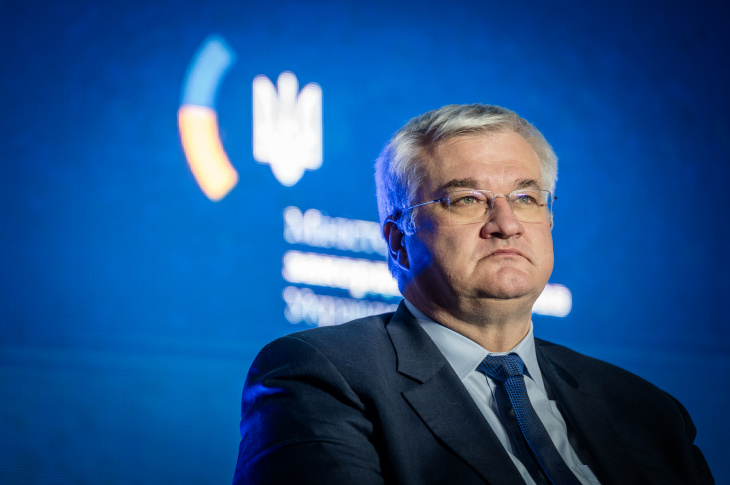
During the Munich Security Conference, Foreign Minister Andriy Sybiga said that Ukraine had received a signal from the United States about readiness to ratify security guarantees in Congress. According to him, this concerns legally binding guarantees, not just political assurances; the draft of bilateral guarantees is almost ready.
Sybiga also emphasized the role of the United States in creating an effective security system in Europe and the need for an American military presence with a "backstop." It was separately noted that the goal is not only to weaken Russia militarily, but also to exhaust its economic potential.
Why legal guarantees carry different weight
In diplomacy words matter, but legal instruments are of a different nature: ratification in Congress means that mutual obligations gain footing in U.S. law and procedure, rather than remaining solely political declarations. This affects questions of funding, missions, and long-term responsibility.
Experts point out that even if formally Congress can impose conditions, the very readiness to ratify strengthens strategic reliability for Ukraine and its partners.
Political context and risks
Official signals from the U.S. come against a background of related statements: the U.S. Ambassador to NATO Vitaker linked the absence of a signed agreement to the unresolved issue of territories in the negotiations. Earlier, President Zelensky also spoke about the possibility of agreeing guarantees and reconstruction in the parliaments of both countries in the near future.
This creates two key dynamics: first, a shift from political assurances to legal mechanisms; second, likely conditionality — guarantees may become the subject of political compromises related to border negotiations or other political parameters.
"The second key element of the security architecture is a military presence with an American backstop. Without the U.S. role, an effective security system in Europe is impossible."
— Andriy Sybiga, Minister of Foreign Affairs of Ukraine
What this means in practice
If the process reaches Congress, Ukraine will receive: stronger legal protection against unilateral withdrawal of promises; potential access to long-term support mechanisms and military coordination; a political signal to investors and partners about the stability of commitments.
At the same time, the question of implementation remains: ratification is an important step, but real security requires concrete institutions, funding, and operational arrangements. Analysts note that guarantees alone will not eliminate risks, but they change the balance of power in favor of Ukraine if accompanied by practical mechanisms.
Brief conclusion
The signal from the United States is a step from words to law. It is not an instant security guarantee, but potentially a foundation for a system that makes Ukraine more protected in the face of Russian aggression. It is now important that declarations be turned into concrete legal and financial instruments, not remain the subject of political debate.



