U.S. Prepares for a Prolonged Campaign Against Iran — What That Means for Negotiations and Ukraine's Security
Reuters reports that U.S. forces are preparing for operations that could last weeks. That raises the stakes in diplomacy with Tehran, affects energy markets, and creates new challenges for Kyiv — we examine the logic and risks.

By Tetiana Suchkova-Ladik
February 14, 2026 · 2 min read
Brief — why this matters
According to Reuters, the Pentagon is preparing U.S. armed forces for the possibility of conducting prolonged operations against Iran that could last weeks if President Donald Trump gives the order. The agency obtained the information from two anonymous American officials. Such preparations raise the stakes in negotiations between Washington and Tehran and make a potential scenario far more serious than previous one-off strikes.
U.S. position: show of force or real plan?
On the eve of these reports, the U.S. sent a second carrier strike group, the USS Gerald R. Ford, to the region. This is both a signal and preparation for operations on a larger scale than the strikes on nuclear facilities in 2025, when the actions were effectively single incidents. Reuters officials emphasize that current planning is more comprehensive and could include strikes not only on nuclear sites but also on Iranian government and security infrastructure.
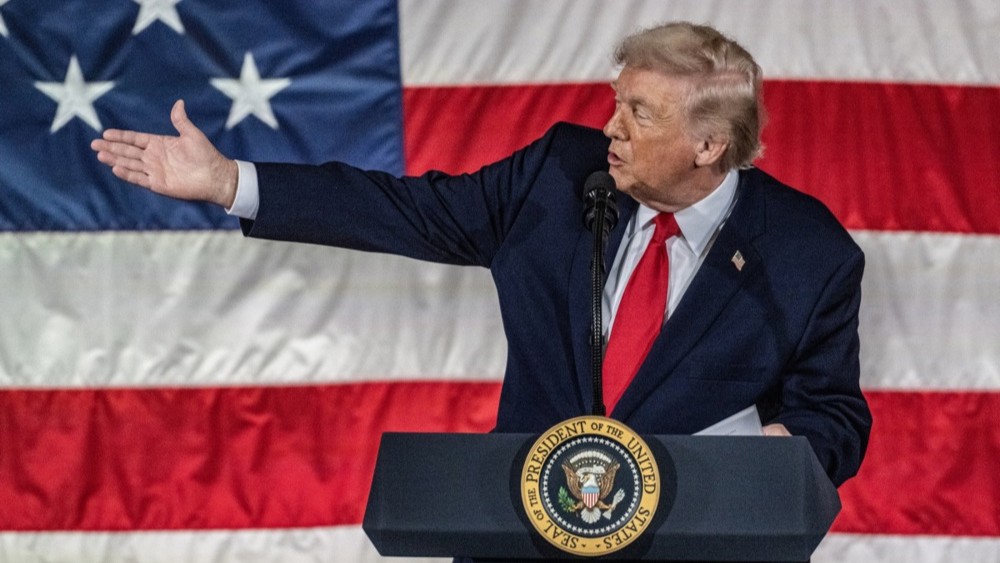
"It was hard to reach an agreement," the U.S. president said during a speech to service members; he added that he "has all options on the table."
— Donald Trump, President of the United States (quote via Reuters)
Risks for the region and global consequences
Experts warn that strikes across a wide range of Iranian targets greatly increase the risk of subsequent missile responses from Iran and escalation throughout the region. Reuters also notes the market reaction — oil futures rose amid the uncertainty.
"If strikes occur on Iranian territory, the Islamic Revolutionary Guard Corps could target any American base."
— Statement of the Islamic Revolutionary Guard Corps (via Reuters)
Why this matters for Ukraine
First, diplomatic attention and resources of leading partners could be dispersed: talks between the U.S. and Iran are expected in Geneva on February 17 — the same day the U.S. holds talks with Ukraine and Russia. Second, any major crisis in the Middle East increases volatility in energy markets and could complicate logistics for arms and financial deliveries.
Deputy director of the Center for Middle East Studies Danylov expressed a separate view in an interview with LIGA.net: in his view, increased pressure on Iran in some scenarios could work to Ukraine's advantage. This is an analyst's position that requires comparison with other assessments: escalation could also divert the attention of the defense industry and partners' diplomacy away from the Ukrainian front.
Conclusion — what to watch next
Signals about preparation for a prolonged campaign change the balance of risks in the region: this is not only a military capability but also a political instrument of pressure in negotiations. For Ukraine, the key question is whether these shows of force will translate into a practical shift in Western partners' priorities, and how that will affect our country's security and support. For now it is important to separate confirmed steps (the deployment of a carrier strike group, official statements) from assessments and scenarios — and to follow developments in Geneva and the region's reactions.
"The president has all options on the table… the final decision is made based on national security."
— Anna Kelly, Deputy White House Press Secretary (quote via Reuters)



