U.S. Deploys GARC Unmanned Boats in the Middle East for First Time — Operational Test with Geopolitical Implications
The Pentagon has confirmed the deployment of light unmanned GARC boats despite previous technical problems. We examine why Washington is taking the risk, how this alters the balance in the region, and what opportunities it opens for Ukraine’s defense industry.

By Tetiana Suchkova-Ladik
March 27, 2026 · 2 min read
What happened
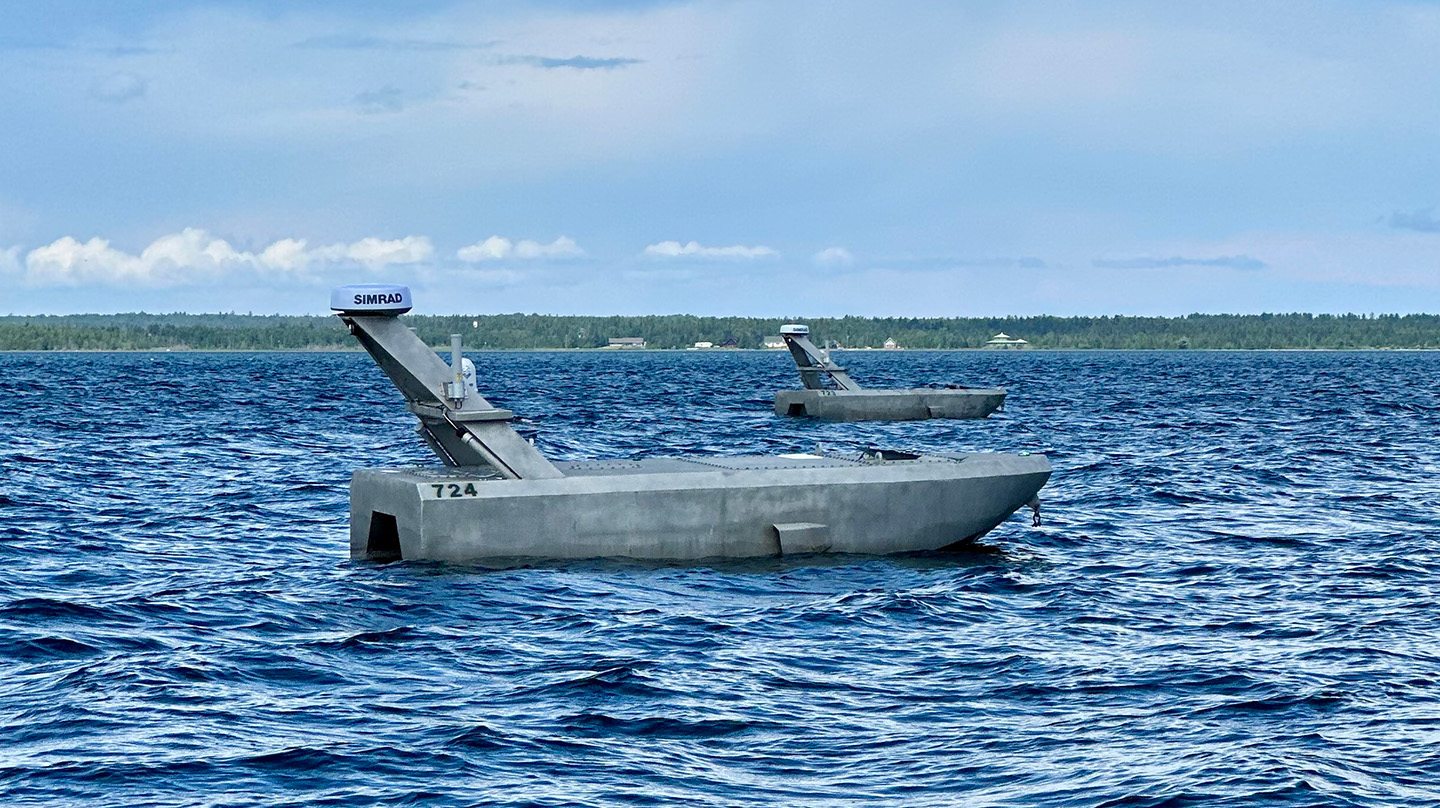
The Pentagon confirmed the use of unmanned high-speed boats Global Autonomous Reconnaissance Craft (GARC) as part of operations in the Middle East — the first time the U.S. has directly linked these platforms to combat missions, Reuters reports, citing a representative of U.S. Central Command.
Context and reason for the decision
The decision to deploy GARC to the region comes amid an escalation between the U.S. and Iran, including a series of strikes and maritime incidents in the Persian Gulf. The Pentagon says this is driven by the need for active patrols and reconnaissance in light of increased threats to commercial shipping and coalition forces.
Technical caveats: why this matters
The GARC project has a history of difficulties: Reuters last year noted performance and safety issues, including collisions during tests. Nevertheless, the Pentagon statement emphasized “more than 450 hours at sea” and 2,200 nautical miles of patrolling — an argument that the platform has already undergone a degree of real-world testing.
"U.S. forces continue to employ unmanned systems in the Middle East region, including surface drones such as GARC. This platform, in particular, has logged more than 450 hours at sea and covered over 2,200 nautical miles during maritime patrols as part of Operation 'Epic Fury'"
— Tim Hawkins, representative of the Pentagon's U.S. Central Command
What this means for Ukraine
Ukraine's experience using maritime drones against Russia's Black Sea Fleet has served as an example of the effectiveness of such platforms and likely influenced Western headquarters' perception of unmanned boats. For the domestic defense sector this is an opportunity: demonstrating real operational advantages could open export niches and technical cooperation with partners that would accelerate refinement and standardization of solutions.
Risks and questions
Politically and technically, using GARC in a combat environment is a double test. On one hand, combat use yields valuable data for improving the system. On the other, it highlights risks of reliability, control, and potential incidents in heavily trafficked maritime corridors. Journalists and analysts also note that official reports on test failures remain partly opaque.
Conclusion — what's next
This decision is not just a technical experiment but also a political signal: Washington is prepared to develop low-cost autonomous platforms as a tool of flexible response in the region. For Ukraine the key question is how to turn its practical experience into a strategic advantage: through standardization, export projects, and joint testing with partners. The next stage is to convert declarations and single operations into systematic contracts and risk-control procedures so the technology enhances security rather than becoming a source of new threats.
Sources: Reuters, official statement of U.S. Central Command, materials from LIGA.net, publications by Axios and The New York Times on U.S. regional offerings.



