Starship Exploded — And It's Considered a Success. How SpaceX Is Rewriting the Standards for Space Testing
# Starship's Seventh Test Mission Ends in Destruction Over Atlantic. SpaceX Calls It Progress. Why Failure Has Become the New Standard in the Race to Mars?

By Tetiana Suchkova-Ladik
May 24, 2026 · 2 min read
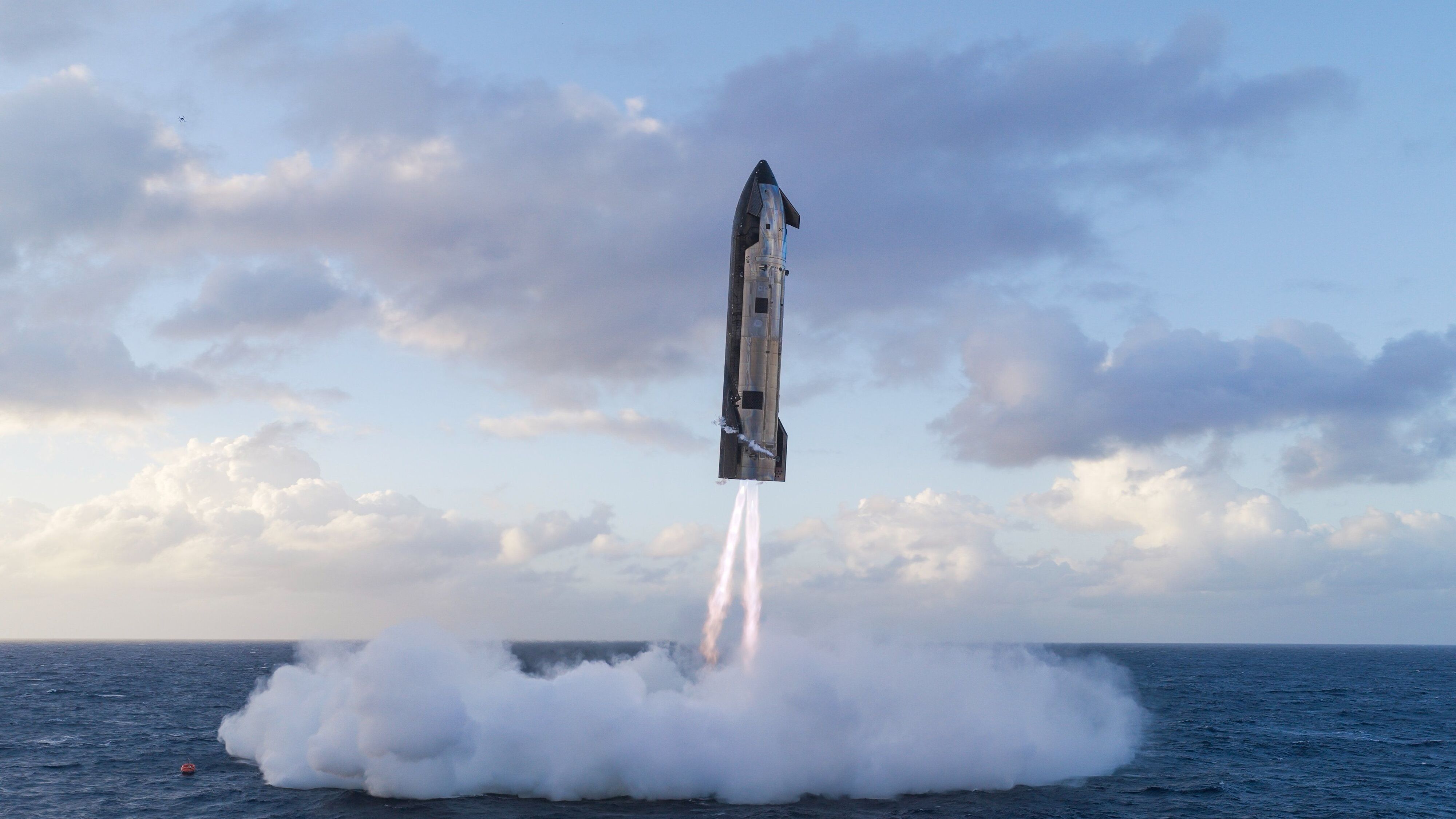
On January 9, 2025, Starship — the largest rocket in human history — lifted off from Boca Chica, Texas, reached its target altitude, and then disintegrated over the Atlantic Ocean into glowing debris fragments in the darkness. The control center applauded.
What Happened Technically
The first stage of Super Heavy performed nominally and was caught by mechanical "chopsticks" of the launch pad — for the second time in a row, which is itself an engineering achievement. The problem arose with the upper stage: the spacecraft lost control during atmospheric re-entry and was destroyed at an altitude of approximately 65 kilometers. The FAA temporarily closed airspace over portions of the Atlantic and the Bahamas — debris scattered over a large area.
Elon Musk wrote in a post on X that the team "learned enough" for the next flight and praised the successful landing of Super Heavy. NASA, which is funding the adaptation of Starship as a lunar lander as part of the Artemis program, has not yet provided official comments.
Conflict Between Methodology and Reality
SpaceX deliberately chose a "test to failure" approach instead of NASA's classical model with thousands of hours of ground testing before the first flight. This is cheaper and faster — but raises a question that the industry has so far sidestepped: where is the line between "controlled risk" and normalization of failures?
For unmanned tests, this philosophy makes sense. Prototypes burn — engineers learn. This is exactly how Falcon 9 became the most reliable rocket in the world after a series of early failures. But Starship is designed to carry people — first NASA astronauts to the Moon, then, according to Musk's plans, colonists to Mars. And here "satisfied with the explosion" is no longer just corporate spin.
The Scale of the Stakes
NASA paid SpaceX $2.9 billion for developing a lunar version of Starship. The first crewed Artemis III mission, where Starship is to land astronauts on the Moon, is scheduled for 2026. Between today's explosion over the Atlantic and landing people on the lunar surface — less than two years and an unknown number of successful tests that still need to be accumulated.
SpaceX claims that the eighth test flight is being prepared right now, and each failure brings it closer to a solution. This may be true. Falcon 9 followed a similar path. But Falcon 9 was never planned for passenger flights to another planet from its first generation.
Unanswered Questions
SpaceX has not published a complete list of criteria by which a particular test is considered "sufficiently successful" to move to the next stage — and as long as the company itself sets this bar without independent technical audit, how can an outside observer distinguish between real progress and optimistic PR?



