Stubb Wants Euro-Envoy to Moscow, But Unsure Who It Will Be
Finland's President Calls on Europe to Act Independently — Before Washington Assigns It a Seat at the Negotiating Table. But Five Key EU Countries Have Yet to Agree Even on the Format.

By Tetiana Suchkova-Ladik
May 11, 2026 · 3 min read
An Envoy Without a Name
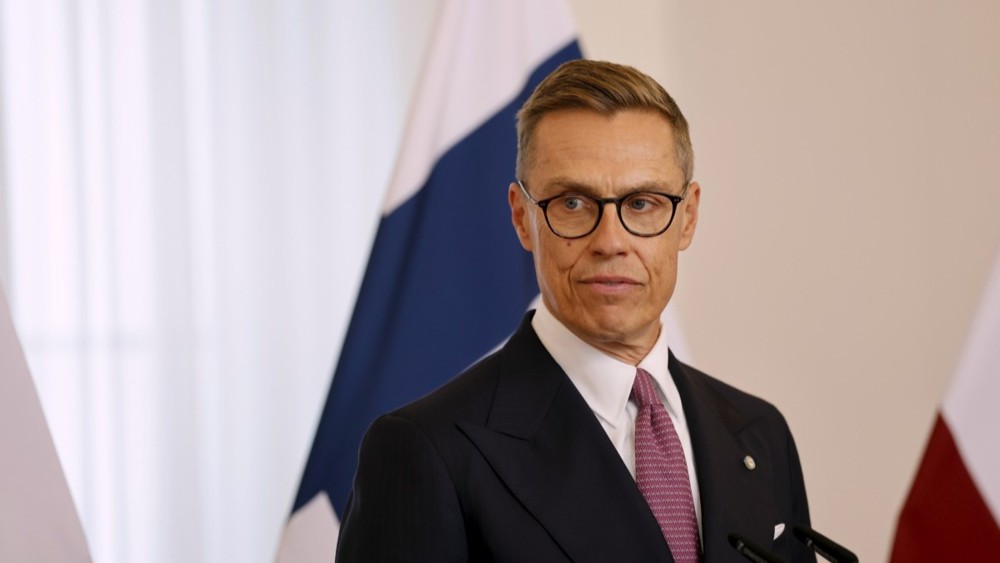
Finnish President Alexander Stubb acknowledged in an interview with Corriere della Sera: Europe must establish direct contact with Russia — because American policy no longer aligns with European interests. But when asked who exactly will do this, he gave an answer that speaks for itself: "Whether it will be a special envoy or a group of leaders — we'll see."
This is not modesty. This reflects a real impasse: eight months after Washington de facto excluded Brussels from negotiations, Europe has still not agreed on either a candidate or a mandate for its representative.
Why Stubb Is Not a Random Voice
Finland shares a 1,340-kilometer border with Russia. Stubb personally participated in settling the Russian-Georgian war in 2008 — he was foreign minister at the time. This is the experience he cites when explaining why a ceasefire with international monitoring is needed first — and only then negotiations.
"I am not very optimistic about achieving a ceasefire or starting peace negotiations, at least this year."
Alexander Stubb, Associated Press
Stubb's skepticism is not theoretical: he witnessed how Russia violated the agreement on energy infrastructure strikes before the ink was even dry.
E5 as the Core — But They Are Not Alone
According to Stubb, any contacts with Moscow must first be coordinated among the so-called "five" countries — Germany, France, Italy, Great Britain, and Poland — as well as with Northern European and Baltic states that border Russia directly. The logic: you cannot make deals with the Kremlin if your allies in Tallinn or Warsaw find out about it from the news.
But this is precisely where an institutional knot forms. As analysts from the International Centre for Defence and Security (ICDS) in Tallinn note, Europe is publicly arguing even about whether an envoy is needed at all, not just about who should be one. The main question remains unclear: should the representative press Russia for a lasting peace — or, conversely, convince Kyiv to make concessions it doesn't want to make.
What Moscow Has Already Answered
Putin, in turn, stated back in May that Russia is ready to talk to Europe — and named the desired interlocutor: former Chancellor Gerhard Schröder. The Kremlin thus immediately outlined what format of dialogue it wants: without representatives of the Baltic states, without firm positions on Ukrainian sovereignty, with a partner it trusts. Russia's official Foreign Ministry spokesman Maria Zakharova has already called Stubb's statements "the stupidity of the year" — a signal that Finland as a mediator does not suit Moscow.
Why This Matters Beyond Diplomatic Corridors
The absence of a unified European voice has a concrete price. While Brussels debates the format, Washington is conducting negotiations — and Trump's special representative Keith Kellogg stated directly in February: Europe can express a position, but will not have a seat at the table. Meanwhile, Macron has already sent his diplomatic advisor Emmanuel Bonne to Moscow — without waiting for pan-European consensus.
"We must be at the negotiating table — because the Ukrainians themselves have already begun negotiations. So why can't Europeans?"
Prime Minister of Latvia — Euronews, February 2026
Stubb's question about an envoy is really a question about whether Europe is capable of acting as a single player. So far, the answer is: capable of speaking, but not of agreeing among itself.
If Macron continues to act outside a common mandate — the question is not whether a "euro-envoy" will appear, but whether there will be anything left for him to represent: a unified position or merely a French one.



