Court reinstates Voice of America: more than 1,000 jobs will return — what it means for the information front
A federal court has ordered the reinstatement of USAGM’s staff and the restoration of international broadcasting. The ruling is not only about jobs: it returns to the United States an important channel of influence amid a shifting media landscape, with direct significance for Ukraine.

By Tetiana Suchkova-Ladik
March 18, 2026 · 2 min read
Briefly
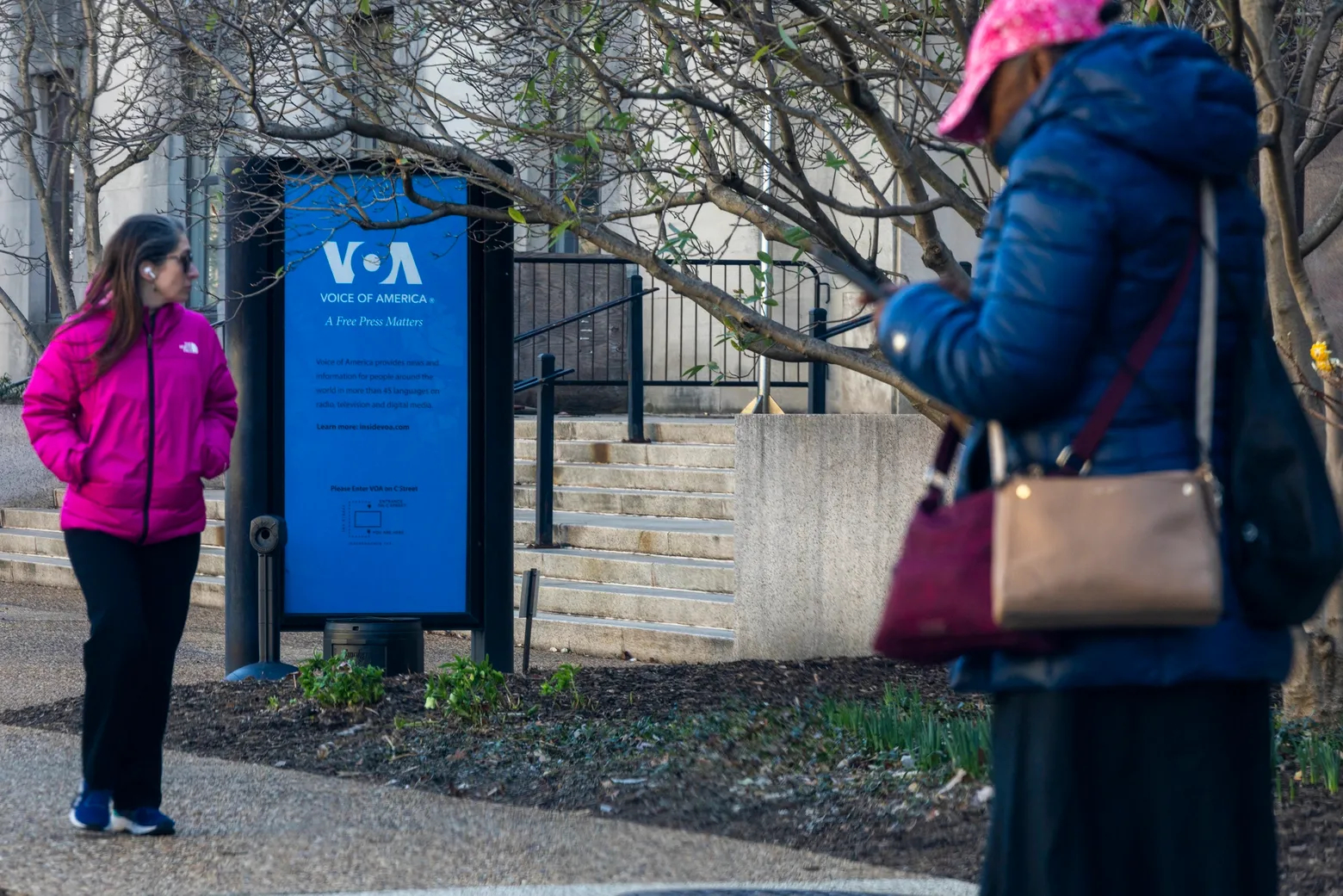
A federal court has ordered the U.S. Agency for Global Media (USAGM) to restore the jobs of more than 1,000 employees and to resume most of Voice of America's international broadcasts. The decision is reported by The Washington Post. For Ukraine this is more important than it may seem at first glance: it concerns preserving an alternative source of information in the fight against disinformation and political influence.
What the court decided
According to media reports, federal judge Royce Lamberth ruled that the near-complete shutdown of USAGM "violates federal administrative law" and ordered the agency to reinstate its staff by March 23. Employees had been on paid administrative leave over the past year while the administration of President Donald Trump sought to reduce the agency's operations to the statutory minimum.
"the near-complete closure of the U.S. Agency for Global Media ... violates federal administrative law."
— Royce Lamberth, federal judge
Context: competition among media platforms and risks of partisan influence
The court's decision should be read against the backdrop of the rapid rise of conservative media platforms. In particular, the launch of the Newsmax channel in Kyiv and its positioning as a "megaphone" for Trump supporters raised concerns about informal informational influence. LIGA.net wrote about the risks of such penetration. At the same time, on February 9, 2025 Elon Musk called for shutting down Radio Free Europe/Radio Liberty and Voice of America, and on March 14 Trump signed an order to cut several agencies, including USAGM.
Why this matters for Ukraine
Voice of America and other USAGM international broadcasters are instruments of U.S. soft power: they provide independent coverage of events, counter-media against disinformation, and access to verified information for audiences in areas under Russian influence. Restoring the agency's full operations reduces the risk of domination by a single partisan narrative and preserves an alternative communication channel that is important to Ukrainian media consumers.
Background and practical consequences
On September 30 the court temporarily halted the administration's layoff plan, but the full decision now requires the restoration of broadcasts and staff. In practice this means: reinstating editorial processes, returning journalists to international broadcasting, and faster responses to informational challenges around the world, including the war in Ukraine.
What may happen next
USAGM may appeal the decision or seek legal ways to implement cuts in another form; at the same time, the revival of broadcasting provides time and resources to rebuild presence in key markets. For the Ukrainian side it is important to monitor not only the legal battles but also the actual quality and scale of broadcasts — because influence is measured not by decrees but by audience and trust.
Summary. The court ruling is a temporary victory for preserving an institutional channel of information. The next step for American institutions is to turn declarations into restored programs and a sustainable presence on the global airwaves, which directly affects Ukraine's information security.
Sources: The Washington Post, LIGA.net, public court documents.



