"Judge with the Nickname 'Bald Director': How the DBR Exposed the Scheme of Seizing Apartments from the Deceased"
Former judge Alexei Tandir, who is already being tried for a fatal drunk driving accident at a checkpoint, is now suspected of organizing a criminal group that seized five apartments of deceased persons through forged debt lawsuits and compliant state bailiffs.

By Tetiana Suchkova-Ladik
May 11, 2026 · 3 min read
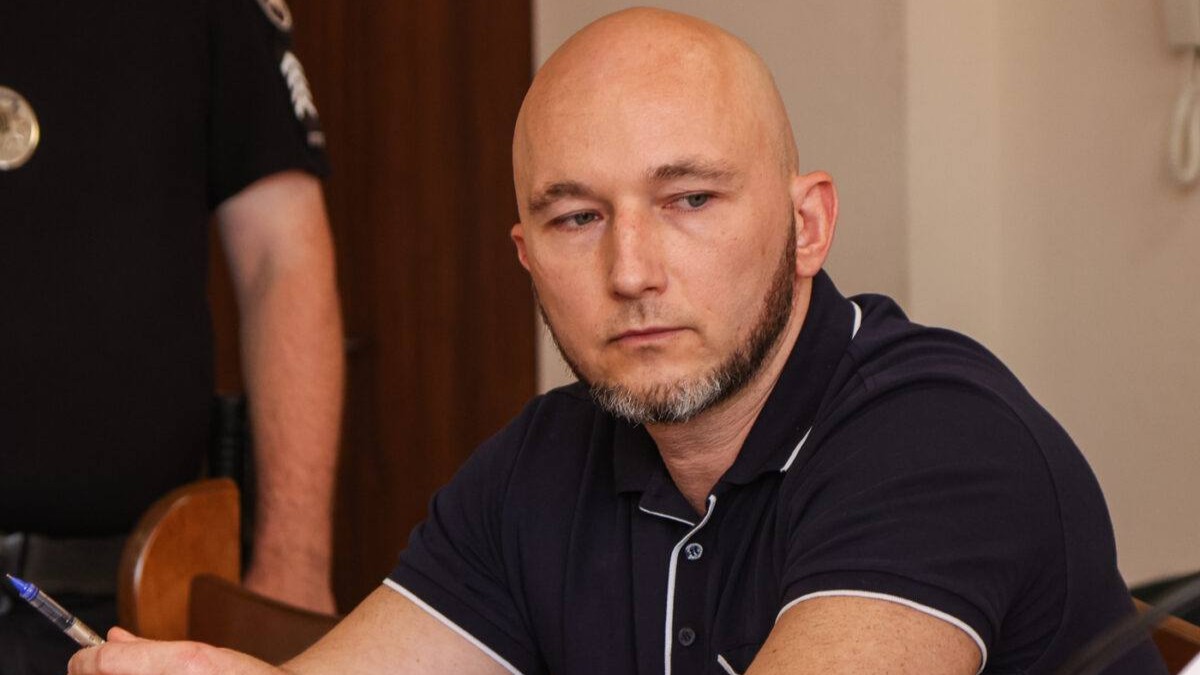
The State Bureau of Investigation has released wiretap recordings in a case involving the seizure of apartments belonging to deceased citizens. In the recordings, participants of the scheme communicate using code pseudonyms — the judge, according to investigators, is referred to as "Bald Director," and another suspect as "Brick." While the DBR has not officially released names, sources at LIGA.net in law enforcement agencies confirm the case concerns former judge of the Makariv District Court of Kyiv Region Oleksii Tandir.
How the scheme worked
According to investigators, the criminal group operated according to a clear three-tier logic. The brain center consisted of a judge, his lawyer, and a former state bailiff. Two other participants filed lawsuits claiming to recover supposed million-hryvnia debts from people who had already died or had no means to pay. The judge would issue rulings based on forged documents, the state bailiff would open enforcement proceedings — and apartments would transfer to new "owners."
"The group's activities were clearly structured and well-organized. The judge ensured the adoption of necessary rulings, while representatives of the enforcement service opened enforcement proceedings and initiated apartment seizures."
State Bureau of Investigation
One of the key documented episodes involves a 2021 lawsuit. A certain Oleksandr Dobrianskyi demanded to recover 11.28 million hryvnias from a woman allegedly under a 2017 loan agreement. Investigators point out that Dobrianskyi's 2016 declaration contained no income or savings that would have allowed him to lend such an amount. Moreover, in 2017, he and the then-head of the Makariv district branch of the State Enforcement Service were detained in a bribery case — at that time, Dobrianskyi reached a plea agreement and paid a fine of 17,000 hryvnias. Judge Tandir ruled in favor of the lawsuit. The "debt repayment" settlement amounted to two apartments of 43 square meters each.
Scale and consequences
- Five apartments in Odesa and Kyiv communities — the documented result of the scheme.
- Six suspects have been notified of suspicion of participation in a criminal organization (Part 1, Article 255 of the Criminal Code) — sentence up to 12 years with asset confiscation.
- Tandir was remanded in custody without bail alternative — unlike the traffic accident case, where a February 2026 court ruling reduced bail from 120 to approximately 20 million hryvnias.
- The High Council of Justice dismissed Tandir from his position as judge in August 2024.
Context: a case already in court
Parallel to the new suspicion, the Sviatoshynskyi District Court of Kyiv continues to hear Tandir's first case — a fatal traffic accident at a checkpoint on May 26, 2023. His Lexus, traveling at high speed, struck National Guard member Vadym Bondarenko, who was installing engineering barriers. Bondarenko died, leaving behind a wife and three children. A July 2023 expert examination established the driver was under the influence of alcohol; Tandir denies this. As of early 2026, the case is at the stage of examining the prosecution's written evidence — a verdict has not yet been issued.
In parallel, in December 2025, the European Court of Human Rights ordered Ukraine to pay Tandir over 2,000 euros in compensation for prolonged detention without a verdict — a decision that the first instance court used as grounds for reducing bail.
What comes next
The new suspicion of participation in a criminal organization is formally more serious than the traffic accident charge. However, the apartment scheme covers only five documented objects — the investigation remains incomplete. If the DBR proves that Tandir reviewed similar lawsuits in other cases beyond the already known episodes, the scope of the criminal group could turn out to be significantly larger than currently appears from the case materials.



