The Kremlin's Satellites over Tel Aviv: How Russia Turned Reconnaissance into a Weapon Against Israel
Zelensky disclosed that Moscow handed Tehran the coordinates of 50–53 sites in Israel’s energy system — and this is no longer an isolated incident, but part of a documented intelligence alliance.

By Tetiana Suchkova-Ladik
April 5, 2026 · 3 min read
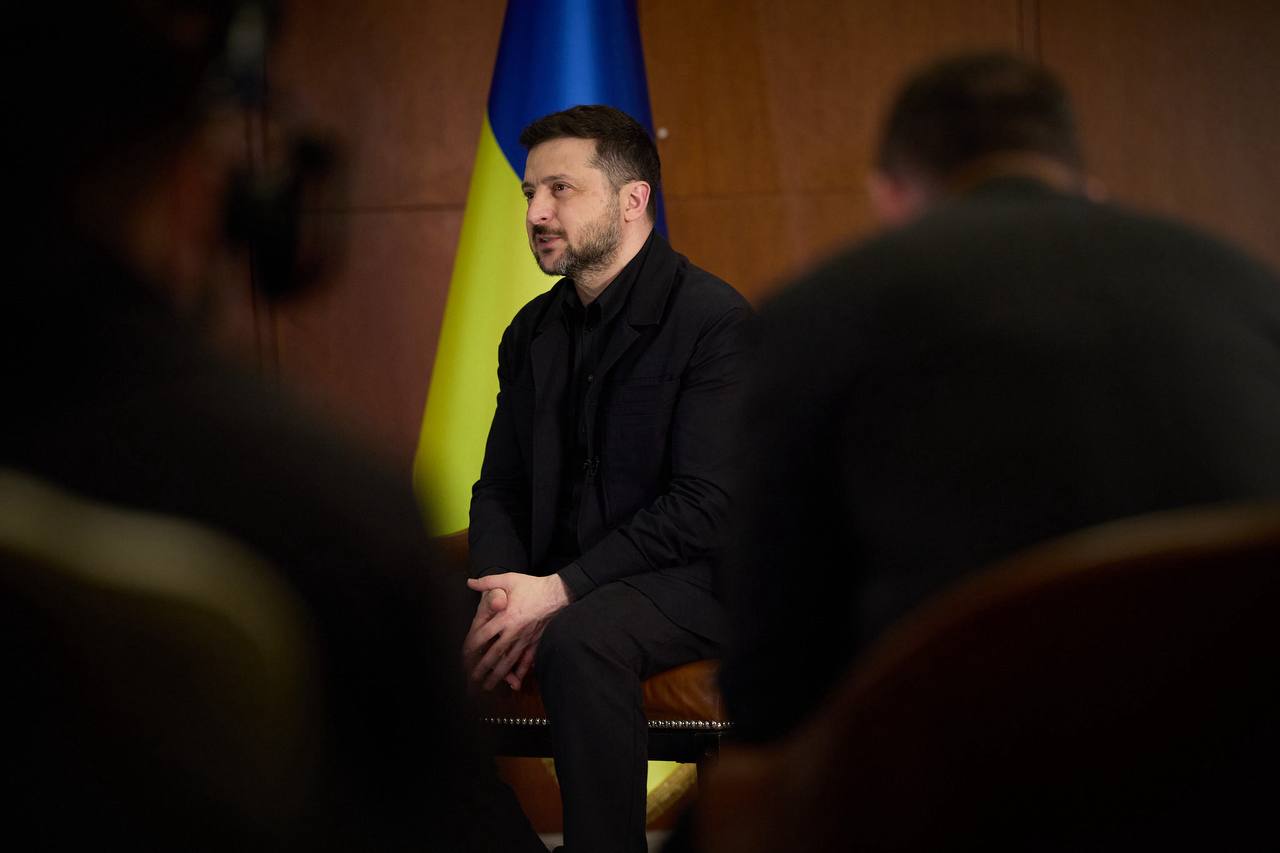
President Volodymyr Zelensky told Associated Press in a concrete report: Russia provided Iran with satellite intelligence on 50–53 sites of Israel's civilian energy infrastructure. None of them had a military purpose — only power grids and systems without which the country cannot function.
"They are helping Iran carry out strikes. We're talking about civilian infrastructure with no military purpose."
Volodymyr Zelensky, AP interview, April 5, 2025
Not the first time and not accidental
The statement about Israel is just one episode in a series. Earlier Zelensky revealed that Russian satellites photographed the U.S. Prince Sultan airbase in Saudi Arabia three times — on March 20, 23 and 25 — several days before the Iranian strike on that facility. According to The Washington Post, Moscow systematically supplies Tehran with intelligence on the locations of U.S. military assets in the Middle East.
At the same time there is a technical component: according to the Middle East Forum, Russia significantly modernized Iran's Shahed drones by replacing the engine with a compact turbojet, which increases their speed threefold. The technology honed on Ukrainian cities may now be turned against Israel in a new form.
In January 2025 Russia and Iran signed a strategic partnership agreement that officially enshrined military‑defense cooperation between the two countries.
What Zelensky offers Netanyahu — and why he is silent
Kiev openly offers Jerusalem an exchange: Ukraine has experience countering Iranian drones, Israel has systems the Ukrainian Armed Forces lack. As Times of Israel reports, Zelensky put it plainly:
"He has what I need, and I have what he needs. I am ready for that dialogue."
Zelensky — on possible talks with Netanyahu
But Jerusalem is not in a hurry. According to Zelensky, his last conversation with Netanyahu took place in January 2025. Israel has not approached Ukraine for help, while Jordan, Saudi Arabia and the UAE have already hosted Ukrainian military experts on drone interception. The reason for Israeli caution is no secret: Jerusalem has for years balanced between Moscow and Kiev, in particular to preserve freedom of action in Syrian airspace.
"Even when Russia helps Iran, the prime minister, it seems to me, still balances."
Zelensky — on Netanyahu's position, Times of Israel
Moscow's logic: destabilization as strategy
Zelensky insists that the transfer of intelligence is not a service to an ally but a deliberate strategy of prolonged instability: Russia supports Iran with intelligence and drones to prolong the conflict in the Middle East, divert the West's attention from Ukraine and profit from oil revenues that are not constrained by sanctions. The methodology is recognizable — for years Moscow has deliberately struck Ukrainian power grids and water supplies according to the same principles of targeting civilian critical infrastructure.
- Intelligence: satellite images of sites — from U.S. bases to Israel's energy systems
- Technology: modernized Shahed drones with turbojet engines
- Funding: oil and gas revenues not blocked by sanctions flow into the military‑industrial complex
Open‑source analysts record an increase in data traffic between Russian and Iranian servers that coincides with the orbital passes of reconnaissance satellites.
If Israel obtains verified evidence that the coordinates of its energy facilities are already in Iranian databases, the question will not be whether Netanyahu shifts his rhetoric about "balance," but whether there will be enough time before the first strike on the grid to revise that balance.



