Witness acquitted — but the case he was tried for continues
Yusuf Mameshev was persecuted for testimony that undermined the SBU's version against a NABU detective. The court found no crime — and this raises an uncomfortable question about the investigation itself.

By Tetiana Suchkova-Ladik
May 20, 2026 · 2 min read
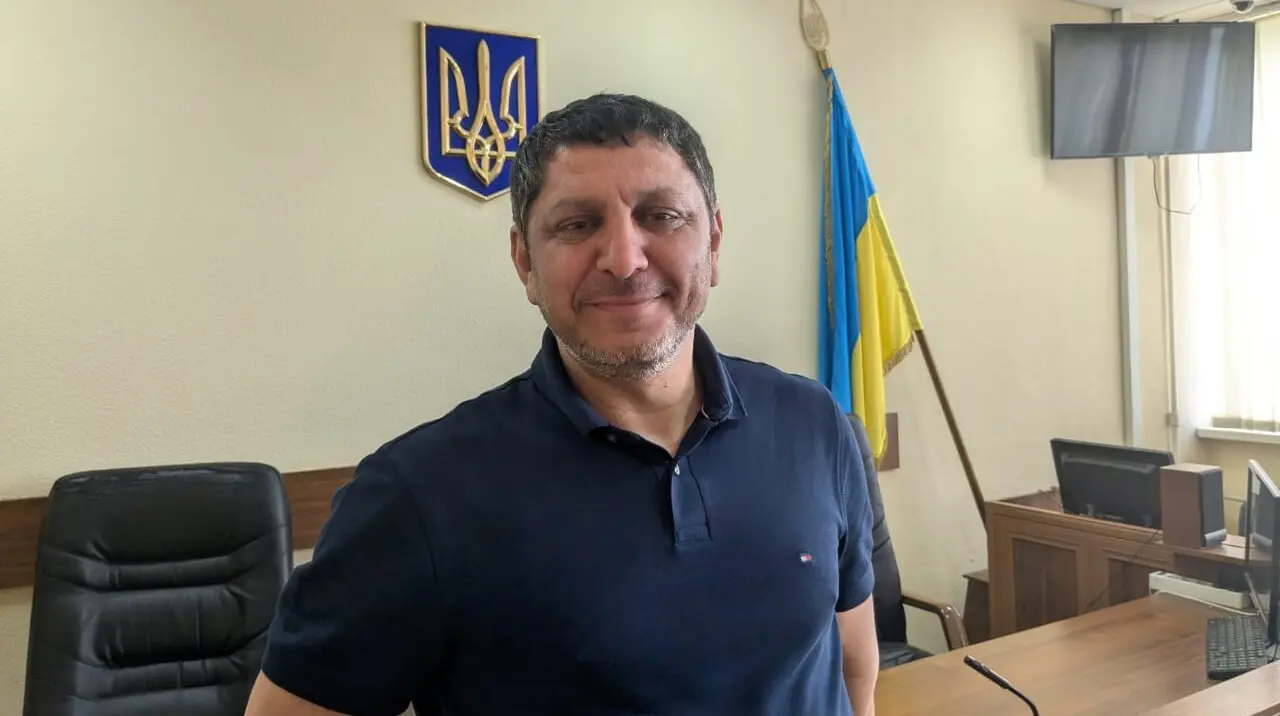
On May 20, the Shevchenko District Court of Kyiv found Yusuf Mameshev not guilty — an entrepreneur with Uzbek business roots who was accused of giving false testimony. The ZMINA organization reported this from the courtroom.
Mameshev is not a random figure. He is a central witness in the case of NABU detective Ruslan Magamedrasoulov, head of the inter-regional detective management unit, who was detained by the SBU on July 21, 2024, and suspected of aiding the aggressor state.
What is at the heart of the conflict
The entire version of the prosecution rested on audio recordings of an intercepted conversation: allegedly Magamedrasoulov discussed the sale of technical hemp to Dagestan — which led the SBU to qualify this as a connection to the Russian Federation. Mameshev was the person who participated in that conversation.
"The witness came and testified under oath: I spoke with Magamedrasoulov about hemp, but it was about selling to Uzbekistan, not Dagestan. And immediately after that, he was notified of suspicion."
Radio Free Europe/Radio Liberty, interpretation of the defense position
According to Mameshev, he has been conducting business in Uzbekistan for many years, which explains the context of the conversation. A case against him was registered on October 16, 2025 — the day after his testimony in court under oath. The Kravchenko group prosecutor's office demanded two years of restricted liberty, corrective labor, and probation supervision.
The pressure scheme — as the defense sees it
- Mameshev gave testimony that contradicted the SBU's version.
- The next day, criminal proceedings were opened against him.
- He was subjected to a preventive measure: an electronic ankle bracelet, travel ban, and passport confiscation.
- On May 20, the court found no elements of a crime and acquitted him completely.
The Anti-Corruption Center (APC) noted that Mameshev's testimony is confirmed not only by his words in court but also by correspondence with Magamedrasoulov and other materials from the case file. According to the APC's assessment, the SBU investigator could not even name the exact number of case volumes when disclosing materials to the defense.
Broader context: Is NABU under pressure or is the detective under suspicion?
Magamedrasoulov participated in Operation Midas — an investigation into a corruption scheme at Energoatom involving businessman Timur Mindich (call sign "Carlson"). According to the detective himself, his task was to document Mindich and the associated Oleksandr Tsukerman ("Shugerman"). Magamedrasoulov cites this activity as the reason for his detention.
The SBU, in turn, alleged that the detective had contacts with Fedor Khrystenko — a former OPZZ deputy, believed to be an FSB agent. Magamedrasoulov spent more than four months in custody before the preventive measure was relaxed.
The acquittal of Mameshev does not close Magamedrasoulov's case and does not confirm his innocence. However, it removes the only witness whom the prosecution was trying to transform into proof of the falsity of an alternative version of events.
If the prosecutor's appeal against the acquittal fails — and the recording of the conversation remains without the "correct" interpretation from the prosecution — will the main case against Magamedrasoulov withstand the next court hearing?



