Trump called Iran a 'loser' and announced a strike — what it means for Ukraine's security and the markets
After Tehran's announcement of a temporary suspension of attacks, Donald Trump responded sharply. We examine why this matters for Ukraine — from air defenses to energy prices.

By Tetiana Suchkova-Ladik
March 7, 2026 · 2 min read
Introduction
In high diplomacy, quiet agreements matter more than loud statements. On March 7 Tehran took a public step toward de‑escalation, and Washington’s reaction showed the situation remains unstable. This is not just a regional story — escalation affects defense resources and markets on which Ukraine’s security also depends.
Briefly — what happened
According to Reuters, on March 7 Iranian official Masud Pezeshkian apologized to neighboring countries and reportedly announced a suspension of attacks on a principle of reciprocity. At the same time, it was reported that some strikes by Iranian forces were still directed at Gulf states, and the IRGC (Islamic Revolutionary Guard Corps) claimed a drone strike on the U.S. air operations center at Al‑Dhafra Air Base near Abu Dhabi.
“I personally apologize to the neighboring countries that suffered from Iran’s actions.”
— Masud Pezeshkian, according to Reuters
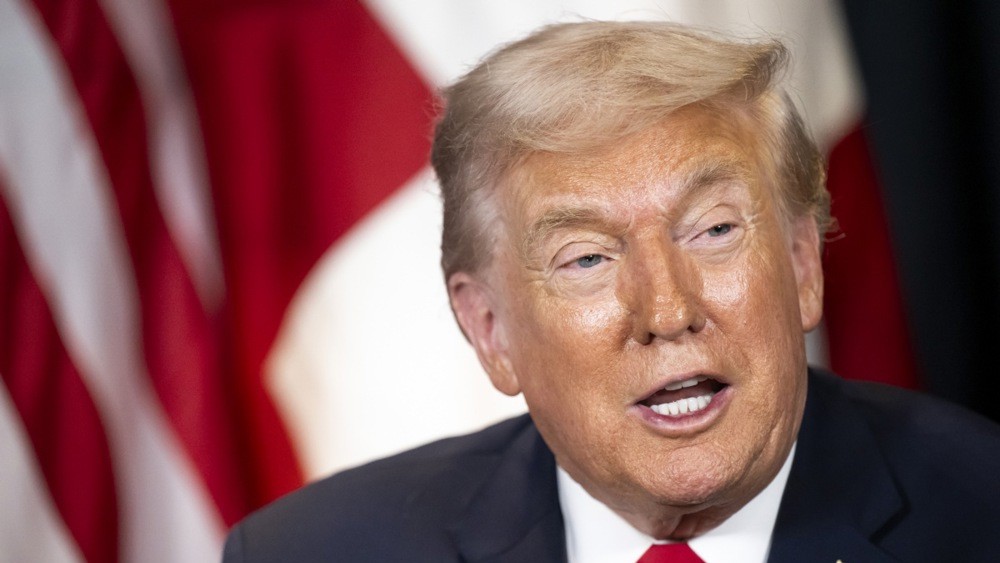
Donald Trump’s reaction was sharp: he mocked Tehran, called Iran “the loser of the Middle East” and announced a “very strong” strike. Some of his statements included threats of “complete destruction” of certain areas and groups of people; he did not provide specific details about targets or a plan.
“They sought to seize the region... They said, ‘Thank you, President Trump.’ I replied, ‘You’re welcome!’ … Iran is no longer a ‘bully’ — it has become the ‘LOSER OF THE MIDDLE EAST’.”
— Donald Trump, public statement
Sources and uncertainty
Reuters notes it is unclear how much Pezeshkian’s statement reflects a real decision by Tehran or is a tactical maneuver. NBC News reports Trump’s interest in the possible deployment of small U.S. forces in Iran for specific strategic purposes. Bloomberg, citing heads of trading firms, warns that continued conflict could push the price of oil to around $100 per barrel within a few days — a factor the global economy is already feeling.
What this means for Ukraine
Redirecting attention and resources. If the conflict in the Middle East intensifies, allies may temporarily divert air defense assets, intelligence capabilities, and logistics. These systems are also needed by Ukraine; their temporary reallocation increases risks on our front.
Economic effect. Rising oil and gas prices put pressure on inflation and the budgets of partner countries, complicating long‑term financing of assistance. As LIGA.net wrote, escalation scenarios directly affect currency rates, gold, and even crypto markets — so this is not only a geopolitical issue but also a practical one for Ukrainians.
Political signal. Strong statements by leaders affect partners’ willingness to take concrete steps: from supplying arms to deploying contingents. Ukraine has an interest in having quiet agreements turned into signed contracts and clear delivery schedules.
Expert assessment and conclusion
Analysts note: words matter less right now than movements — troop redeployments, confirmed strikes, and logistics. So far we have a mix of statements, partial strikes, and market forecasts. For Ukraine the key task is to ensure partners keep focus on our security and convert political support into concrete deliveries despite the risk of resources being diverted to other regions.
Now the move is on partner capitals: their declarations must turn into concrete actions, and citizens should watch for confirmations from Reuters, NBC, and Bloomberg — these sources are currently shaping the most likely picture of events.
Sources: Reuters, NBC News, Bloomberg, LIGA.net.



