Trump did not rule out a ground operation in Iran — what it means for regional security
Donald Trump, in an interview with the New York Post, said he does not rule out the option of sending "boots on the ground" into Iran. We examine why those words matter not only for Tehran but also for the security of Europe and Ukraine.

By Tetiana Suchkova-Ladik
March 2, 2026 · 2 min read
In high diplomacy, it's not loud statements that matter — but quiet signals
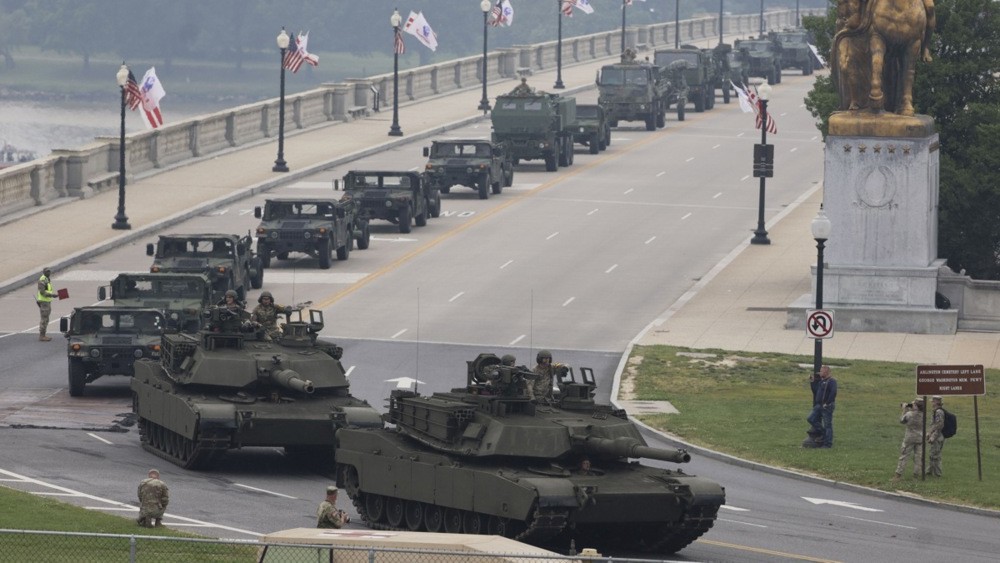
In an interview with the New York Post, Donald Trump said he does not rule out sending American ground troops to Iran "if they are needed," adding that the operation "would go pretty quickly" and that "we would do it." Those words are part of an informational signal: they are intended to convey a readiness to escalate, but are not necessarily equivalent to a final course of action.
"I have no fear about boots on the ground... I'm not saying that. I say: 'probably they are not needed' [or] 'if they are needed'"
— Donald Trump, interview with the New York Post
Facts and human losses
Alongside public statements, the U.S. Central Command (CENTCOM) reported human losses: as of March 2, four American service members were killed during the operation against Iran. In its statement, CENTCOM clarified that "the fourth service member, who was seriously wounded... ultimately died of his injuries" — a reminder that even limited strikes carry a real cost.
"The fourth service member, who was seriously wounded during the initial Iranian attacks, ultimately died of his injuries"
— U.S. Central Command (CENTCOM)
Why Trump speaks this way: rationalizing the signal
There are three rationales behind such statements: first, a demonstration of resolve for deterrence — to make the opponent reconsider its course of action. Second, a message for the domestic audience — positioning oneself as a strong leader. Third, a pressure tool in negotiations with allies and adversaries: strengthening the verbal threat may push the opponent to seek diplomatic exits. Analysts at international centers (notably the Atlantic Council and CSIS) warn that verbal escalation should not become an automatic pretext for military intervention — the risk of unintended escalation is high.
What this means for Ukraine
Despite the geographic distance, the consequences can be felt: first, a reallocation of U.S. attention and resources toward the Middle East could slow decisions on weapons deliveries or political support. Second, escalation in the region increases overall turbulence in energy markets and logistical routes, which has economic consequences for Europe and Ukraine. Third, any expansion of the conflict brings political strain within alliances — partners will have to balance deterring Iran with maintaining focus on supporting Ukraine.
Short conclusion
A leader's words are part of a strategy, but not always an action plan. For Ukraine, the key task is to work with partners to ensure that verbal statements are accompanied by clear guarantees: from deliveries and funding to diplomatic coordination. Whether these statements will turn into real ground operations depends on the U.S. willingness to assume political and operational risks, and on how quickly partners can minimize side effects for European security.



