Trump unveils national security strategy focused on Latin America
Trump unveiled the National Security Strategy with a focus on the Western Hemisphere. The document calls for bolstering the U.S. military presence in the region to combat drugs and migration and contains harsh criticism of Europe.

By Tetiana Suchkova-Ladik
December 5, 2025 · 4 min read
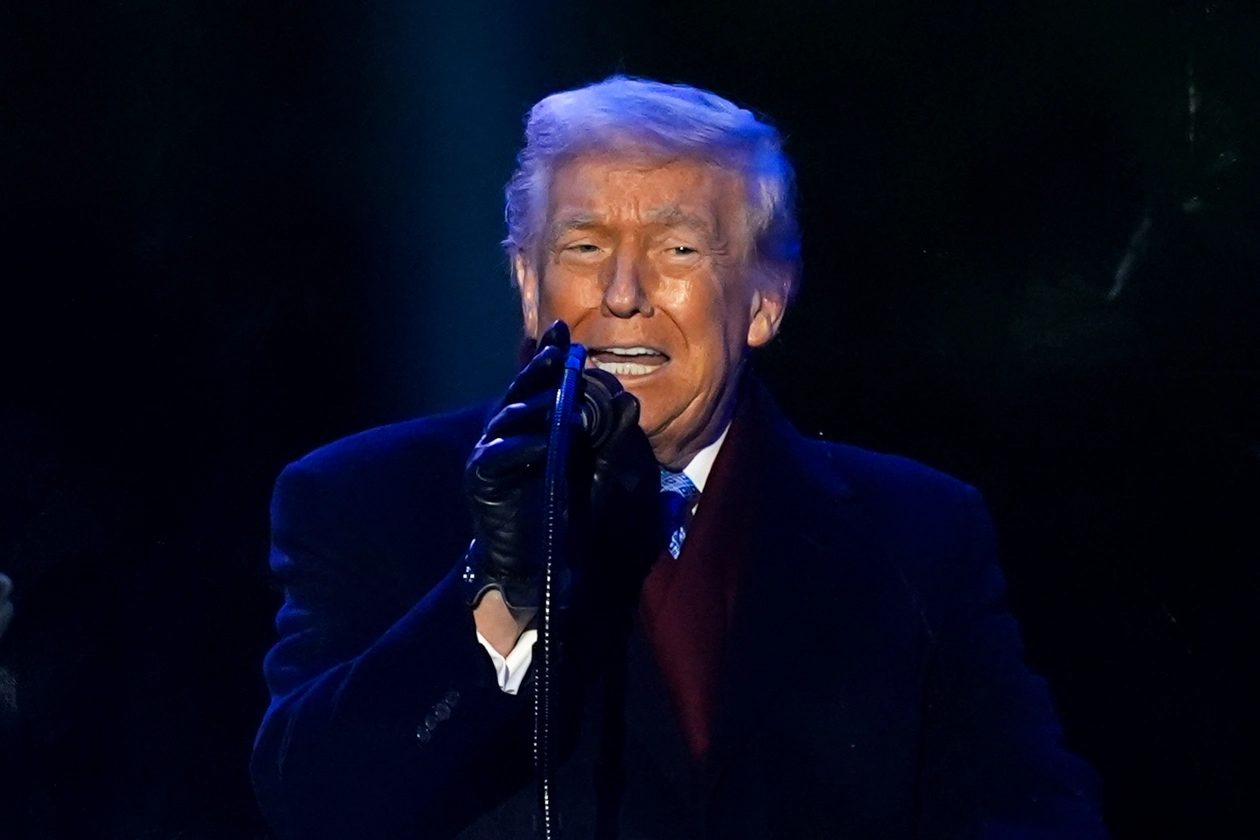
The administration of Donald Trump has released a National Security Strategy that calls for a strengthened U.S. military presence in the Western Hemisphere. The document is aimed at combating migration, drugs and the influence of hostile states in the region.
Key provisions
The 33-page document contains a rare formal explanation of Trump’s foreign-policy worldview. Presidents typically publish such strategies once per term, and they help government agencies allocate budgets and set priorities.
The White House quietly released the strategy on Thursday. The document devotes an unusually large amount of attention to the Western Hemisphere, depicting it as the defense of American territory. In contrast, the Middle East and Africa receive almost no attention.
Border security is a central element of national security
– from the U.S. National Security Strategy
The strategy contains veiled hints about Chinese efforts to entrench themselves on the American continent. The document stresses that the U.S. must be the dominant power in the region as a condition of its own security and prosperity.
"The Trump doctrine"
The authors describe the plans as a "Trump doctrine" akin to the Monroe Doctrine of 1823, when President James Monroe declared that the United States would not tolerate harmful foreign intervention in its hemisphere.
The strategy envisions that the terms of alliances and any assistance should depend on rolling back hostile external influence — from control over military bases and ports to the purchase of strategic assets.
The document specifically calls for a greater Coast Guard and Navy presence to control sea lanes, counter illegal migration, and fight human trafficking and drug smuggling.
Economic promises
The U.S. will strengthen ties with Latin American governments, including working together on strategic resources — likely referring to rare-earth metals. Washington also promises more partnerships with the private sector to spur American investment in the region.
Such promises could satisfy many Latin American governments that have long complained of a lack of U.S. attention. However, it is unclear how this squares with Trump’s intent to impose tariffs on trading partners.
Cautious rhetoric on China
The strategy pays considerable attention to China, although it often does not name Beijing directly. Many U.S. lawmakers from both parties view China as the most serious long-term threat to American global power. While the language in the document is tough, it is cautious and far from incendiary.
The administration promises to "rebalance economic relations with China, prioritizing reciprocity and fairness to restore American economic independence." At the same time, the document calls for balanced trade and "maintaining truly mutually beneficial economic relations with Beijing."
On Taiwan: the U.S. will maintain a long-standing policy, meaning opposition to any unilateral changes to the status quo in the Taiwan Strait. This may reassure analysts worried that Trump would retreat from support for the island in the face of Chinese threats.
Harsh criticism of Europe
The document contains brutal formulations about Europe, hinting at its civilizational decline. The strategy reserves its sharpest remarks for allied European countries.
The administration, in veiled terms, criticizes European efforts to rein in far-right parties, calling such moves political censorship:
The Trump administration disagrees with European officials, who have unrealistic expectations about war while sitting in unstable minority governments, many of which trample basic democratic principles to suppress opposition
– from the U.S. National Security Strategy
The strategy also suggests that migration will fundamentally change European identity to such an extent that it could harm ties with the United States. The document posits that in a few decades some NATO members could become "majority non-European," calling into question their sense of place in the world and their alliance with America.
Despite this, the document acknowledges Europe’s economic and other strengths, noting that writing the continent off would be self-destructive. "Our goal should be to help Europe correct its current trajectory," the text says.
Softer tone on Russia and Ukraine
The document states that ending the fighting in Ukraine is a key U.S. interest, as is reducing the risk of Russian confrontation with other European countries. But overall the strategy pulls its punches when it comes to Russia — there is little outright criticism of Moscow.
Delay amid disputes
The strategy and its accompanying document — the National Defense Strategy — were delayed in part by debates within the administration over wording on China. Treasury Secretary Scott Bessent insisted on softening language toward Beijing because delicate trade negotiations with China are underway. Trump himself is also cautious about relations with Beijing.
Traditional values
The strategy even endorses so-called traditional values associated with the Christian right. The administration seeks "the restoration and strengthening of American spiritual and cultural health" and "an America that cherishes its past glories and heroes." The document mentions the need for "a growing number of strong traditional families raising healthy children."
Context
In the strategy’s introductory remarks, Trump called it "a roadmap to ensure that America remains the greatest and most successful nation in the history of humankind."
The document largely aligns with many of the steps of a second Trump term and the priorities of his aides. This includes much greater use of American military force in the Western Hemisphere, numerous measures to reduce migration, support for a stronger industrial base, and the promotion of "Western identity."
Trump’s first-term strategy focused heavily on competition with Russia and China, but the president often undermined it by seeking the favor of leaders of those nuclear powers. If the new strategy better reflects what Trump truly believes, it could help other parts of the U.S. government adapt — not to mention foreign governments.



