Trump: U.S. involvement in negotiations between Ukraine and Russia — "a favor to Europe for life". What does this mean for Kyiv?
The U.S. president said he is taking part in the negotiations as "a favor to Europe." We examine why Washington's words carry consequences for Ukraine's security and what risks and opportunities this creates.

By Tetiana Suchkova-Ladik
March 7, 2026 · 2 min read
Speech in Florida — a signal beyond Europe
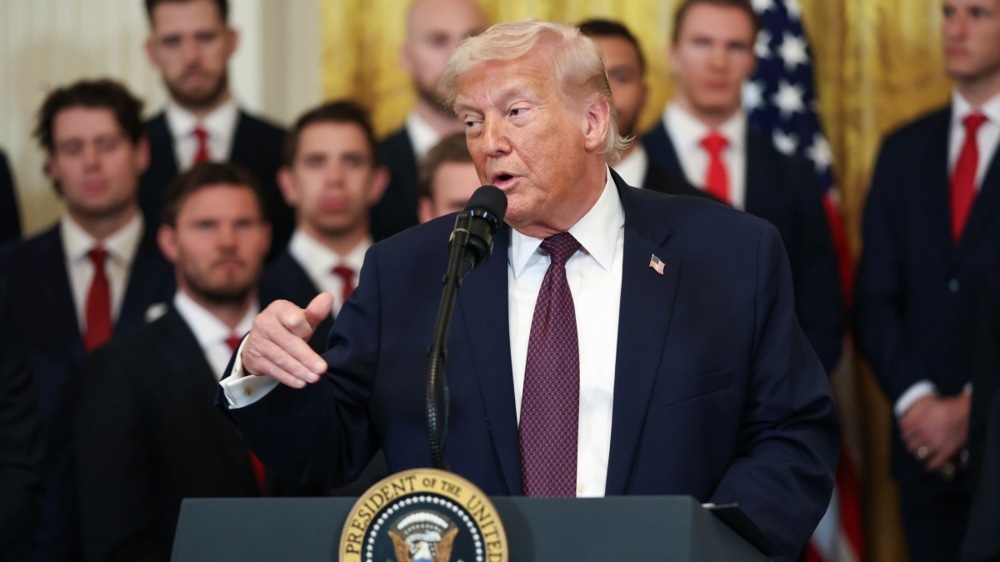
Speaking to leaders of Latin America in Florida, U.S. President Donald Trump said that his involvement in negotiations between Ukraine and Russia is a “lifelong favor to Europe.” The report was published by Clash Report, citing the president’s tweet of 7 March 2026.
"You know, Ukraine and Russia — you’d think there might be a little camaraderie somewhere, but the hatred is enormous. It’s very hard for them to get there. It’s very, very hard. We’ll see what happens."
— Donald Trump, President of the United States (speech in Florida; source: Clash Report / Twitter)
Context: recurring messages and timeline
This is not an isolated claim. On 3 March, Trump already listed ending the war among the main goals of his foreign policy agenda, and on 5 March he publicly urged Volodymyr Zelenskyy to “come to his senses” and reach an agreement with Russia. This sequence of signals matters not so much for the rhetoric itself as for the possible impact on negotiation processes and partners’ expectations.
Why this matters for Ukraine
First, the phrase about a “favor to Europe” frames the U.S. role as a mediator that can push Europe toward compromises, but does not necessarily guarantee Ukraine’s security. Second, repeated calls to end the conflict create a risk of diplomatic pressure on Kyiv to make quick concessions without appropriate guarantees. Third, for citizens this is a security question: whether the statements will turn into concrete protection mechanisms — financial, military, or legal — or remain purely political declarations.
Experts also draw attention to another aspect: front-line experience is changing views on standards and operational approaches. Valentyn Badrak, director of the Center for Army, Conversion and Disarmament Studies, in a piece for LIGA.net emphasizes that Ukrainian front-line experience has posed a challenge to traditional Western models of conducting combat operations — a factor that should be taken into account in any negotiations and guarantee agreements.
What could happen next
There are several scenarios: from a U.S. diplomatic initiative accompanied by security packages and financial support, to pressure on Kyiv demanding rapid concessions without guaranteed control mechanisms. For Ukraine, it is important to insist that peace talks be accompanied by clear guarantees and verifiable security mechanisms, not only political promises.
Now it is up to the partners: will they turn Trump’s words into concrete instruments to protect Ukraine, or will they become an argument to pressure Kyiv — the answer will determine how the security balance in the region changes.
Sources: Clash Report (tweet by Donald Trump, 7 March 2026), materials from LIGA.net (comments by Valentyn Badrak).



