Trump Withdrawing 5,000 Troops from Germany — and Promises "Much More." What This Means for Ukraine
# Decisions Without Strategy, Laws With Loopholes and the Only Hope — That Trump Simply Forgets About His Dispute With Europe. Retired Colonel Cedric Leighton Laid Out the Scenarios Frankly.

By Tetiana Suchkova-Ladik
May 15, 2026 · 3 min read
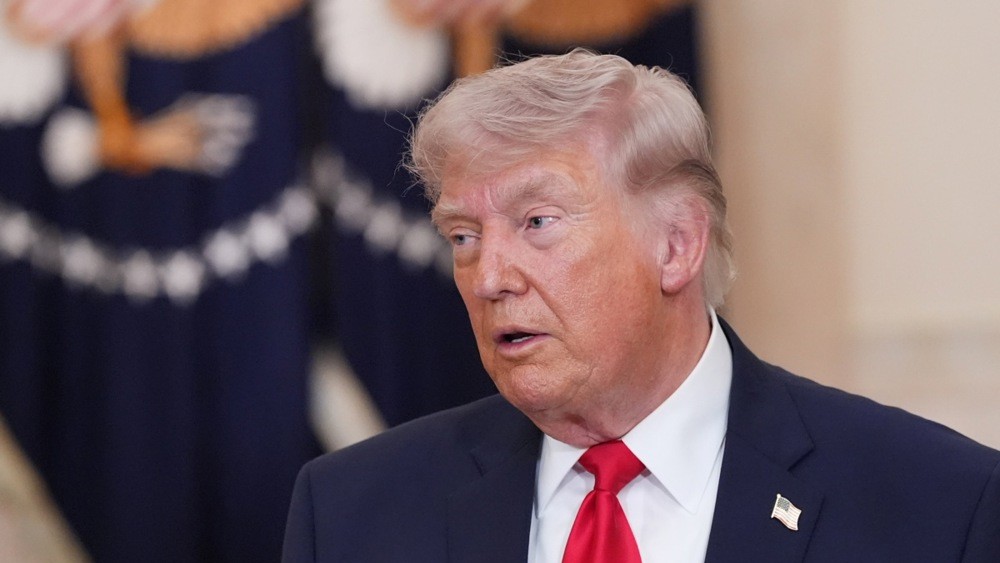
The Pentagon confirmed the withdrawal of 5,000 American military personnel from Germany over the next six months to a year. Trump added that the reduction will be "much larger," without specifying figures or timelines. According to Euronews, citing NATO sources, there was no deliberate strategy behind the decision — only a personal dispute between the president and Chancellor Friedrich Merz over criticism of the American operation against Iran.
Three Scenarios — From Worst to Most Realistic
Retired U.S. Air Force Colonel Cedric Leighton, whom LIGA.net asked to assess the situation, made no attempt to hide his skepticism about a "complete reversal" by Washington.
"The best-case scenario for Ukraine is if Trump forgets about his dispute with Europe and changes course. A complete reversal may be unlikely, but European and Ukrainian leaders can still exert positive influence on the U.S. and should continue to do so."
Cedric Leighton, Retired U.S. Air Force Colonel
Leighton also noted that a reduction of a few thousand by itself does not significantly change the military balance — but carries a symbolic risk: Moscow may interpret it as a signal of American weakness, even if such a conclusion would be mistaken. According to him, "adversaries often make similar mistakes when analyzing Washington's actions."
Regarding the NATO threat in the East, Leighton maintains cautious optimism: Russia is currently under significant economic and military pressure due to failures in Ukraine, which restrains its appetite for new adventures — particularly in the Suwalki Corridor region between Lithuania and Poland.
The Law Exists. But With Conditions
The U.S. Congress attempted to protect itself in advance. In December 2025, in the defense budget NDAA-2026, lawmakers set the record: the U.S. contingent in Europe cannot fall below 76,000 personnel for more than 45 days without consultations with NATO allies and an independent assessment of consequences. The vote passed 312 to 112 — a rare bipartisan agreement.
However, the provision is not an absolute ban — it complicates the procedure but does not fully block the withdrawal. Currently, 80,000 to 100,000 American military personnel are stationed in Europe (the exact figure varies due to constant rotations), so the withdrawal of 5,000 formally leaves the contingent in a "safe" zone. NATO allies, according to Bloomberg, are already preparing for new announcements — including regarding Italy.
The Pentagon also unexpectedly cancelled the deployment of 4,000 military personnel to Poland — another move that caught Warsaw off guard.
What This Means Specifically
- Ramstein in Question: Germany hosts approximately 36,000 American military personnel, including key command centers and a medical facility. The withdrawal of even part of this force changes the logistics of supporting Ukraine.
- Long-Range Missiles: Bloomberg reports that the Trump administration may reconsider plans for deploying American long-range systems in Germany, agreed upon under Biden.
- NATO Exercises: Diplomats predict that the U.S. will reduce its participation in the Alliance's joint exercises.
Swedish Armed Forces Commander General Micael Claesson acknowledged in a comment to AP that "any change in American presence" affects overall security dynamics — but added that Trump's statements are being received "as if the Americans are leaving, but they're not."
If Trump does announce new cuts — in Italy or elsewhere — before the 2026 congressional midterm elections, the question will no longer be about symbolism: Europe will have to decide whether it is capable of filling the gap in the deterrence architecture on its own — and on what timeline.



