Trumpism as an ersatz ideology and a simulation of political doctrine
Why are so many thoughtful people around the world today trying to understand the nature and causes of the rise of Trumpism? Perhaps because there is already a clear understanding—or, if not understanding, then at least a feeling—that this will not end well.

By Oleg Bazylewicz
December 12, 2025 · 2 min read
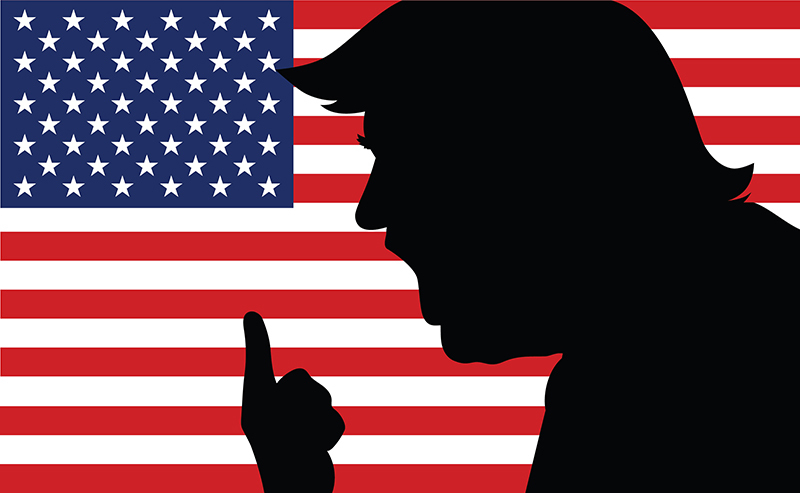
What is Trumpism and is it an ideology
This is how the political ideology of Trump and his “hard-core” supporters began to be called already during his first presidential campaign. After his coming to power, and especially in a second term, this ideology materialized into significant changes in the practice of government, in domestic and foreign policy, and even in the “Pshonka-style” decoration of the Oval Office.
We remember that totalitarian ideologies of the past (national socialism, Marxism–Leninism, Maoism), when they became the basis of state policy, also began to influence everything they could reach — including things seemingly far removed from politics, such as aesthetics, culture, art, and architecture.
But is Trumpism an ideology? By many measures, it “doesn’t measure up” to a classical ideology. Trumpism lacks a worked-out intellectual base and is not grounded in the writings of founders. Of course, Trump is the author of many books, including the well-known bestseller The Art of the Deal (1987), co-written with journalist Tony Schwartz. But that is certainly not Das Kapital or Mein Kampf…
Trumpism is not a system of ideas, values, and convictions. It does not explain the world, it does not form a worldview. In other words, Trumpists pretend they have all that and that they possess a corresponding program of action — but in reality there is nothing of the sort.
An aggregate of different ideological elements
So far Trumpism looks like a raw and “unrefined,” and at times even scorched mix of various ingredients, such as:
- “Conventionally right-wing” populism: pitting “ordinary people” (working class) against corrupt elites (legal, financial, and creative elites), although in reality such populism often smacks of leftism;
- Neo-nationalism: prioritizing national interests (“America First”) over international obligations and globalism.
- Economic protectionism: state interventions, a fixation on tariffs and trade restrictions to protect domestic production and jobs.
- Anti-globalism and isolationism: skepticism toward international institutions, global phenomena, and processes;
- Authoritarian tendencies: concentration of power, weakening of democratic institutions and systems of checks and balances.
Questionable political styles
Add to this certain elements of political style characteristic of Trumpists:
- Cult of personality: it is still a long way from talk of Trump as the “great leader of the American people,” but within MAGA circles there is a pronounced tendency, at minimum, toward uncritical acceptance of everything Trump says and does;
- Aggressive rhetoric, designed for the emotional rather than the rational sphere: to point out enemies, “galvanize” the electorate, and polarize society.
- Demagoguery: both Trump himself and his MAGA people routinely juggle unreliable figures and facts, and generally engage in strange talk that to many politicians, especially Europeans, sounds simply bizarre.
- Appointing poorly competent but personally loyal people to important positions.
We have a porridge of various ideological elements, seasoned with a questionable political style. It might seem like nothing serious. An ersatz ideology, a simulation of a political doctrine. Yet, nonetheless, Trumpism has become an important factor influencing world affairs, geopolitics, and geoeconomics. And for understandable reasons, today much depends on the Trumpists on how successful Ukrainian resistance to Moscow’s aggression will be.
We will continue to examine the “sources and components” of Trumpism in subsequent publications.



