"This is not good": Trump on alleged attack on Putin's residence — a signal for security and diplomacy
At first Donald Trump said he didn't know about the incident, but later said that Putin had complained to him by phone. We examine why those words affect the risks of escalation and how this is connected to the Kremlin's information campaign.

By Tetiana Suchkova-Ladik
December 29, 2025 · 2 min read
Briefly
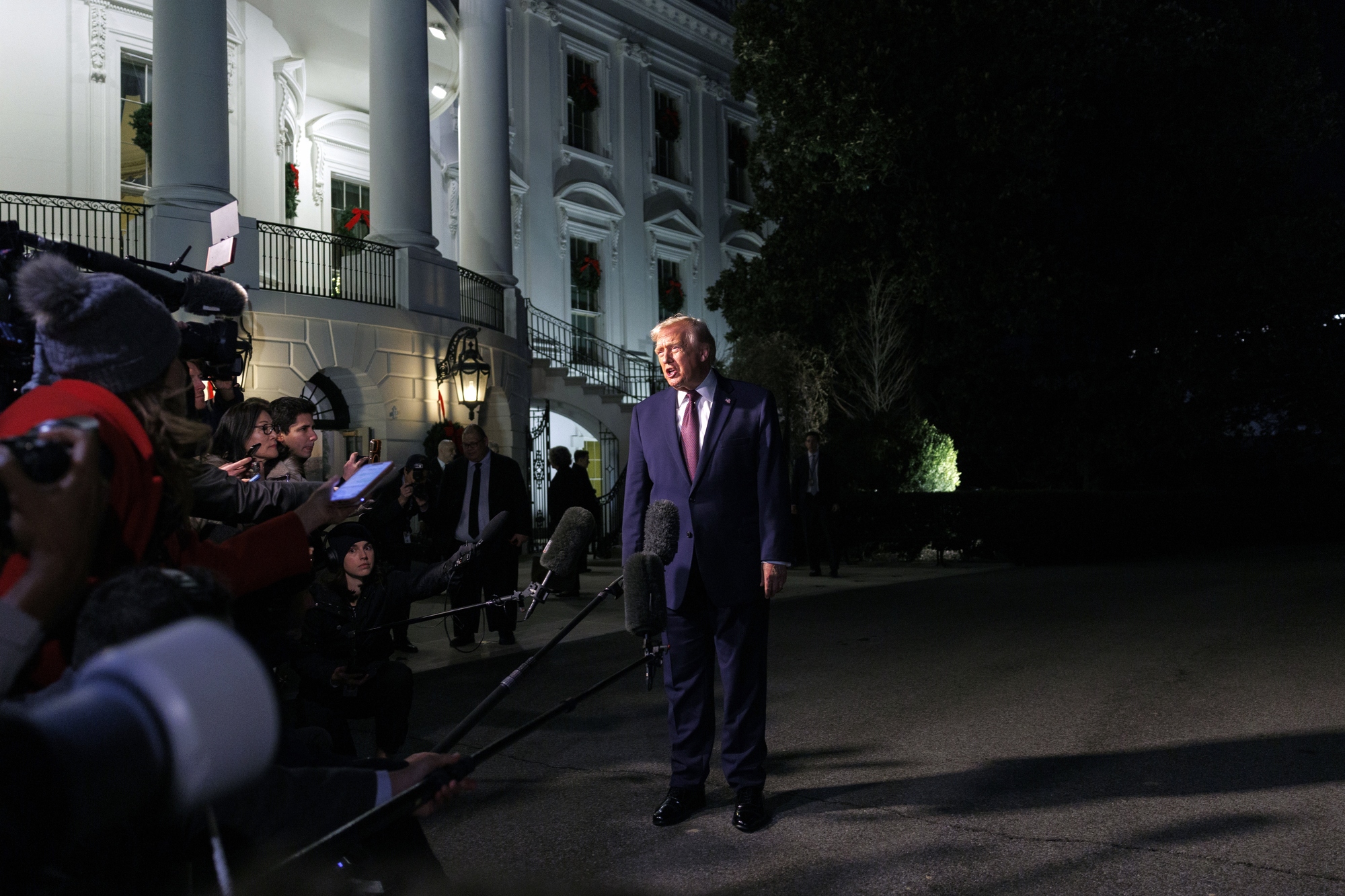
U.S. President Donald Trump confirmed that during a phone conversation on December 29 Vladimir Putin told him about an alleged attack on his residence. Reuters reported this during a meeting with the Prime Minister of Israel. Initially Trump denied knowledge of the incident, then repeated Putin's account and described the situation as "not good."
What exactly Trump said
"No, actually I don't know about that. I basically only heard about it, but I don't know anything about it. That would be very bad. That would be not good."
— Donald Trump, President of the United States
"Yes, I don't like that. It's not good. I heard about it this morning... President Putin told me about it this morning. He said he was attacked."
— Donald Trump, President of the United States
In the same conversation Trump also said that he "stopped a Tomahawk," hinting at his own steps or the possibility of intervention in response — wording that requires further fact-checking and details.
Context: what Moscow and Kyiv say about it
On December 29 Russian Foreign Minister Sergey Lavrov said that allegedly Ukrainian drones tried to attack Putin's residence in Novgorod Oblast. President Volodymyr Zelensky responded by calling that statement "a lie" and explained why the Kremlin might spread such messages — as an element of informational pressure and a justification for further measures.
Why this matters for Ukraine
First, the very fact of exchanging such messages between leaders affects the assessment of escalation risk. If Moscow presents information as an attack on the Kremlin's top, it creates a threat of political or military justification for harsh responses.
Second, even unconfirmed Kremlin statements function as a information weapon: they mobilize the domestic Russian audience and can push international partners toward reactions that Moscow seeks to prompt.
What experts say about it
As Reuters notes, Moscow's official rhetoric around such incidents often does not align with independent verification of facts. Analysts point to two key effects: a combination of signals of fear of escalation and an attempt to legitimize the Kremlin's subsequent political moves.
Outlook
So far we have conflicting statements and an exchange of interpretations between the capitals. The next steps matter more than loud phrases: Ukraine's partners and Kyiv itself should demand independent fact-checking and strengthen communication to prevent disinformation from becoming a trigger for escalation. The ball is now in the court of international institutions and diplomacy: declarations need to be turned into verified data and clear political responses.
Source: Reuters; official statements of the Kremlin and the Office of the President of Ukraine.



