Turkey opens case against opposition leader over rally remarks — the second major opposition figure to come under pressure in a year
The Ankara prosecutor's office is investigating Özgür Özel for "insulting the president." Last year the Istanbul mayor from the same party was jailed. The pattern is repeating.

By Tetiana Suchkova-Ladik
March 30, 2026 · 2 min read
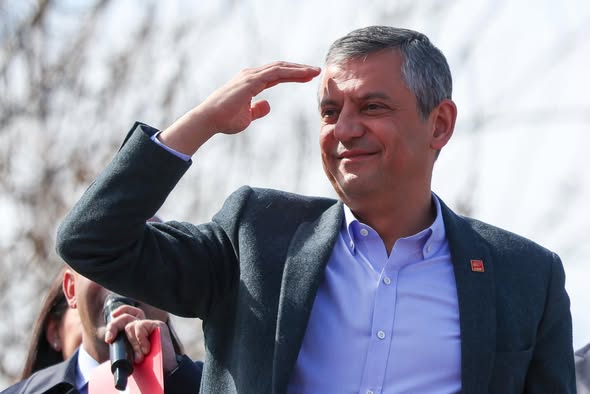
Özgür Özel took the stage in Kuşadası and said out loud what he thinks. “You have decided to become the leader of a junta,” he addressed Erdoğan in front of thousands of people at a “Defend the Nation’s Will” rally. The next day Ankara’s prosecutor’s office opened an investigation.
The basis was the article on “insulting the president” — one of the most frequently used in the Turkish legal system against critics of the authorities. The start of the case was announced by Recep Tayyip Erdoğan’s personal lawyer Hüseyin Aydın in a post on the social network X. In other words, the signal did not go through an independent legal channel but through a person who directly serves the president’s interests.
The full text of Özel’s speech was published on the official website of the Republican People’s Party (CHP). There are no calls for violence or hate speech — there is political criticism: the opposition leader reproaches Erdoğan for “deciding to enter history in disgrace” instead of leaving power with dignity. It is this that the prosecutor’s office is classifying as an insult.
The context makes this case even harder to ignore. In March 2025 Turkish authorities arrested Ekrem İmamoğlu — the mayor of Istanbul from the same CHP and the main potential rival to Erdoğan in the presidential elections. He was detained on charges of corruption and links to terrorist organizations. International observers and the opposition interpreted the arrest as politically motivated. The university where İmamoğlu earned his degree stripped him of it — which under Turkish law would automatically make him ineligible to run in the presidential race.
Now — an investigation against the party’s current leader. Both are from the same party but are two different instruments of pressure: criminal prosecution of the mayor and procedural pressure on the head of the CHP.
Turkish legislation provides for up to four years in prison for “insulting the president.” According to the human rights organization Stockholm Freedom Center, since Erdoğan came to the presidency in 2014 more than 160,000 cases have been opened under this article. The vast majority concern journalists, activists and politicians.
Özel remains free for now and continues his public activity. The CHP had not commented officially on the case at the time of publication.
The question that will determine what happens next: will the investigation stop at the “signal” stage — as often happens with opposition politicians whom authorities do not want to make martyrs of — or will it move to formal charges before Turkey’s next electoral cycle?



