Philippine mercenary killed in Donetsk region — evidence of large-scale recruitment of foreigners into Russia’s army
The death of John Patrick near Novoselivka is not an isolated case. We examine why the Kremlin is resorting to the rapid recruitment of foreigners, what risks this creates for migrants, and what it means for the operational capability of Russian units.

By Tetiana Suchkova-Ladik
January 26, 2026 · 2 min read
What happened
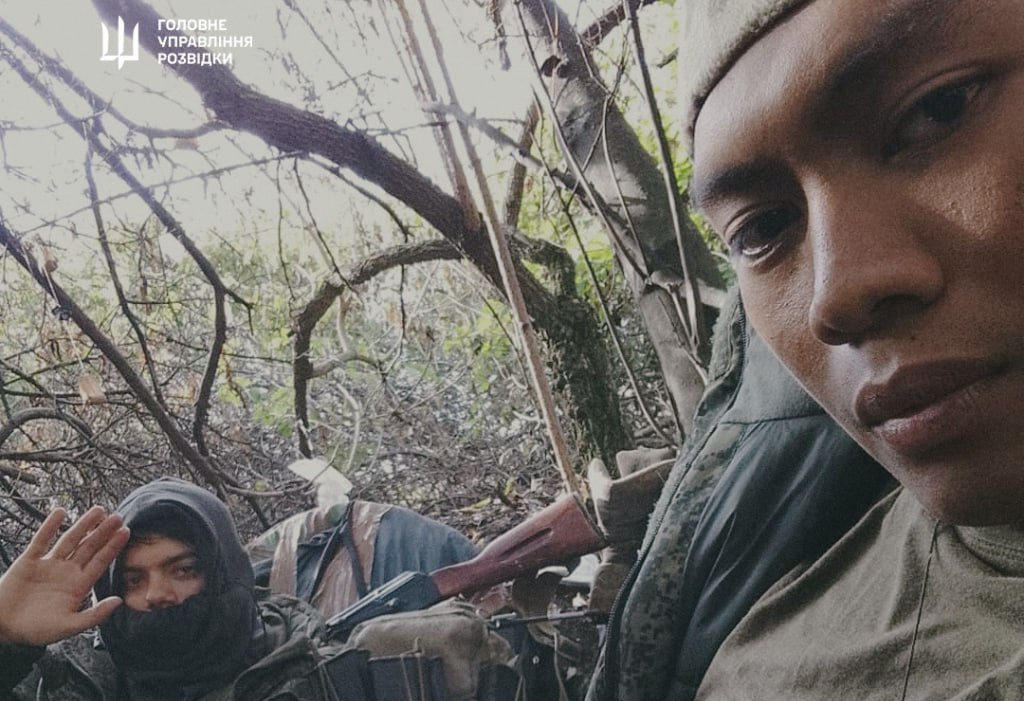
In Donetsk Oblast the body of a mercenary from the Philippines — John Patrick — was found. According to the Main Directorate of Intelligence (HUR), he served in the 9th assault company of the 3rd battalion of the 283rd regiment of the 144th motor rifle division of the 20th Army. Patrick was killed during a so-called "meat assault" in the Novoselivka area of Kramatorsk district; next to the body were a weapon, ammunition, and a scrap of paper with the unit number, a phone number and the commander's name.
Key details
Intelligence established that the mercenary was trained for a week and sent to the front. He was wounded in a wooded area and, according to the HUR, bleeding led to his death — evacuation of the wounded was not organized. It was also noted that Patrick did not speak Russian, which complicated communication and increased risks during combat.
"A trip to Russia — a real chance to end up in an assault company without training and with no chance to survive"
— Main Directorate of Intelligence (HUR)
Why it matters
This case is not an isolated signal. Analysts point to several reasons why the Kremlin is recruiting foreigners: a shortage of mobilized manpower, a desire to reduce the political and social costs of recruiting within Russia, and experiments with cheap labor for assault operations. Such practices increase combat losses, undermine unit command, and intensify international criticism.
Context and corroboration
Earlier, Bloomberg reported on the recruitment of South African citizens via online platforms, including Discord; in one such case a mercenary has already died. There were also reports of initiatives in Baghdad to investigate the recruitment of young people for the war against Ukraine. Taken together, these data paint a picture of a systemic practice rather than an isolated incident.
What it means for foreigners and for Ukraine
First, this is a direct warning to foreigners: work or travel to Russia can turn into a risk of combat involvement, deception, or coercion. Second, for Ukraine — it is an additional argument in diplomatic appeals and information countermeasures: evidence of involving foreigners undermines narratives about the "voluntariness" and "legitimacy" of Russian actions.
Conclusion
The death of John Patrick highlights a number of problems in the Kremlin's personnel policy: rapid training, the use of foreigners in assault operations, and the lack of organized evacuation for the wounded. This is both a humanitarian and an operational problem with consequences for migrant safety and the tactics of Russian units. Whether international pressure will change these approaches remains an open question, but the warning to potential migrants and partners is clear.



