In Kharkiv, a military TCC official was stabbed with a knife during a notification — attacker still at large
On April 6 in Kharkiv, a civilian attacked a military recruitment center (TCC) serviceman with a knife during an awareness campaign. This is no longer an isolated incident: in 2025, the number of attacks on TCC employees has increased almost threefold compared to the previous year.

By Tetiana Suchkova-Ladik
April 6, 2026 · 2 min read
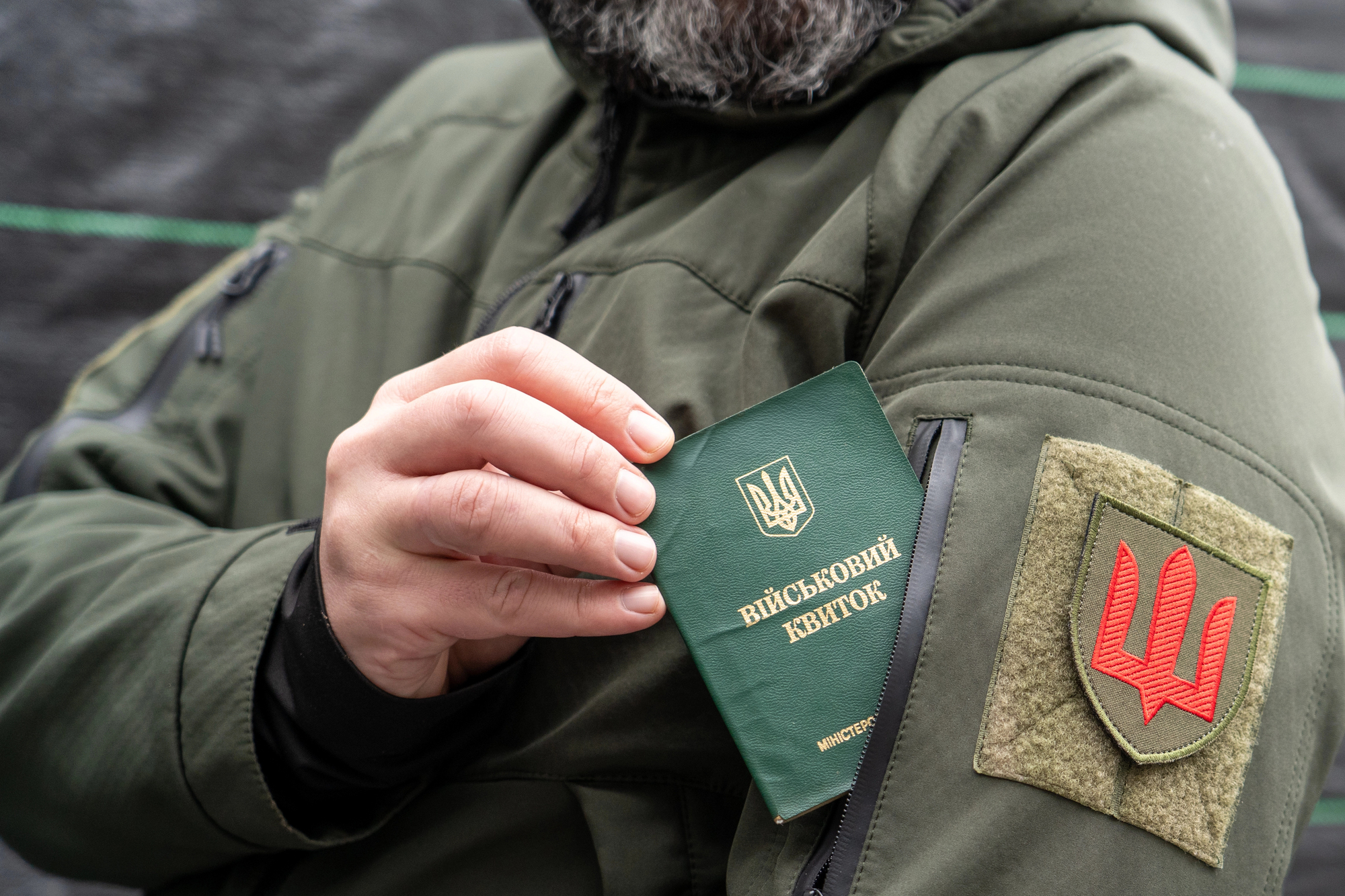
On Monday, April 6, in Kharkiv, during notification activities for military conscripts, a civilian man stabbed a serviceman of the territorial recruitment and social support center with a knife. The wounded man was taken to the hospital. The attacker fled the scene and is being sought.
What happened
According to the Kharkiv Regional TCC and SSC, the incident occurred while center employees were performing their official duties. The civilian struck one of the servicemen with a knife in the abdomen. Medical personnel provided the wounded man with necessary assistance; there is no threat to his life. Police have launched a search for the suspect.
Context: Not an isolated case
The attack in Kharkiv occurred four days after the death of a TCC serviceman in Lviv. On April 2, an unknown person stabbed 52-year-old Oleh Avdyeyev in the neck on Patona Street during a notification operation — he died from his injuries. According to media reports, the suspect was detained.
Kharkiv Region leads in the number of attacks on TCC employees: according to the National Police, as of March 2025, 64 incidents have been recorded there — more than in any other region. For comparison: Kyiv — 49 cases, Dnipropetrovsk Region — 42.
"In 2025, the number of attacks on TCC and SSC employees rose to 341 — almost three times more than a year earlier"
National Police of Ukraine
In 2024, 118 such incidents were recorded; in the first two years of full-scale war — 43. That is, the growth is not linear but occurs in jumps.
What this means for TCC employees
Notification activities are field work without constant armed protection. TCC employees operate in a civilian environment, often in situations of direct conflict with people trying to avoid mobilization. Legal responsibility for attacks on them is equated to attacks on government representatives performing their duties, but this does not stop the growing statistics.
- In February 2025, a similar incident already occurred in Kharkiv: a man, noticing servicemen, first fled, then got a knife and wounded two TCC employees. The suspect was detained.
- In Kharkiv Region, there was also a hit-and-run incident involving a car hitting a TCC serviceman during a document check.
- In Lviv, the murder of Oleh Avdyeyev became the first fatal case in 2026 according to new police data.
The Kharkiv TCC, following a series of incidents in April, officially noted an increase in attacks and stated that those responsible would be held accountable. Specific changes to the notification procedure — in particular regarding armed escort — were not publicly announced.
If the state does not change the operational security protocol for TCC employees during field operations, the statistics for attacks in 2026 will exceed 2025 figures by summer.



