"Flamingo" strike on Votkinsk — Zelensky: some were shot down, but those that got through reached the plant
Systematic work by the defense sector has paid off: long-range missiles with a 1,400 km range struck a manufacturing facility in Russia. Why this matters for security and how it will affect the enemy’s production — briefly and with facts.

By Tetiana Suchkova-Ladik
February 25, 2026 · 2 min read
What happened
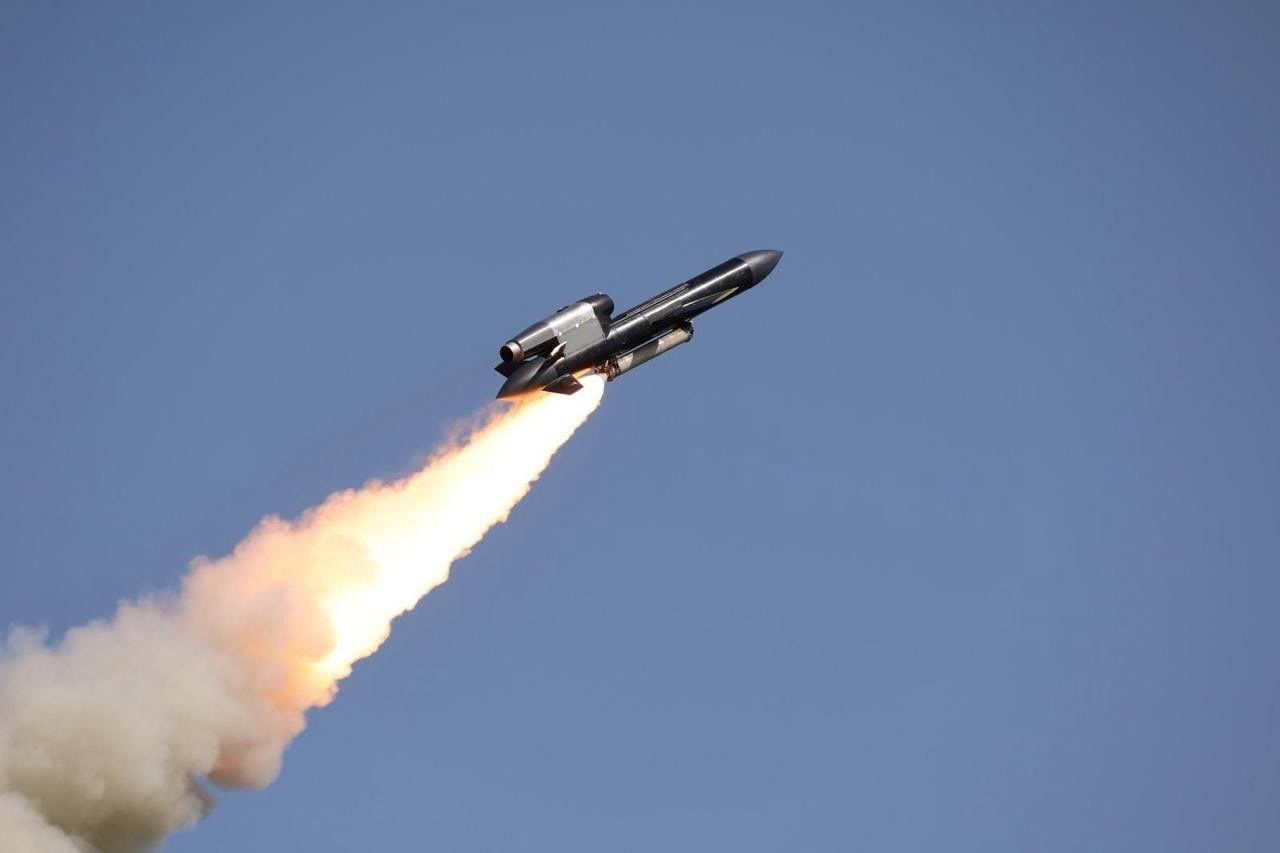
On the night of February 21 Ukrainian forces struck a missile factory in Votkinsk (Udmurtia), President Volodymyr Zelenskyy said during a press conference with Norwegian Prime Minister Jonas Gahr Støre in Kyiv. The strike involved the use of long-range cruise missiles "Flamingo" at a distance of about 1,400 km.
Official explanation
"There were shoot-downs by Russian air defenses, there were misses and there were precise hits. But the most important thing is that all the missiles that were launched — all reached the target. I consider that the most important success"
— Volodymyr Zelenskyy, President of Ukraine
Zelenskyy also emphasized that this is the result of the work of the Ukrainian industry and that the scale of "Flamingo" production will depend on funding and the availability of components.
Why it matters
A strike on a missile manufacturer deep inside Russian territory immediately serves several purposes: it disrupts the enemy's logistics, demonstrates the operational range of Ukraine's strike capabilities, and pressures Russia's ability to rapidly replenish munitions. Even if air defenses shoot down some rounds, destroying production facilities reduces the pace of replenishing offensive stocks.
Context about the manufacturer
The "Flamingo" missile is produced by the Ukrainian company Fire Point, also known as a maker of long-range drones. In August 2025 Kyiv Independent reported inspections of the company; NABU later said that the investigation does not directly concern the production of "Flamingo". Separate media pieces (citing sources) touched on questions of ultimate ownership — these facts should be distinguished from investigative conclusions: there were no official suspicions related to missile production at the time of those reports.
What this means for Ukraine and partners
First, it signals growing capabilities of our defense industry — but the scale of the impact depends on investment in production and the supply of critical components. Second, an attack on a factory deep in Russia changes the enemy's operational calculus: it must allocate more resources to protecting infrastructure, not just the front line.
Risks and questions
Strikes on factories on Russian territory can have political and military consequences — from escalation to diplomatic statements. At the same time, it is important to distinguish technical details from speculation: information about investigative actions regarding Fire Point was published in the media, but official bodies (NABU) separately commented on the scope of those investigations.
Summary
This is an example of how the combination of technology, intelligence and logistics produces effects on the enemy's strategic infrastructure. Now the question is about resources: can our industry scale up "Flamingo" production and will partners provide that — from financing to the component base. Answers to these questions will determine how much this success turns into a long-term advantage.



