# Strike Against Legless Veteran — and Transfer to the Front: What's Wrong With the Army's Response
# A military TCC officer who struck veteran Artem Moroz, who uses prosthetics, on the head will face punishment in the form of deployment to the front lines. However, police opened a case only for "minor bodily injury," video evidence was destroyed under pressure, and the victim himself is an active serviceman of the 241st brigade.

By Tetiana Suchkova-Ladik
May 23, 2026 · 2 min read
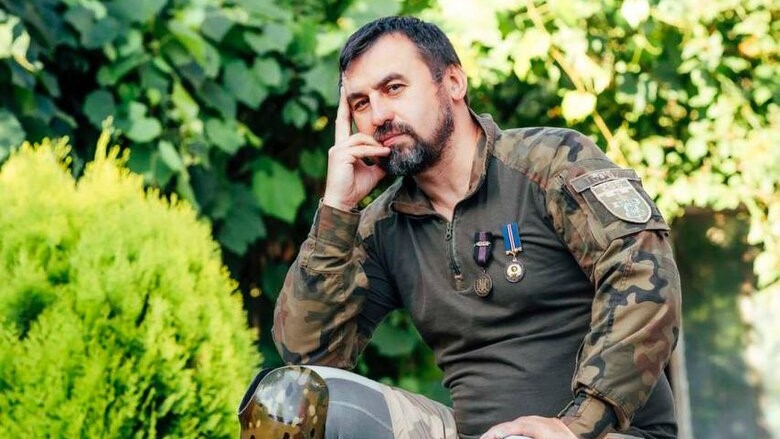
On the evening of May 21, an alert group from the Shevchenko Territorial Defense Center (TDC) stopped the car of Artem Moroz at the intersection with Ivan Vyhovskyi Street. When the veteran's wife Olesya Zhdanova began recording what was happening on her phone, one of eight people in balaclavas approached and struck Artem on the head. He fell to the ground. His prosthetics are not visible, but they are there — Moroz lost both legs in Kherson region in the first months of the full-scale invasion.
Moroz is not simply a veteran in a static sense of the word. After rehabilitation, he returned to the army and serves in the 241st Brigade, where he provides psychological support to the wounded, assists those released from captivity, and helps families of the fallen. In parallel — he dances ballroom dances on prosthetics, runs marathons, and recently performed at Times Square in New York.
«I show guys who are now in despair how I dance, swim, run — and by my own example prove that life has not stopped»
Artem Moroz, according to LB.ua
What happened to the evidence
According to Zhdanova, during the incident, not only people in balaclavas from the TDC were present, but also police officers. The video recording she managed to make was deleted under pressure. Police opened proceedings under Article 125 of the Criminal Code of Ukraine — "Intentional minor bodily injury." Doctors on site suspected a concussion.
An official response appeared the next day: the Kyiv City TDC acknowledged the use of force and promised disciplinary action for "direct participants and their leadership." The Command of the Ground Forces went further — announced the transfer of the guilty to combat units.
«The use of physical force by a TDC servicemember against a veteran cannot be justified by anything»
Command of the Ground Forces of the Armed Forces of Ukraine
Punishment or career path
Sending to the front as a disciplinary measure is an unconventional construction. Formally, this is neither dismissal, nor criminal prosecution, nor deprivation of rank. In a context where thousands of people avoid mobilization, such "punishment" looks like an administrative decision that closes a public scandal without disrupting the system.
According to LIGA.net, citing the National Police, since the beginning of the full-scale war in Ukraine, over 600 attacks on military TDC and SP personnel have been recorded. But this case is a mirror image: it was not the TDC that was attacked, but the TDC that struck the person the system should have protected. Among those affected — an active servicemember with the highest disability category.
- Police classified the incident as "minor bodily injury" — pending determination of severity after examination
- Video evidence was destroyed in the presence of law enforcement, no criminal proceedings were opened on this fact
- The internal investigation is being conducted by the TDC itself — the body whose subordinates committed the incident
The question is not whether this particular soldier will go to the front. The question is whether criminal proceedings will be initiated for destruction of evidence — and if not, then the next incident involving an alert group will happen with the understanding that the video can be taken away without consequences.



