Hungarian elections could delay Ukraine's EU accession — what it means for security and negotiations
Polls and analysis show: the issue of Ukraine has become the main electoral fear in Hungary. We examine why this matters for Kyiv and which post–April 12 scenarios will affect Ukraine's EU integration.

By Tetiana Suchkova-Ladik
February 23, 2026 · 3 min read
Brief — why it's worth reading
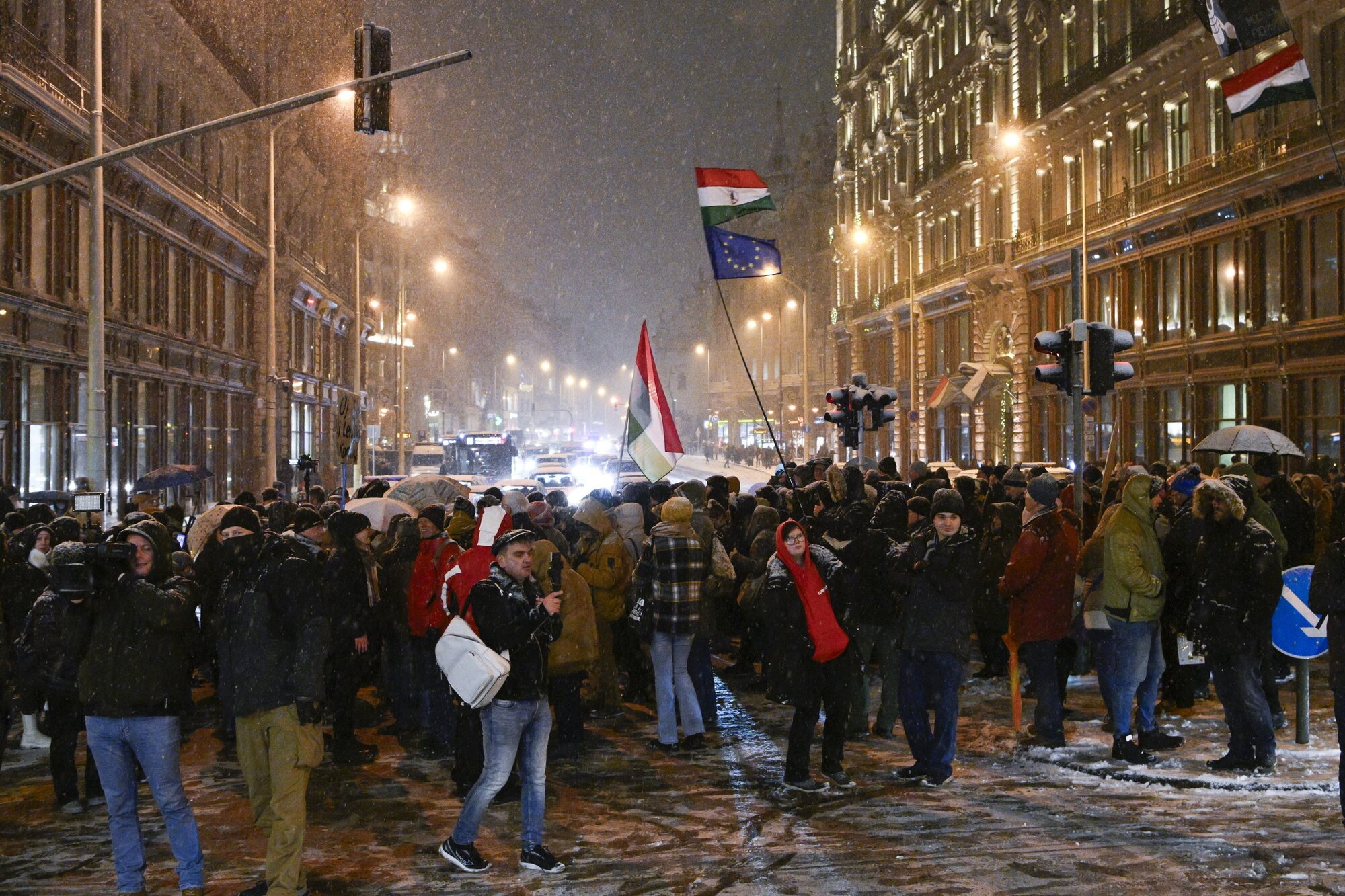
What is happening in Hungary's pre-election politics is not just an internal Budapest story. For Ukraine it is a matter of direct interest: Budapest has a formal tool to block the opening of negotiating chapters and to delay the accession process. We analyze the facts and the real consequences.
Position of the Hungarian electorate
According to the analytical center Policy Solutions, in 2024 among supporters of the Fidesz party 69% favored closer ties with Russia (compared with 32% among opposition supporters). Overall, polls show: 64% of Hungarians are against Ukraine joining the EU, 31% are in favor. Perception of Ukraine has also significantly worsened: 51% name Ukraine as the greatest threat, while Russia is named by 46%.
Experts at the Hungarian Europe Society note that over the course of a year Ukraine's image in the Hungarian media space and public discourse shifted — Kyiv was turned into a convenient opponent for electoral mobilization.
Why this happened: rationalizing the causes
There are three major factors. First, Orbán's domestic campaign turns foreign issues into a tool to mobilize his own electorate. Second, media narratives have cast Ukraine as an "external threat," resonating with part of the voters. Third, the political gain from anti-Ukrainian rhetoric for the ruling party is obvious: it consolidates the base and distracts from economic problems.
What is at stake for Ukraine
The consequences are practical and operational. Budapest can continue to block the opening of individual negotiating clusters in the euro-integration process. This delays not declarations, but concrete technical and political steps that bring Ukraine closer to membership.
At the same time, Brussels is working on options to pressure Hungary: according to Politico (10 February 2026), among the ideas are "unprecedented" measures, including the procedure under Article 7 of the Treaty on European Union, to neutralize the blockage. This creates a parallel front — European against the Hungarian position.
"Another war plan of Brussels and Kyiv — Zelensky's plan"
— Viktor Orbán, Prime Minister of Hungary
Possible scenarios after the elections
1) If Orbán wins — his rhetoric and institutional moves may intensify. This would mean prolonged blocking of certain decisions regarding Ukraine and additional political obstacles.
2) If the opposition wins — Hungary's position may soften, but changes will not be instantaneous. Public sentiments shaped during the campaign will continue to have an effect for months or years.
There is another nuance noted by one Ukrainian diplomat: when the election factor stops pressing on Orbán, there may be more space in the negotiation process for bargaining and compromises — but this is more of a medium-term scenario, not a quick solution.
What Ukraine should do — a short plan
- Continue the diplomatic front and simultaneously work with European institutions to minimize the possibility of blockages.
- Work on the issues Hungary formally raises (rights of national minorities), but without concessions that undermine national interests.
- Prepare communication for the European public: show what benefits the EU will gain from integrating Ukraine, not just the risks.
Conclusion
Hungarian elections are not just a choice for Hungary; they are a geopolitical node for Ukraine. Will European partners turn their support into effective measures that compensate for Budapest's blockage? Or will another round of political games in the region postpone the decision for years? The answer depends both on Kyiv's diplomacy and on the EU's willingness to apply instruments of influence.



