Ukraine and Saudi Arabia sign defense cooperation agreement — a platform for technology and investment
A document between the ministries of defence opens the way to contracts, the exchange of expertise and investments. For Kyiv, this is not only an economic resource but an enhancement of its diplomatic clout in the region.

By Tetiana Suchkova-Ladik
March 27, 2026 · 2 min read
What was signed and why it matters
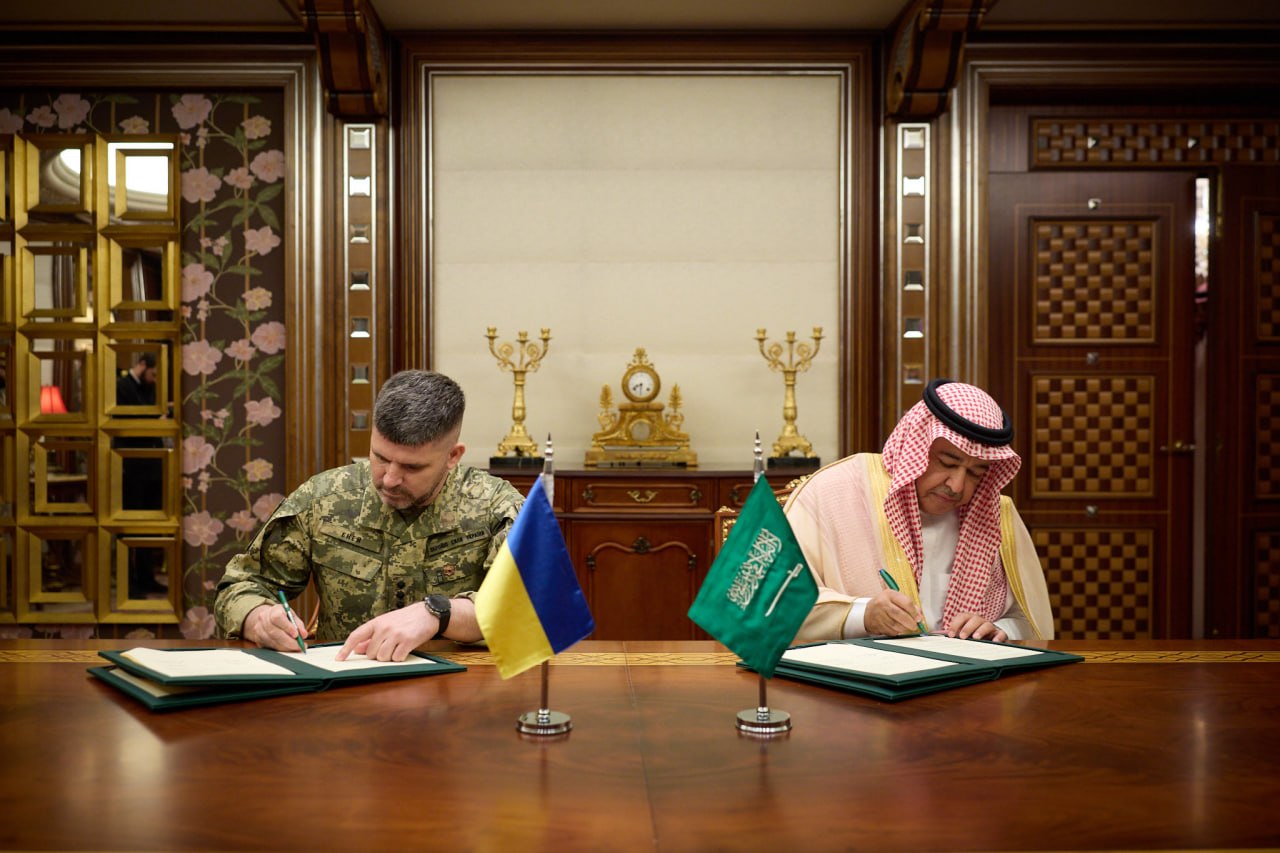
Ukraine and Saudi Arabia signed a defense cooperation agreement: the signature was placed by the Chief of the General Staff of the Armed Forces of Ukraine Andriy Hnatov ahead of President Volodymyr Zelenskyy's meeting with Crown Prince Mohammed bin Salman Al Saud. This is a framework document that lays the legal and diplomatic foundation for further contracts, technological exchange, and investment.
Context: security, technology, investment
For Ukraine, such an agreement is an instrument of both practical and geopolitical significance. First, it is a channel for exporting Ukrainian expertise in countering ballistic strikes and drones, in which our army has practical experience from recent years. Second, it is an opportunity to attract investment for reconstruction and defense infrastructure. Third, diplomatic support from a key Middle Eastern actor strengthens Kyiv's position in the region.
"We have an important agreement between the defense ministries of Ukraine and Saudi Arabia on defense cooperation," — wrote Volodymyr Zelenskyy.
— Volodymyr Zelenskyy, President of Ukraine
What it provides in practice
The agreement creates a mechanism for negotiations on specific contracts: from supplying defense systems to joint personnel training programs and technology transfer. Analysis by LIGA.net and experts' comments indicate that early results will depend on two factors: the speed of signing technical agreements and the parties' willingness to resolve licensing and export-control issues.
The president emphasized mutual benefit: Ukrainian specialists are already working in the Middle East — according to him, more than 200 Ukrainians are in the region, with about 34 more ready for deployment. This gives Ukraine not only income but also a practical platform to demonstrate its expertise.
"For the fifth year now Ukrainians have been fighting against the same kind of terrorist ballistic and drone strikes... And Saudi Arabia has what Ukraine is interested in. This cooperation can be mutually beneficial"
— Volodymyr Zelenskyy, President of Ukraine
Risks and issues
The agreement is only the beginning. There are security, political, and reputational risks: control over technologies, systems compatibility, and international restrictions. Analysts point to potential requests for guarantees against the proliferation of sensitive developments and to how this cooperation will affect relations with Ukraine's other partners.
What's next
The next step is technical agreements and commercial contracts. In that sphere it will be decided whether the diplomatic agreement will turn into concrete training programs, joint production chains, and investments in defense infrastructure. Experts agree: the outcome will depend on Kyiv's ability to quickly offer competitive solutions and on the transparency of the procedures.
Conclusion. The deal with Saudi Arabia is a strategic bet: it offers a chance to strengthen the defense industry, attract capital, and expand diplomatic influence. But whether it will become a systemic driver for reconstruction and modernization is a question for practical implementation, which will be decided in the coming months.



