Ukraine imposes sanctions on Lukashenko — response to Russia's assistance in strikes in the north
On 18 February, Kyiv announced a package of restrictions against Alexander Lukashenko for aiding Russia — from relay stations for strike drones to the supply of critical components. We examine why this matters and what consequences it could have.

By Tetiana Suchkova-Ladik
February 18, 2026 · 2 min read
What happened
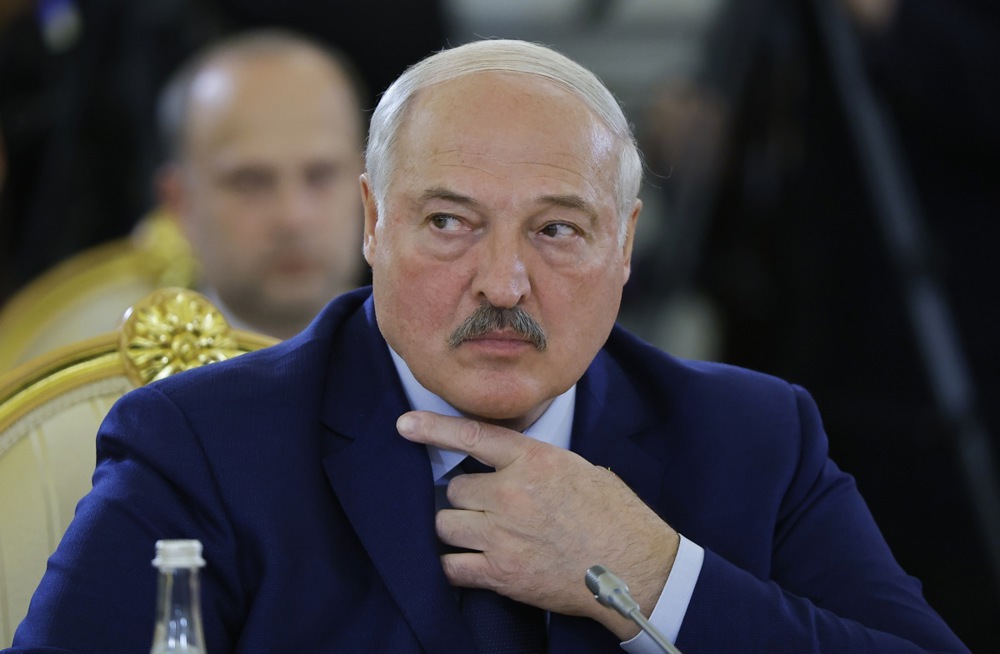
On February 18 President Volodymyr Zelensky signed a decree applying a package of sanctions against Alexander Lukashenko. According to the official account, the decision is a response to Belarus’s systemic assistance to Russian aggression against Ukraine.
"Lukashenko has for quite some time been trading Belarus’s sovereignty for the continuation of his personal power, helping the Russians evade the world’s sanctions for this aggression, actively justifying the Russian war, and now is even increasing his own involvement in scaling up and prolonging the war. There will be special consequences for that."
— Volodymyr Zelensky, President of Ukraine
Why it matters
According to the president and intelligence data, in the second half of 2025 the Russians deployed in Belarus a system of relay stations for controlling strike drones, which significantly increased the ability to attack Ukraine’s northern regions. Some strikes, in particular against energy and rail infrastructure, would have been considerably more difficult without the support of Belarusian infrastructure.
Beyond infrastructure, the statement emphasizes the role of more than 3,000 Belarusian enterprises that supply equipment, components, and mechanical capacity for the Russian defense industry — including parts used in missile production. It also mentions the development of capabilities to host the medium-range missile "Oreshnik."
What the sanctions package entails and how it will work
The official text of the decree contains restriction mechanisms targeting individuals and entities that directly facilitate the aggression — from asset freezes to bans on economic contacts. Kyiv stresses it will act together with partners to achieve a global effect and complicate logistics and technological supplies for the Russian Federation.
This is not merely a symbolic step: the sanctions' targets were chosen to affect supply chains and communications infrastructure that directly enhance the adversary’s combat capabilities.
Context and related steps
Kyiv also announced the appointment of a special representative for contacts with democratic forces in Belarus — targeted work that complements sanctions policy. In addition, the SBU and intelligence services reported the uncovering of a KGB agent who tried to integrate into Ukraine’s defense structures; negotiations on a possible exchange are ongoing.
What’s next
The sanctions have a dual logic: to raise the cost for Lukashenko’s regime and to cut off specific channels of assistance to Russia. But their effectiveness will depend on coordination with international partners — without it, the sanctions risk remaining a local step with limited impact.
Analysts point to two key test questions: whether Ukraine will succeed in turning the political signal into technical restrictions on supply chains, and whether partners will intensify pressure on the same industrial nodes mentioned in the statement. The answers to these questions will determine how much the sanctions change the operational picture on the front and in diplomacy.
"Some of the strikes, in particular against energy facilities and railways in our regions, the Russians would not have been able to carry out without such assistance from Belarus."
— Volodymyr Zelensky, President of Ukraine
Now it is up to the partners: declarations must be transformed into synchronized steps that limit the Lukashenko regime’s capabilities and reduce the risks to infrastructure and people in Ukraine.



