Ukrainian flag at an opposition march in Budapest: provocation or sign of solidarity ahead of the elections?
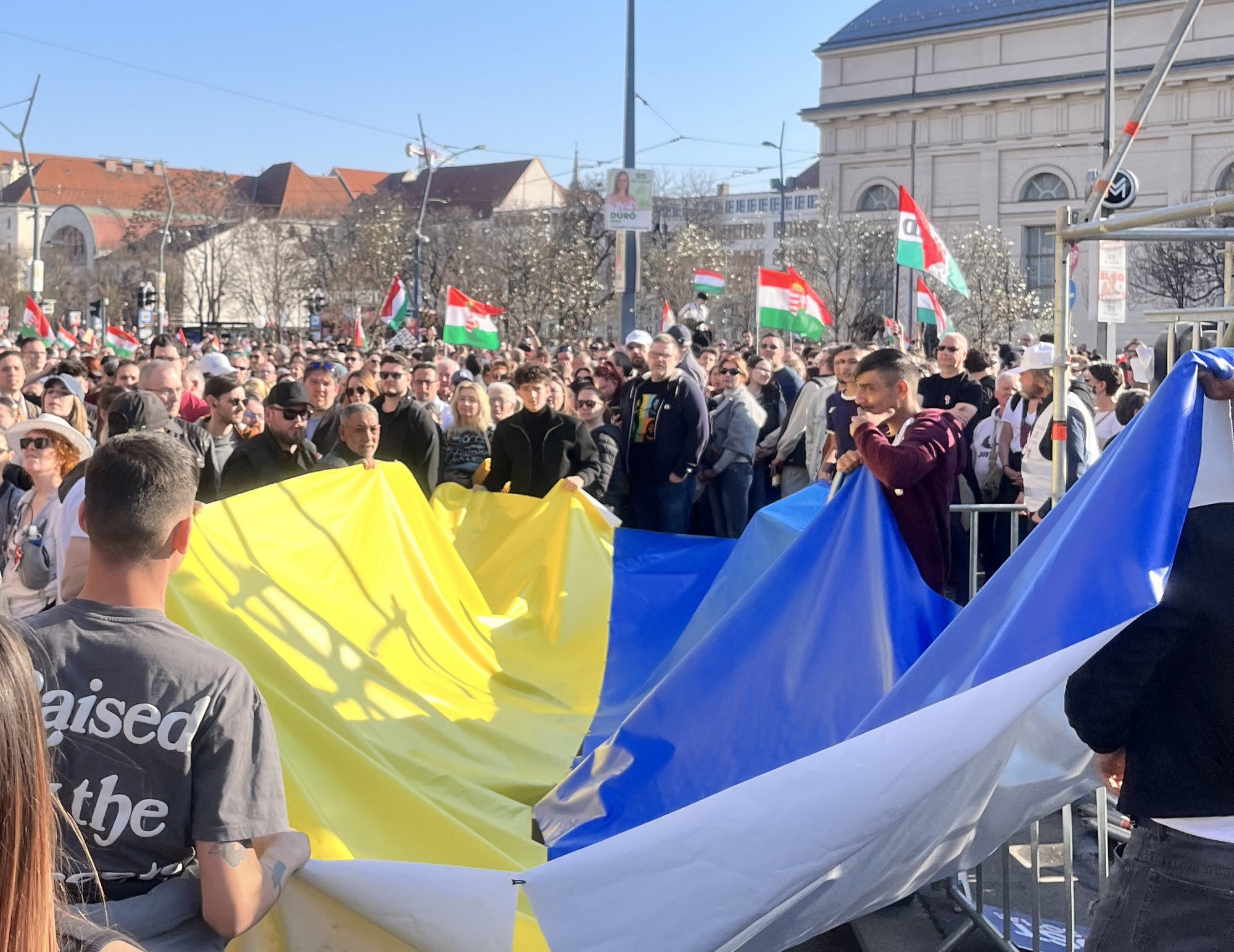
During a mass rally in Budapest, several people unfurled a 4–5-metre Ukrainian flag. The incident became a pretext for accusations of provocation — and is significant in the context of the parliamentary elections on April 12.

By Tetiana Suchkova-Ladik
March 16, 2026 · 2 min read
What happened
On March 15, during an opposition march in Budapest, several young people temporarily unfurled a Ukrainian flag measuring roughly 4–5 meters. Within minutes other participants tried to seize the banner, after which it was folded and those who had brought the flag left the crowd.
Reaction of politicians and the media
"The ruling party literally organized a fake provocation with the [Ukrainian] flag involving young people who are connected with it. I wonder if this vile government can stoop any lower?"
— Tisa Péter Madyar, leader of an opposition party
The incident was reported by Hungarian media, including 444.hu; photos of the banner were shared on Facebook by several Fides politicians, notably Foreign Minister Péter Szijjártó, State Secretary for Health Péter Takács and Member of the European Parliament Kinga Gál. Pro-government outlets ran pieces linking the appearance of the flag to alleged long-standing disputes over energy supplies (some media wrote that the country "has been blocking oil supplies since January 27" — as certain publications framed it).
Context and why it matters
Organizers say about half a million people took part in the march. Hungary is due to hold parliamentary elections on April 12, and any symbolic gesture in public space can produce a significant political reaction.
Analysts consulted by LIGA.net note that a victory for the incumbent government led by Viktor Orbán would likely mean the continuation of a more pragmatically pro-Russian line in relations with Kyiv. A breakthrough for the opposition, by contrast, could open opportunities to ease tensions. Thus, even a small-scale action can be used as a tool to mobilize the electorate or discredit opponents.
What next
There are at least three explanations for the incident: an improvised gesture of solidarity, a provocation aimed at discrediting the opposition, or a planned pre-election information operation. Which is closer to the truth will be shown by verification of the participants' connections and further statements from the parties involved.
For Kyiv, the emotions around one flag are less important than the long-term dynamics: whether these episodes will turn into pre-election arguments in policy toward Ukraine, or remain a short-lived media flare-up. The answer depends on the election result and on how quickly the sides can translate rhetoric into diplomatic steps.
Question for the reader: will the appearance of the Ukrainian flag in Budapest become a marker of new public solidarity or a tool of political manipulation — and what consequences will it have for Ukrainian-Hungarian relations after the elections?



