Umerov Flying to Miami for the Third Time — But Four Key Documents Still Lack Implementation Mechanisms
Negotiations between Kyiv and Washington have been ongoing for months and each time conclude "constructively" — without any binding results. What is actually on the table and why "progress" has not yet gone beyond statements.

By Tetiana Suchkova-Ladik
May 7, 2026 · 3 min read
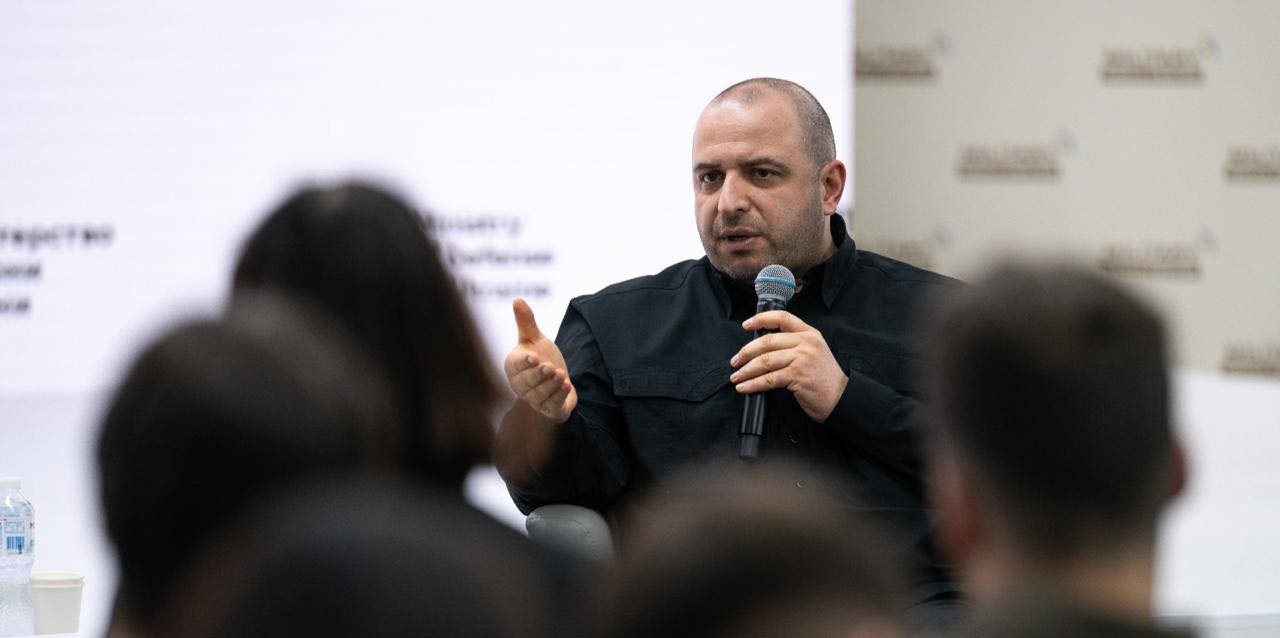
NSDC Secretary Rustem Umierov will head to Miami for another meeting with U.S. President Donald Trump's special envoy Steve Witkoff. According to Bloomberg, citing unnamed White House officials, the talks will take place this week. Umierov's spokeswoman Diana Davityan refused to confirm or deny the trip.
Third round, same formula
Miami has already hosted two rounds of negotiations between the delegations of the two countries. In December 2025, Umierov visited twice: first on December 5–6 to receive a briefing after Witkoff and Jared Kushner's visit to Putin, then on December 19–21 in an expanded format with the participation of Chief of the General Staff Andrii Khnатov and EU advisors. Another round took place in mid-January on January 17–18, which included Budanov and Arakhamia, with U.S. Army Secretary Daniel Driscoll joining from the American side.
After each meeting, both sides published identical-toned statements: "constructive," "productive," "continuing work." No signed documents, no announced deadlines.
What's on the table — and where it's empty
Following the December negotiations, Umierov and Witkoff confirmed that the parties are working on four documents: a 20-point plan, a "multilateral framework document on security guarantees," "American security guarantees for Ukraine," and a "plan for economic prosperity."
"Our shared priority is to stop the killings, achieve guaranteed security, and create conditions for Ukraine's reconstruction, stability, and long-term prosperity."
— Rustem Umierov after negotiations on December 21, Miami
However, the OSW analytical center found that the Ukrainian side's reaction following the December rounds indicates the absence of any significant progress on key issues — the status of the part of Donbas controlled by Ukraine, the line of demarcation, and most importantly, security guarantees. The mechanism for their implementation remains vague: documents are being "agreed upon" but not signed and contain no commitments from either side.
Trump's "deal" and what was left out
On December 28, Zelensky and Trump met at Mar-a-Lago — almost three hours behind closed doors. Trump publicly said they were "very close" to resolving the Donbas issue, but "not quite there yet." At the same time, he said he was not setting hard deadlines: "In the next few weeks we will find out if anything comes of this."
Meanwhile, Moscow has not softened its position. According to OSW's assessment, after separate talks between Witkoff and Kremlin envoy Kirill Dmitriev in Miami, Russia even hardened its demands rather than moved toward compromise. Trump, meanwhile, called Putin "good and generous" — despite no conciliatory steps being recorded.
Why Miami repeats itself
Kyiv deliberately goes into each new round — even without a guarantee of results. The logic is simple: keep the United States in the negotiating track and give Washington no reason to halt military and intelligence support. According to OSW's assessment, Ukraine is willing to discuss any American proposal in order to subsequently adjust it with European partners to an acceptable form.
- Security guarantees — Kyiv's top priority, but the "framework document" still lacks an enforcement mechanism.
- Territorial issue — Zelensky publicly maintains the formula "we respect the land we control," which effectively means refusing to legitimize the occupation.
- Europe's role — after the December round, Zelensky emphasized the need for broader consultations with the EU; EU leaders' advisors have already joined part of the negotiations.
The next announced stage after the January round is team-level consultations in Davos. But the list of documents and participants is expanding, while substantive commitments remain on paper.
The question is not whether a meeting in Miami will take place. The question is whether the final statement will contain even one point with a specific verification mechanism — because its very absence turns each new round into a well-rehearsed ritual with no legal consequences.



