Uranium Without Money and 10 Days of Silence: What Trump Announced — and What's Still Missing From the Deals
Trump announced that the US will remove Iranian nuclear "dust" for free, while Israel and Lebanon agreed to a 10-day ceasefire. The details of the mechanisms for implementing both agreements remain an open question.

By Tetiana Suchkova-Ladik
April 17, 2026 · 2 min read
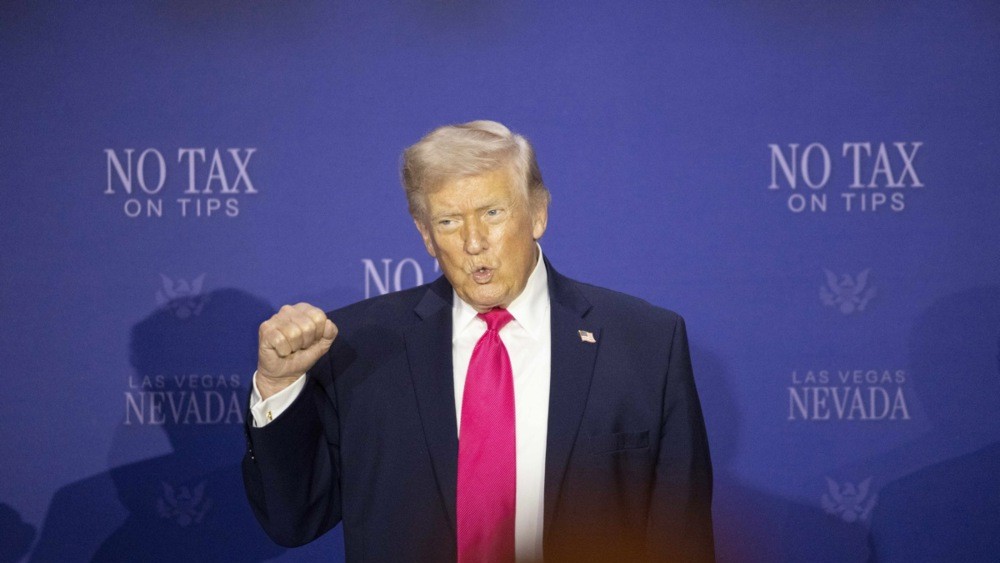
On April 16, 2026, U.S. President Donald Trump announced two pieces of news from the Middle East — and both were formulated in his characteristic style: as accomplished results, not as a framework agreement with open ends.
Uranium: Declaration of Free Extraction
In a Truth Social post, Trump wrote that the United States would obtain all the nuclear "dust" resulting from American B-2 bomber strikes on Iran's underground facilities, and would not pay a cent for it. "Nuclear dust" refers to the remnants of enriched uranium buried after Operation Midnight Hammer, conducted on June 22, 2025, when seven B-2 Spirit bombers attacked the underground Fordо facility at a depth of 90 meters.
"The U.S. and Iran will jointly extract and remove all deeply buried nuclear dust. No uranium enrichment will be permitted."
— Donald Trump, Truth Social, April 16, 2026
According to the IAEA's assessment, as of June 2025, Iran possessed approximately 440 kilograms of highly enriched uranium. The agency's director noted in March that roughly half of the stockpile was stored at an underground facility near Isfahan, with the rest buried in the wreckage of Natanz or Fordо.
The devil is in the details. Trump claimed that "many of the 15 points have already been agreed upon," but his posts refer to an American 15-point plan for ending the war — a plan that Iran has not recognized as a basis for negotiations. No specific verification mechanism, extraction timeline, or role for the IAEA was mentioned in the announcement.
Lebanon: 10-Day Ceasefire with "Certain Conditions"
Trump announced that Israel and Lebanon agreed to a 10-day ceasefire, which took effect on Thursday at 5:00 p.m. Eastern Time. The State Department defined its purpose as "enabling good-faith negotiations toward a permanent agreement on security and peace between Israel and Lebanon."
The agreement was reached after Trump's call with Netanyahu — Israel agreed "under certain conditions." Following this, Secretary of State Rubio called Lebanese President Aoun and obtained his commitment.
- In the 24 hours before the ceasefire, the Israeli military struck more than 380 Hezbollah targets in southern Lebanon.
- Israeli Ambassador to the UN Danny Danon called the agreement "complex," while Iran's ambassador approached the pause "with caution."
- Israel stated that it would maintain its forces in southern Lebanon despite the ceasefire.
Context Not to Lose Sight Of
Parallel to the Lebanese ceasefire, the U.S. and Iran are in a two-week cessation of fire established on April 7 — and the end of this regime is approaching: new peace negotiations could take place as soon as this weekend.
Iranian Parliament Speaker Mohammad Baqer Galibaff stated that any attempt to limit uranium enrichment will fail. This directly contradicts what Trump presented as "agreed upon."
Two open variables will determine whether these announcements translate into real commitments: whether Iran will agree to verified physical removal of uranium under international supervision — and whether the Lebanese ceasefire will withstand Israel's "certain conditions," the contents of which have not been publicly disclosed.



