Supreme Court's Grand Chamber Under Investigation: NABU Expands Kniaziev Case to Four Supreme Court Justices
On May 19, the National Anti-Corruption Bureau and the Specialized Anti-Corruption Prosecutor's Office conducted searches at the Supreme Court and served new suspicions to three sitting judges and one retired judge. According to the investigation, all four, as members of the Grand Chamber, allegedly accepted bribes for decisions favoring Kostiantyn Zhevago.

By Tetiana Suchkova-Ladik
May 19, 2026 · 2 min read
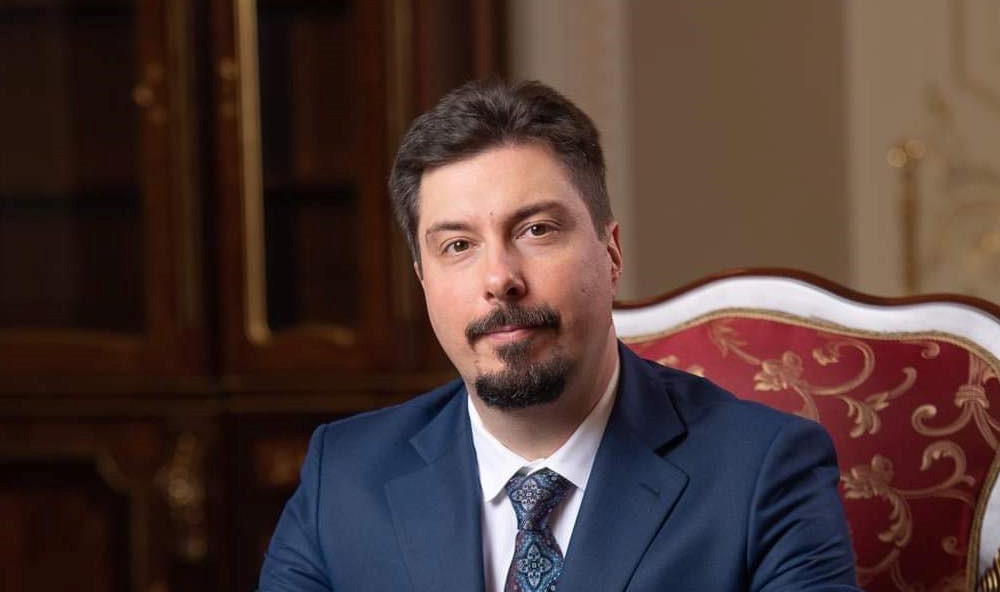
On May 19, detectives from the National Anti-Corruption Bureau (NABU) together with the Prosecutor General's Office (SAP) conducted searches at the workplaces, residences, and vehicles of a number of current and former judges of the Supreme Court — including the former head of the institution whose case is being heard in the Supreme Anti-Corruption Court (VAСS). Details from the announcement point to Vsevolod Knyazev.
Simultaneously, anti-corruption authorities issued new suspicions to four judges: three still in office, one retired. This is the first public expansion of the circle of accused since 2023.
The scheme: how, according to the investigation, a decision was purchased
According to NABU materials, the case concerns March–April 2023. Businessman Konstantin Zhevago, owner of the Finance and Credit group, in order to preserve the company's shares, transferred $2.7 million through an intermediary to a lawyer who was part of the so-called "back office" of the Supreme Court. According to the investigation, the money was supposed to go to the head of the court and judges of the Grand Chamber in exchange for the desired court decision.
"With the help of an undercover detective, contacts were recorded between the owner of the Finance and Credit group regarding the transfer of improper benefits in exchange for making a desired court decision"
NABU Director Semen Krivonos
On May 15, 2023, Knyazev was detained "red-handed" while receiving the second tranche — $450,000. The total amount of the suspicion is $2.7 million — a record bribe in the history of Ukrainian justice.
Why specifically the Grand Chamber
The new suspects are judges of the Grand Chamber of the Supreme Court. This is a narrow body with exclusive powers: it considers the most complex and exceptional legal disputes, and its decisions are final and binding for all courts. This is precisely why, according to the logic of the investigation, the price of a "correct" decision was measured in millions of dollars.
Case chronology
- May 2023 — Knyazev's detention, suspicion against the head of court and lawyer.
- August 2023 — suspicion announced against Konstantin Zhevago. The businessman's press service denied his involvement.
- January 2024 — Knyazev released from detention on bail of 18.16 million hryvnia.
- October 2025 — VAСS authorized special pre-trial investigation against Zhevago.
- December 2024 — Supreme Court permanently stripped Knyazev of judge status.
- May 2026 — indictment against Zhevago's intermediary sent to court; new suspicions issued to four judges.
Suspicion is not a verdict
All parties in the case are suspects or accused — no court verdict has yet taken effect. Zhevago's lawyer has consistently denied his client's involvement in the bribe transfer from the beginning. NABU has not yet disclosed the names of the four newly suspected judges.
If VAСS proves the guilt of current judges of the Grand Chamber — a practical question will arise: which decisions made by this composition are subject to review, and does the system have a mechanism for this?



