Vance boasts about stopping aid to Ukraine — and said it in response to a question about immigrants
# Translation At a TPUSA event at the University of Georgia, the US Vice President turned a question about legal migrants into a monologue about cutting weapons supplies to Kyiv. Meanwhile, the Trump administration is considering stripping legal status from 240,000 Ukrainian refugees.

By Tetiana Suchkova-Ladik
April 15, 2026 · 2 min read
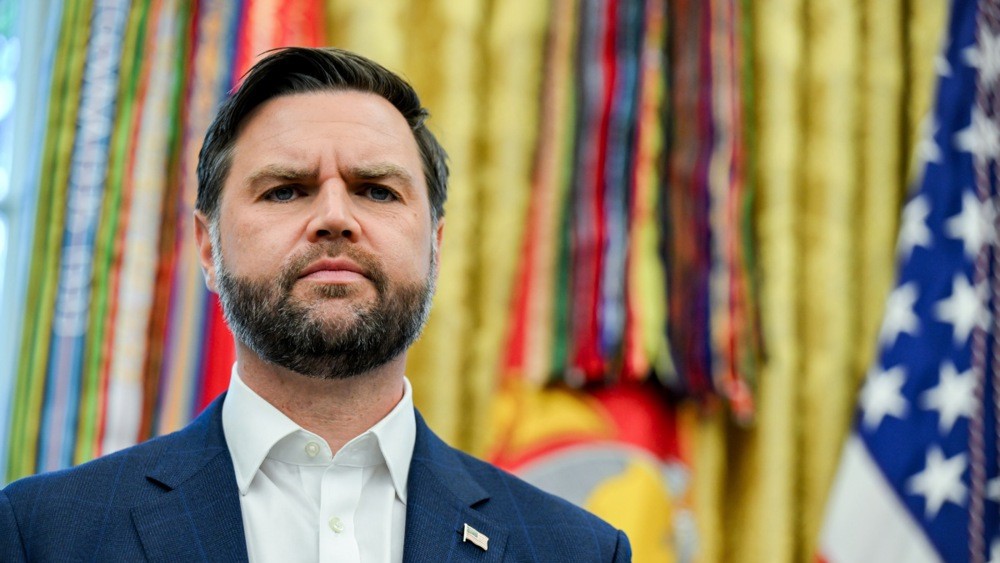
The question was about legal immigrants. The answer was about pride in cutting aid to Ukraine.
JD Vance was speaking at a TPUSA event at the University of Georgia when a student of Ukrainian descent asked about the administration's stance on legal migrants — those who came by the rules, obtained documents, and pay taxes. Instead of a direct answer, Vance switched to Ukraine and stated that ending military aid to Kyiv was one of the things he was most proud of during his time in the administration.
The student whom Vance criticized had argued that the US should continue supporting Ukraine in its confrontation with Russia. Vance, instead, presented his arguments as an example of why he considers this aid a mistake.
What actually happened to the aid
Vance repeatedly reiterated the thesis that the US "spends too much" on Ukraine. However, data from the Kiel Institute refutes this narrative: from January to March 2025, American government support for Ukraine amounted to €0.5 million, and from April to June 2025 — zero. During the same period, support for Ukraine from other allies totaled €26.9 billion.
"Vance was complaining about something that isn't happening"
— Kyiv Post, July 2025
Even accounting for aid during the Biden administration in January 2025, support for Ukraine from non-American allies in the first half of 2025 was 53 times greater than American aid.
Parallel pressure on Ukrainians in the US
Vance's speech took place against a broader context that directly affects Ukrainians in America. The Trump administration is preparing to strip approximately 240,000 Ukrainians who fled the conflict with Russia of their temporary legal status.
White House Press Secretary Karoline Leavitt stated that "no decision has been made yet," however, Julia Gelatt from the Migration Policy Institute warned that canceling the humanitarian parole for Ukrainians would be a "sharp break in the country's approach to those fleeing war," although it aligns with the administration's overall position on humanitarian parole.
If protection is indeed revoked, the consequences will be legally complex. To protect themselves from deportation, Ukrainians could apply for asylum, but this requires proving persecution based on race, religion, nationality, or political beliefs — the mere fact of active war in their homeland is insufficient.
Structural paradox
Vance presents ending aid to Ukraine as "America First." But in terms of GDP share, the most generous donors to Ukraine are Estonia and Denmark — each spending around 3% of national GDP, while Germany and Poland bear an additional burden by accepting 1.2 and 0.99 million Ukrainian refugees respectively.
Overall, the US has accepted approximately 287,000 Ukrainian refugees — 7.3 times fewer than Poland and Germany combined.
The question at TPUSA was about legal migrants. But if the administration revokes TPS and humanitarian parole for Ukrainians, it is these very "legal" people who will be the first to feel the answer to the question Vance never gave.
If Washington does indeed strip 240,000 Ukrainians of their legal status — will this change Vance's rhetoric about "pride," or will it become another argument against "unnecessary spending"?



