Verona ahead of the Olympics' closing: protests against the 'unsustainable' Games and their political reverberations
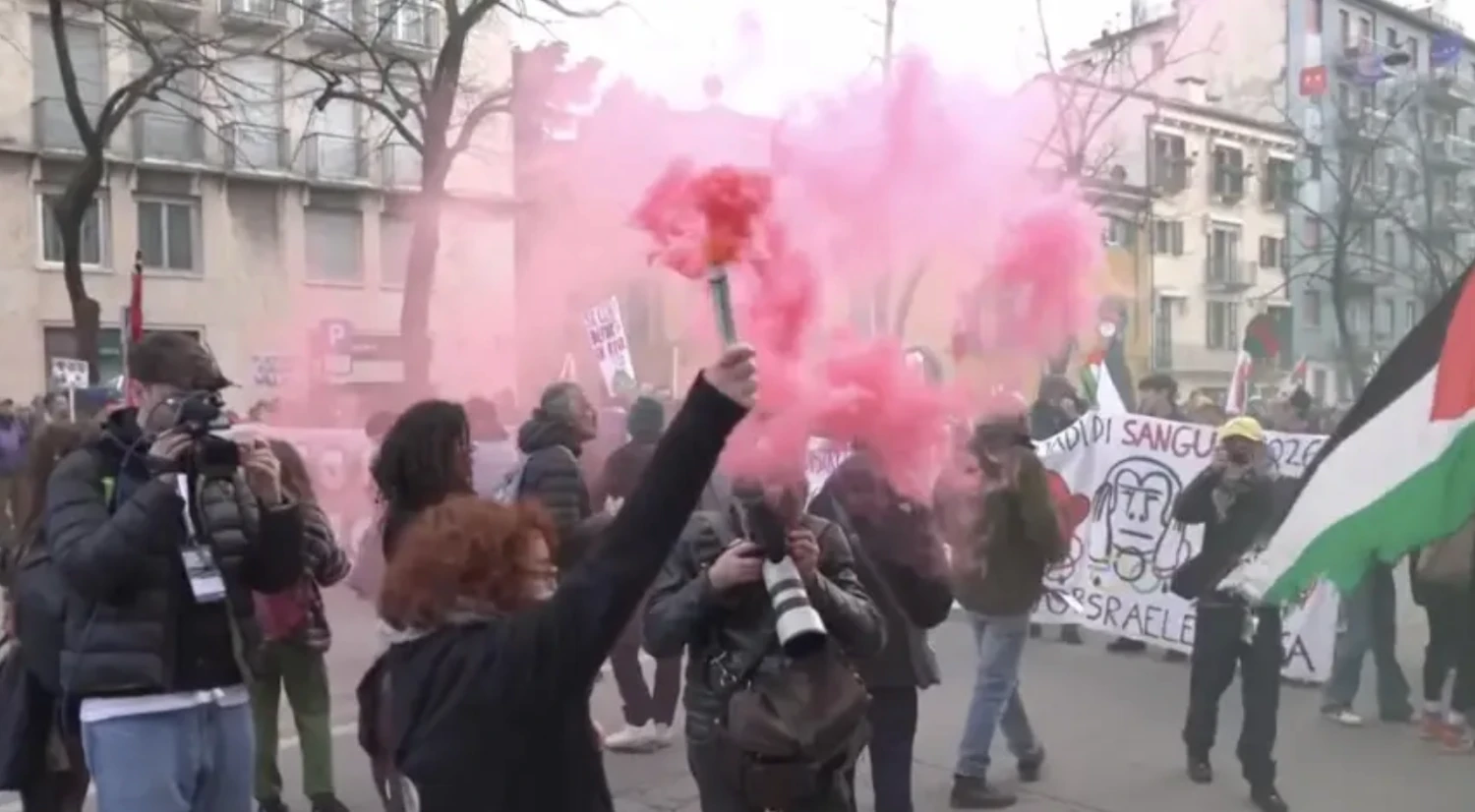
Ahead of the closing ceremony in Verona, a march against the economic, environmental and political costs of the Games took place — a signal that drew a sharp response from authorities and fuels the global debate over the cost of major sporting events.

By Tetiana Suchkova-Ladik
February 23, 2026 · 2 min read
Briefly
On the eve of the Olympics' closing in Verona, Italy, a demonstration took place, whose participants called the event “unsustainable” and even “bloody,” AP reports (via UNN). The march under the slogan “Olympics — no, thank you” voiced discontent with the economic, environmental and political consequences of holding the Winter Games.
What participants said
"We're here because we believe these Olympic Games are hypocritical, unsustainable and, on top of that, bloody"
— Filippo Comencini, participant/activist
According to the Games' organizers, virtually all necessary electricity is to be supplied from "environmentally clean" sources — from arena lighting to the production of artificial snow. Supporters of the event present this promise as an argument, but critics say that declarations do not offset the actual costs and risks for local communities.
Reaction from officials
The protests drew a sharp response from some politicians. Italian officials and certain leaders called the marchers uncooperative, while other official comments characterized some IOC decisions and their implementation as "a moment of shame" — a sign of internal political pressure. Remarks by Prime Minister Meloni about the protests also drew media and public attention.
Why this matters
Economy: large events leave long-term budgetary and infrastructure commitments. When part of society questions the cost-effectiveness of the Games, it can complicate the return on investments and create a political conflict over spending.
Environment: promises of "clean" energy raise the bar of expectations, but also make organizers vulnerable to criticism if realities turn out to be more complicated.
Politics and reputation: the demonstrations reinforce a trend — sport is increasingly less separate from politics. This matters for countries considering hosting major events during political or security crises: the risks of reputational damage and diplomatic complications grow.
What's next?
The protests in Verona are not just a local event. They are becoming part of a broader narrative about who pays for major games, what ecological responsibility organizers should bear, and what political price states are willing to pay. For Ukraine, this is another example of why, when planning large events, it is important to weigh resources, security and international reputation.
Conclusion
While attention is focused on the ceremony, the marches and the authorities' reactions serve as a reminder: major sporting events can no longer be viewed solely as image-building or tourism projects. Whether organizers can turn declarations about "clean" energy into real results is a question society will be waiting to see answered after the Games close.



