Vilnius evacuates parliament and president — von der Leyen now heading to the Baltics
At least 15 drone incidents were recorded in the sky over Estonia, Latvia, and Lithuania over the course of a month. The EU is responding not with sanctions — but with a visit.

By Tetiana Suchkova-Ladik
May 25, 2026 · 2 min read
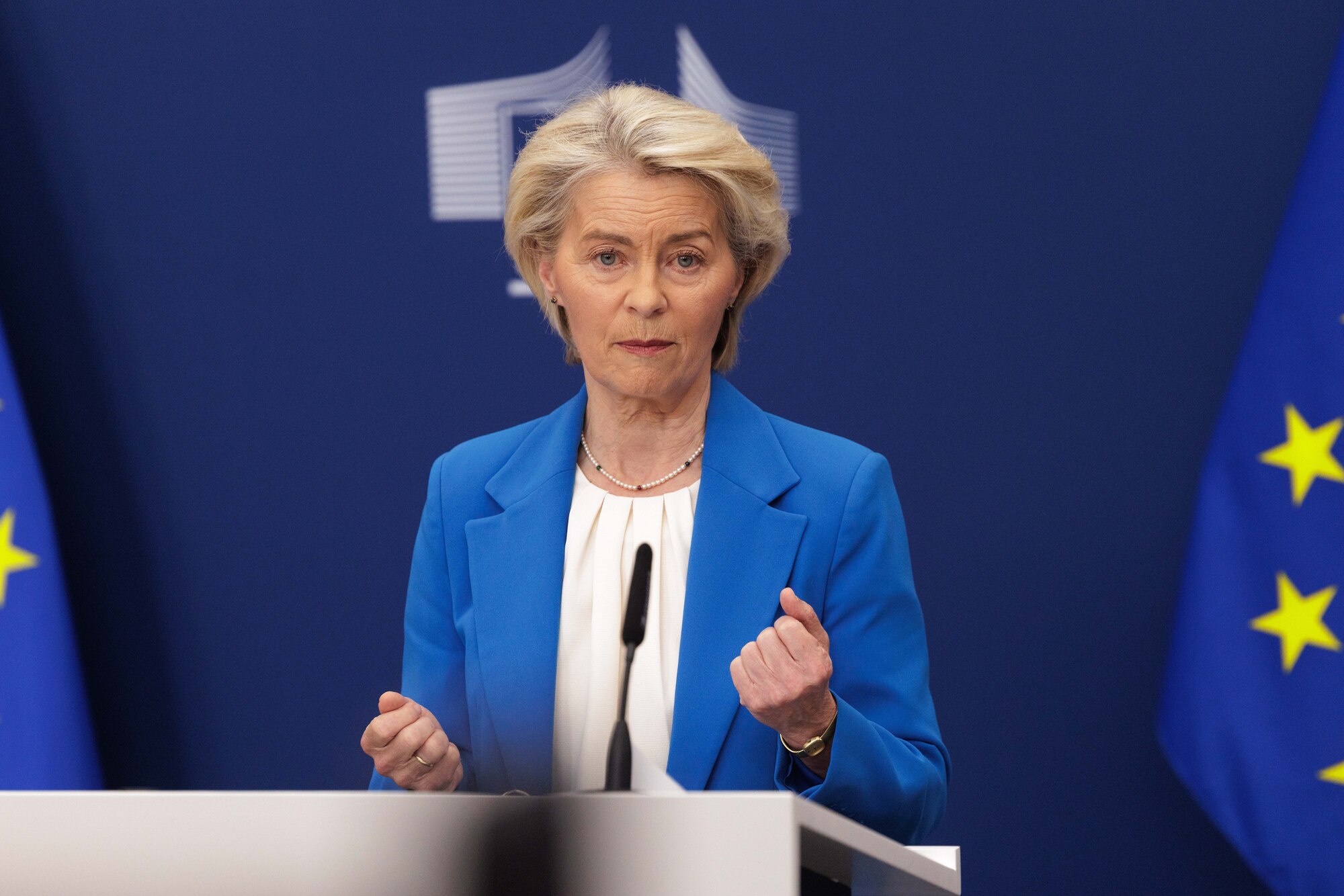
On May 26, European Commission President Ursula von der Leyen will arrive in Vilnius — accompanied by EU Commissioner for Defence Andrius Kubilius. Politico cites three anonymous officials familiar with the visit details. There has been no official confirmation from Brussels yet.
The occasion is not diplomatic, but literal: on May 20 alone, Lithuania declared a red level air alert for the first time in its history. Vilnius airport was closed, and parliament and President Gitanas Nausėda were evacuated to shelters. A day earlier, a NATO F-16 shot down a drone over Estonia for the first time — piloted by a Romanian pilot from the Baltic Air Policing mission.
24 incidents — and no clear attribution
According to Novaya Gazeta Europe's count, since the beginning of 2025, drones have been detected over the Baltic countries at least 24 times: 12 episodes in Latvia, seven in Lithuania, five in Estonia. This year alone — already 15 cases compared to nine for the entire 2024. Wreckage has been found on beaches, in water, and in nature reserves.
The origin of the devices remains a matter of dispute. Some were identified as Ukrainian — those that were meant to strike targets inside Russia and went off course due to Russian electronic warfare systems. Kyiv has repeatedly confirmed this version and apologized to neighbors. Some drones were attributed to Russia or Belarus directly.
"Russia and Belarus bear direct responsibility for redirecting drones. They endanger people on NATO's eastern flank."
Ursula von der Leyen, post on social network X, May 2025
Analysts at the Atlantic Council identify a distinct logic in this from Moscow: not just drones, but an information operation — to make Baltic societies question whether supporting Ukraine brings war to their own skies, and to create friction between allies.
What will be discussed in Vilnius
- A joint Baltic response to drone threats — coordination instead of separate national protocols
- Funding for air defense systems through European Commission mechanisms
- A position on responsibility: Russia and Belarus or Ukraine — and how to communicate this within the EU
On May 22, foreign ministers from eight countries — Denmark, Estonia, Finland, Iceland, Latvia, Lithuania, Norway, and Sweden — signed a joint statement that rejects Russian and Belarusian accusations and condemns threats to use force against the region. The document exists, but there is no enforcement mechanism.
If, after the Vilnius meeting, Brussels offers only a declaration of solidarity without a concrete financial package for Baltic air defense, the next drone incident will call into question not only the region's security, but also the EU's ability to act differently than with words.



