Vittoff and Kushner Were in Moscow Three Times — and Never in Kyiv. Zelenskyy Ready to Receive Them Tomorrow
Trump's chief negotiators confirmed their arrival in Ukraine for early April, but no dates have been set yet. Zelenskyy explained the delay himself: the envoys don't want to leave the president.

By Tetiana Suchkova-Ladik
April 14, 2026 · 2 min read
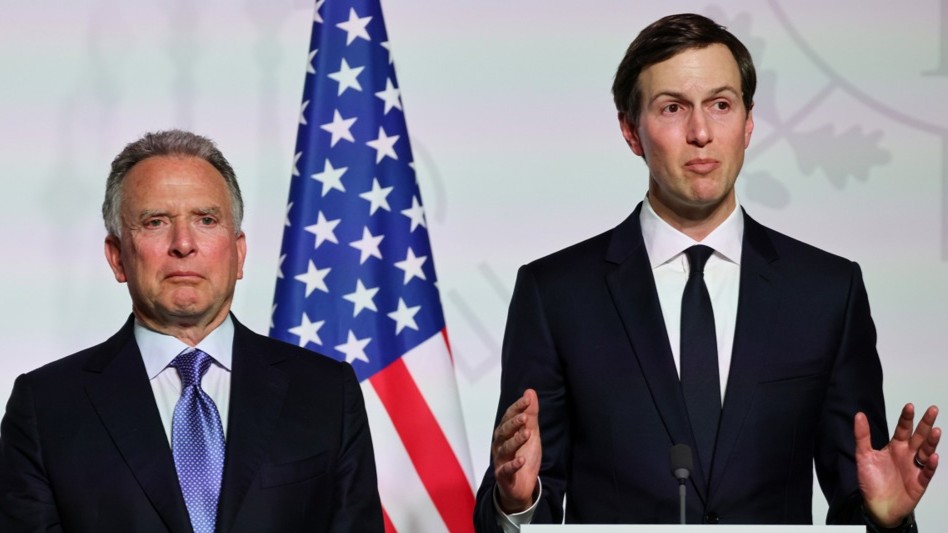
Steve Witkoff and Jared Kushner have held negotiations with Putin in Moscow at least several times. They have never visited Kyiv. It is precisely this asymmetry that Zelensky is trying to correct—publicly, persistently, and so far unsuccessfully.
What Zelensky said in Norway
At a briefing in Oslo, the president confirmed: there is no specific date for a visit by the American negotiators. According to him, Ukraine has not received any confirmation regarding timing. At the same time, Zelensky added that Kyiv is ready to receive a delegation any day.
«We agreed that they would come here. Even before there was a ceasefire in the Middle East, I told them: come to us, and then go to Moscow».
Volodymyr Zelensky, briefing in Norway
Zelensky formulated the reason for the delay without diplomatic niceties: Witkoff and Kushner, as he sees the situation, decided that they cannot stay away from Trump right now.
A chronology that explains the tension
- End of March — talks between the US and Ukraine in Miami. The last face-to-face meeting between the two sides.
- Early April — head of the Presidential Office Kyrylo Budanov publicly stated to Reuters that Witkoff, Kushner, and Senator Lindsey Graham are expected in Kyiv shortly after Orthodox Easter (April 12).
- April 8–9 — Zelensky at a closed briefing for journalists admitted that it is «hard to say» whether the visit will take place at all, or whether the meeting will be held elsewhere in a tripartite format.
- Video call in early April — Zelensky had a «positive conversation» with Witkoff and Kushner. They confirmed their intention to come, but did not name dates.
Why format matters more than date
According to Kyiv Independent, the real subject of dispute is not the calendar, but the structure of negotiations. Zelensky proposed a «Kyiv → Moscow» scheme: Americans first visit Ukraine, then go to Putin. This would symbolically equalize the status of the parties. Instead, the American side is considering the option of a tripartite meeting immediately—without a separate visit to Kyiv.
In parallel, as Kyiv Independent reports, during a video conference with national security advisors from Ukraine, Germany, France, and Great Britain, Witkoff and Kushner discussed a demilitarized zone plan. In other words, substantive work is underway—but without physical presence in Ukraine.
Context that should not be ignored
Five-hour negotiations between Witkoff and Kushner with Putin at the Kremlin ended after midnight. According to ZN.ua analysts' assessment, Putin used the meeting in his own interests: made the Americans wait almost three hours, addressed new threats to Europe, and offered no compromises. The fact that Trump's envoys have still not come to Kyiv after this, Moscow can present as evidence of asymmetry in Washington's approach to the two sides of the conflict.
In Norway, Zelensky attempted to highlight this asymmetry—without accusations, but with an obvious message: we are open, the ball is not in our court.
If Witkoff and Kushner do come to Kyiv before their trip to Moscow—this will change not only the symbolism of the negotiations, but also who sets their agenda. If not—the question of whose interests American diplomacy is actually defending in this war will remain open.



