Lukashenko's visit to Pyongyang: agreement with North Korea lacks details, poses risks to Ukraine's security
The first official visit of Lukashenko to North Korea concluded with the signing of a "friendship treaty," but the text of the agreement has not been released. We examine why this matters for Ukrainian security and what questions Kyiv and its partners should be asking.

By Tetiana Suchkova-Ladik
March 26, 2026 · 2 min read
Agreement signed — but without details
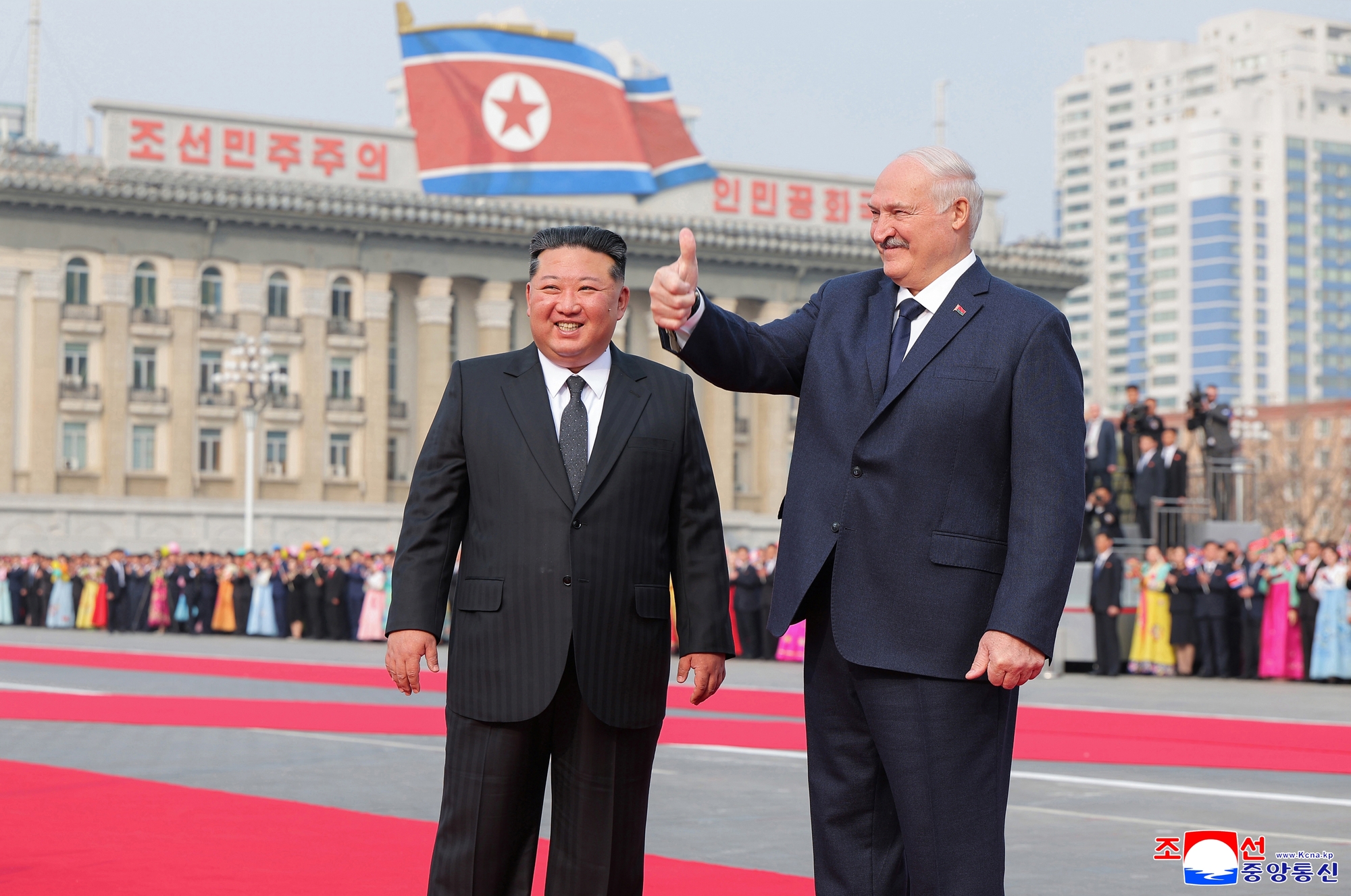
According to the official website of the President of Belarus and Reuters citing North Korea's KCNA, on March 26 Alexander Lukashenko was on an official visit to Pyongyang, where he signed a agreement on friendship and cooperation between Belarus and the DPRK. At the same time, none of the official portals published the text of the agreement, and details about the areas in which cooperation will develop are absent.
"Relations between Minsk and Pyongyang never ceased after the collapse of the USSR, and the countries' economies complement each other"
— Alexander Lukashenko, President of Belarus
Ritual and symbolism of the visit
KCNA described the ceremony in detail: Lukashenko was greeted with a 21-gun salute, schoolchildren waved flags, there was a parade of the honor guard, and the Belarusian leader visited the mausoleum of Kim Il-sung and Kim Jong-il. These elements underline the political weight of the visit — it was not merely an administrative formality, but an act of symbolic legitimation of the two regimes for each other.
Context: money, military ties and sanctions
Earlier Yonhap reported that North Korea may have received up to $14.4 billion from Russia in connection with the deployment of its units and the supply of weapons. Also, at the February military parade in Pyongyang, units reportedly marched that are linked to operations on Ukrainian territory. Separately, LIGA.net noted that the US eased some sanctions on Belarusian potash after the release of political prisoners — an example of how diplomatic moves can turn into economic preferences.
What this means for Ukraine
First, the mere fact of an agreement between regimes that have close contacts with Moscow raises the risks of political and technical-logistical coordination that could be used to circumvent sanctions or make deliveries that would strengthen aggression against Ukraine.
Second, the absence of a public text of the agreement is a signal: partners should check supply chains, economic links and any signs of military-technical cooperation.
Third, Belarus's symbolic support for the DPRK provides a basis for further diplomatic work: Kyiv and Western partners need to turn statements into concrete control mechanisms and sanctions to avoid unforeseen consequences.
Conclusion
For now the visit looks like a demonstration of mutual support and symbolic legitimation, but the risks of practical cooperation remain real. The question is not only about the papers signed, but whether they will turn into concrete economic or military ties — and how Western partners will respond. Can Ukraine, together with its allies, seize the initiative and minimize potential threats?



